

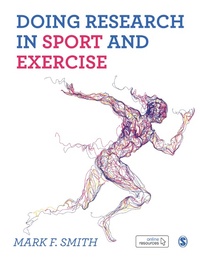
Doing Research in Sport and Exercise
A Student's Guide
1st Edition
Published on 17. November 2021
560 pages
978-1-5297-1140-0 (ISBN)
Description

Split into five sections that cover your whole research journey, this book captures everything you need to understand to do a sports research project.
From getting started with a research question and selecting a research approach to choosing a method of data collection and analysing and presenting research findings, it walks you step-by-step through the entire research process. The book also:
Showcases a diverse range of approaches, including experiments, surveys, focus groups, interviews, systematic reviews and mixed methods, to help you choose the best option for your project.
Focuses on applied research, showing you how to go beyond the classroom, conduct research in the field and manage and analyse data in the real world.
Explores how your supervisor can support you to get the most out of your project.
Features include over 40 student activities that encourage you to think more deeply about what you've learned, nearly 50 case studies highlighting research from real-world students and sport researchers, and reflection points, to help you check your understanding.
For students across courses relating to Sport & Exercise Science, Coaching Practice & Development, PE and Sport, this book is a down-to-earth guide to help anyone doing a research project in sport and exercise.
From getting started with a research question and selecting a research approach to choosing a method of data collection and analysing and presenting research findings, it walks you step-by-step through the entire research process. The book also:
Showcases a diverse range of approaches, including experiments, surveys, focus groups, interviews, systematic reviews and mixed methods, to help you choose the best option for your project.
Focuses on applied research, showing you how to go beyond the classroom, conduct research in the field and manage and analyse data in the real world.
Explores how your supervisor can support you to get the most out of your project.
Features include over 40 student activities that encourage you to think more deeply about what you've learned, nearly 50 case studies highlighting research from real-world students and sport researchers, and reflection points, to help you check your understanding.
For students across courses relating to Sport & Exercise Science, Coaching Practice & Development, PE and Sport, this book is a down-to-earth guide to help anyone doing a research project in sport and exercise.
Reviews / Votes
A friendly introduction to key elements of the research process, this book covers many approaches to research and includes topics not covered in similar texts. Examples give application to the concepts addressed. Easy access to sections most useful for particular projects and references to further reading and published research consolidate particular points. -- Beverley HaleMore details
Edition
1. Auflage
Language
English
Place of publication
London
United Kingdom
Publishing group
Sage Publications Ltd (Digital)
Target group
College/higher education
Product notice
Reflowable
ISBN-13
978-1-5297-1140-0 (9781529711400)
Copyright in bibliographic data and cover images is held by Nielsen Book Services Limited or by the publishers or by their respective licensors: all rights reserved.
Schweitzer Classification
Other editions
Additional editions
Book
11/2021
1st Edition
SAGE Publications Ltd
€164.00
Shipment within 15-20 days
Book
11/2021
1st Edition
SAGE Publications Ltd
€313.98
Shipment within 15-20 days
Person
Dr Mark F Smith is both an Associate Professor within the School of Sport and Exercise Science and Director of Education within the College of Social Science at the University of Lincoln, UK. Mark holds British Association for Sport and Exercise Sciences Accreditation for pedagogy (Teaching and Learning) having previously held it for over a decade for Sport Science consultancy activity. As a sport scientist with more than 25 years' experience, Mark has worked with a wide range of performers and teams. He has published research in a range of leading international scientific publications and has been on International Editorial Boards for Sport and Exercise science-related research. As a qualified teacher, Mark has taught many aspects of sport science and research methods across a broad range of educational settings for over two decades. His previous textbooks in Research Methods in Sport and Golf Science have a global audience with the latter having been translated into six languages. He has been an external examiner and educational advisor at a wide range of educational institutions both at home and aboard.
Content
Part I: Mapping your research journey
Chapter 1: The context of sport and exercise research
Chapter 2: Getting started - the research process
Chapter 3: Managing yourself through a research project
Chapter 4: Working with your supervisor
Part II: Starting your research project
Chapter 5: Generating ideas and developing questions
Chapter 6: Reviewing the literature (why, when and how?)
Chapter 7: Developing a research proposal
Chapter 8: Working safely and effectively - a matter of ethics
Part III: Selecting your research approach
Chapter 9: Selecting an appropriate research strategy
Chapter 10: Systematic review research strategy
Chapter 11: Experimental research strategy
Chapter 12: Correlational research strategy
Chapter 13: Case study research strategy
Chapter 14: Survey research strategy
Chapter 15: Ethnographic research strategy
Chapter 16: A mixed-research design approach
Part IV: Choosing your data collection methods
Chapter 17: Recruiting and involving participants in research
Chapter 18: 'Clinical' data collection methods
Chapter 19: 'Observational' data collection methods
Chapter 20: 'Questionnaire' data collection method
Chapter 21: 'Focus group' data collection method
Chapter 22: 'Interview' data collection methods
Chapter 23: 'Content and discourse analysis' methods
Part V: Analysing and presenting your research findings
Chapter 24: Collecting, storing and organising your data
Chapter 25: Analysing your data
Chapter 26: Preparing data for presentation
Chapter 27: Writing-up and disseminating your research project
Chapter 1: The context of sport and exercise research
Chapter 2: Getting started - the research process
Chapter 3: Managing yourself through a research project
Chapter 4: Working with your supervisor
Part II: Starting your research project
Chapter 5: Generating ideas and developing questions
Chapter 6: Reviewing the literature (why, when and how?)
Chapter 7: Developing a research proposal
Chapter 8: Working safely and effectively - a matter of ethics
Part III: Selecting your research approach
Chapter 9: Selecting an appropriate research strategy
Chapter 10: Systematic review research strategy
Chapter 11: Experimental research strategy
Chapter 12: Correlational research strategy
Chapter 13: Case study research strategy
Chapter 14: Survey research strategy
Chapter 15: Ethnographic research strategy
Chapter 16: A mixed-research design approach
Part IV: Choosing your data collection methods
Chapter 17: Recruiting and involving participants in research
Chapter 18: 'Clinical' data collection methods
Chapter 19: 'Observational' data collection methods
Chapter 20: 'Questionnaire' data collection method
Chapter 21: 'Focus group' data collection method
Chapter 22: 'Interview' data collection methods
Chapter 23: 'Content and discourse analysis' methods
Part V: Analysing and presenting your research findings
Chapter 24: Collecting, storing and organising your data
Chapter 25: Analysing your data
Chapter 26: Preparing data for presentation
Chapter 27: Writing-up and disseminating your research project
