

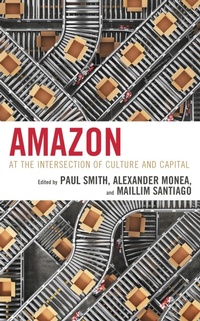
Amazon
At the Intersection of Culture and Capital
1st Edition
Published on 28. November 2022
366 pages
979-8-8818-5111-8 (ISBN)
Description

Amazon is everywhere. In our mailboxes, in delivery vans clogging our streets, in an increasing portion of our air traffic, in our grocery stores, on our televisions, in our smart home devices, and in the infrastructure powering many of the websites we visit. Amazon's tendrils touch the majority of online retail transactions in the United States and in many other countries.
As Amazon changes the face of capitalist business, it is also changing global culture in multiple ways. This book brings together some of the most important analyses of Amazon's pioneering business practices and how they intersect with and affect the components of everyday culture. Its contributors examine the political economy of Amazon's platform, making the argument that it operates as an unregulated monopoly that is disruptive to the global economy and that its infrastructure and logistical operations increasingly alienate its workers and wreak many other social harms.
Our contributors outline the practices of resistance that have been employed by organizers ranging from Amazon employees to artists to digital piecemeal laborers working on Amazon's Mechanical Turk platform. They examine the broader cultural impact that Amazon has had, looking at things like Amazon Prime and the creation of unending consumption, the absorption of Whole Foods and its brand of 'conscious capitalism,' and the impact of Amazon Studios and Prime Video on everyday film and television viewing practices.
This book examines the broader environmental impacts that Amazon is having on the world, looking at the slow violence it incurs, its underwhelming Climate Pledge, and the regional impacts that its business practices have. Lastly, this book gathers together some important artistic responses to Amazon for the first time in an appendix that offers readers insight into other ways in which critics of the company are making their voices heard and attempting to move broader audiences into solidarity against Amazon.
As Amazon changes the face of capitalist business, it is also changing global culture in multiple ways. This book brings together some of the most important analyses of Amazon's pioneering business practices and how they intersect with and affect the components of everyday culture. Its contributors examine the political economy of Amazon's platform, making the argument that it operates as an unregulated monopoly that is disruptive to the global economy and that its infrastructure and logistical operations increasingly alienate its workers and wreak many other social harms.
Our contributors outline the practices of resistance that have been employed by organizers ranging from Amazon employees to artists to digital piecemeal laborers working on Amazon's Mechanical Turk platform. They examine the broader cultural impact that Amazon has had, looking at things like Amazon Prime and the creation of unending consumption, the absorption of Whole Foods and its brand of 'conscious capitalism,' and the impact of Amazon Studios and Prime Video on everyday film and television viewing practices.
This book examines the broader environmental impacts that Amazon is having on the world, looking at the slow violence it incurs, its underwhelming Climate Pledge, and the regional impacts that its business practices have. Lastly, this book gathers together some important artistic responses to Amazon for the first time in an appendix that offers readers insight into other ways in which critics of the company are making their voices heard and attempting to move broader audiences into solidarity against Amazon.
More details
Edition
1. Auflage
Language
English
Place of publication
United States
Publishing group
Bloomsbury Publishing Plc
Target group
Professional and scholarly
Illustrations
32 colour photos; 1 tables;
ISBN-13
979-8-8818-5111-8 (9798881851118)
Copyright in bibliographic data and cover images is held by Nielsen Book Services Limited or by the publishers or by their respective licensors: all rights reserved.
Schweitzer Classification
Other editions
Additional editions
Book
01/2025
Rowman & Littlefield Publishers
€45.50
Shipment within 3-4 weeks
Persons
Paul Smith is Professor of Cultural Studies and Global Affairs at George Mason University. Most of his working life has been spent in the US, including posts at Miami University OH, and Carnegie Mellon before his appointment at George Mason University in 1996. Between 1999 and 2002 he was chaired Professor and department head of Media and Cultural Studies at the University of Sussex. At George Mason he has been director of the Center for the Study of the Americas and currently teaches mostly in the Cultural Studies PhD program, but also for Global Affairs. He was elected President of the national Cultural Studies Association (2016-18). He is the author of Pound Revised, Discerning the Subject, Clint Eastwood: A Cultural Production, Millennial Dreams: Culture and Capital in the North, and Primitive America: The Ideology of Capitalist Democracy. He has edited Men in Feminism (with Alice Jardine), Madonnarama (with Lisa Frank), and Boys, and has published a book of translations from Jean Louis Schefer, The Enigmatic Body. His essays and articles have appeared in scores of journals and collections in the US and overseas. His most recent edited volume is The Renewal of Cultural Studies and he is currently completing a book on Covid vaccines.
Alexander Monea is an Assistant Professor in the English Department and Cultural Studies Program at George Mason University. He researches the history and cultural impacts of computers and digital media. He is the author of The Digital Closet: How the Internet Became Straight and co-author of The Prisonhouse of the Circuit: Politics of Control from Analog to Digital. He is also an editor for the journal Data & Policy focusing on the area of Ethics, Equity, and Trust.
Maillim Santiago is a media and culture scholar pursuing a Cultural Studies doctoral track at George Mason University. She has contributed work to MAI: Feminism & Visual Culture and Final Girls Film Festival. Her work has screened across the country, including the Brooklyn Women's Film Festival, Tampa Bay Comic Con, Florida's Undergraduate Research Conference, Orlando Film Festival, Final Girls Film Festival, and more.
Alexander Monea is an Assistant Professor in the English Department and Cultural Studies Program at George Mason University. He researches the history and cultural impacts of computers and digital media. He is the author of The Digital Closet: How the Internet Became Straight and co-author of The Prisonhouse of the Circuit: Politics of Control from Analog to Digital. He is also an editor for the journal Data & Policy focusing on the area of Ethics, Equity, and Trust.
Maillim Santiago is a media and culture scholar pursuing a Cultural Studies doctoral track at George Mason University. She has contributed work to MAI: Feminism & Visual Culture and Final Girls Film Festival. Her work has screened across the country, including the Brooklyn Women's Film Festival, Tampa Bay Comic Con, Florida's Undergraduate Research Conference, Orlando Film Festival, Final Girls Film Festival, and more.
Content
Acknowledgements
Introduction
I.The Political Economy of Amazon
1.Lina Khan, "Amazon's Anti-Trust Paradox" [Reprint]
2.Ulysses Pascal, "Amazon 1-Click and the Value of Broken Infrastructure"
3.Nikolaus Poechhacker and Eva-Maria Nyckel, "The Logistics of Probability: Anticipatory Shipping and the Production of Markets" [Reprint]
4.Alessandro Delfanti, "Amazonian Fulfillment: Machinic Dispossession and Augmented Despotism"
II.Practices of Resistance
5.Jamie Woodcock and Callum Cant, "Platforms, Resistance, Organizing"
6.xtine burrough, "Disrupting Work with Play on Mturk.com: A Visual Essay"
7.Lilly Irani, "Difference and Dependence among Digital Workers: The Case of Amazon Mechanical Turk" [Reprint]
III.Amazon and Culture
8.David Arditi, "Unending Consumption: A Prime Example"
9.Lisa Daily, "Amazon Eats Whole Foods"
10.Maillim Santiago, "Virtuous Viewing and Amazon Studios"
IV.Environmental Impact
11.Brett Hutchins, Libby Lester, Richard Maxwell, Toby Miller, and Whitney Monaghan, "Quick and Sl
Introduction
I.The Political Economy of Amazon
1.Lina Khan, "Amazon's Anti-Trust Paradox" [Reprint]
2.Ulysses Pascal, "Amazon 1-Click and the Value of Broken Infrastructure"
3.Nikolaus Poechhacker and Eva-Maria Nyckel, "The Logistics of Probability: Anticipatory Shipping and the Production of Markets" [Reprint]
4.Alessandro Delfanti, "Amazonian Fulfillment: Machinic Dispossession and Augmented Despotism"
II.Practices of Resistance
5.Jamie Woodcock and Callum Cant, "Platforms, Resistance, Organizing"
6.xtine burrough, "Disrupting Work with Play on Mturk.com: A Visual Essay"
7.Lilly Irani, "Difference and Dependence among Digital Workers: The Case of Amazon Mechanical Turk" [Reprint]
III.Amazon and Culture
8.David Arditi, "Unending Consumption: A Prime Example"
9.Lisa Daily, "Amazon Eats Whole Foods"
10.Maillim Santiago, "Virtuous Viewing and Amazon Studios"
IV.Environmental Impact
11.Brett Hutchins, Libby Lester, Richard Maxwell, Toby Miller, and Whitney Monaghan, "Quick and Sl
