

Afrocentricity
Description

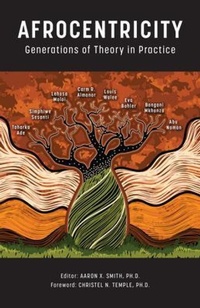
Afrocentricity: Generations of Theory in Practice is a landmark scholarly volume that affirms Afrocentricity as a theoretical approach and as a lived, generational, and global commitment to centering African agency, knowledge systems, and liberation. Edited by Dr. Aaron X. Smith and featuring a powerful foreword by cultural theorist Dr. Christel N. Temple, this book charts the legacy, application, and future of Afrocentric thought across disciplines and borders.
Rooted in the pioneering work of Dr. Molefi Kete Asante, this collection convenes the voices of major Afrocentric scholars across continents, each of whom demonstrates the enduring power of Afrocentricity as a framework for personal, pedagogical, political, and philosophical transformation. These research articles are both theory, operationalized frameworks, and testimonies of praxis. They reflect how Afrocentricity is applied in academic research embedded in Legal Studies, Africana Studies, Communication, Political Science and Business school programs.
The international contributions from Dr. Simphiwe Sesanti of South Africa, whose work embodies Afrocentric journalism and African ethics; Dr. Abu Sayeed Noman who advances the Afrocentric paradigm through language and literature; and Dr. Ricardo Matheus Benedicto of Brazil, who offers a resounding afterword bridging Afrocentric practice with working-class Black communities in Latin America. This volume insists that Afrocentricity is a worldwide project of resistance and rehumanization.
Afrocentricity: Generations of Theory in Practice stands as a critical expansion demonstrating how generations of scholars have taken up the torch of Afrocentricity to confront colonial legacies and reclaim African intellectual sovereignty, from theory, protest and policymaking.
Fifty years ago, Afrocentricity emerged rooted in agency. Today its relevance is rooted in the future.
More details
Content
Table of Contents
Foreword
Preface
Introduction
Chapter 1: Branches of Igi-Osè: The Genealogical Impact of Afrocentricity-Eva Bohler
Chapter 2: The Asantian Perspective: Critical Insights into Molefi Kete Asante's Conceptualization of Afrocentric Theory-Louis Walee
Chapter 3: How Afrocentric Recentered My Public Policy Practice to Highlight Cultural and Historical Dislocation and Intervention-Carm R. Almonor
Chapter 4: Dismantling the Racial Ladder: Toward an African Cultural Paradigm-Taharka Adé
Chapter 5: My Reflections Encountering Molefi Kete Asante: Notes on Afrocentricity, Decoloniality, and Decolonizing Knowledge in Africa-Lehasa Moloi
Chapter 6: What Asante Said: A Philosophical Engagement with Asante and His Theory of Social Change-Bongani Mkhonza
Chapter 7: Asante's Afrocentric Decolonization of Education: From Kindergarten to Institutions of Higher Learning-Simphiwe Sesanti
Chapter 8: From Orientalism to Afrocentricity: Navigating the Postcolonial Pedagogical Crisis in Light of Asante and Said-Abu Noman
Chapter 9: Aiming at the Cannon: Afrocentricity as a Disruptive Technology-Aaron X. Smith (bka) Jabali Ade¿
Chapter 10: The Diverse Keys to the Creation of PhD in Black Studies: An Interview with Molefi Kete Asante
Afterword
Conclusion
