

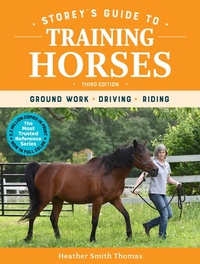
Storey's Guide to Training Horses, 3rd Edition
Ground Work, Driving, Riding
Published on 28. May 2019
448 pages
978-1-63586-122-8 (ISBN)
Description

Storey's Guide to Training Horses is a one-stop reference for every aspect of horse training, including a complete program for turning a shy and gangly foal into a calm, confident, well-balanced equine partner. Now with full-color photography, the third edition includes step-by-step guidance on all the essential training procedures for both English- and Western-style riding, including haltering and leading, saddling and mounting, and addresses the finer points of gaits, lightness, and collection. Best-selling author Heather Smith Thomas draws on her decades of equestrian experience to anticipate every situation that might arise and provide answers to managing all the potential challenges of training different types of horses.
More details
Other editions
Additional editions
Book
05/2019
Storey Publishing LLC
€24.00
Shipment within 3-4 weeks
Person
Heather Smith Thomas has written extensively on animal health care, authoring thousands of articles and 24 books on the subject. Her books include Storey's Guide to Raising Beef Cattle, Essential Guide to Calving, Getting Started with Beef & Dairy Cattle, The Cattle Health Handbook, The Horse Conformation Handbook, Storey's Guide to Raising Horses, Storey's Guide to Training Horses, and Stable Smarts. She raises cattle and horses on her family ranch in Salmon, Idaho.
Content
Preface
Introduction
1 Basic Safety Practices
Safety First - Safe Ground Handling - Safety when Riding
2 Horse Sense and Training Psychology
Understanding Horses - The Horse-Human Relationship - Training Principles - Training Aids - How to Avoid Conflict and Common Pitfalls
3 Handling and Training the Foal
Learning Begins with Imprinting - Imprinting Your Foal - Handling a Foal during the First Weeks - First Leading Lessons - Beginning Lessons in Foot Handling - Beginning Lessons in Tying - Grooming Lessons for Handling and Patience - Advanced Leading Lessons - Basic Lesson Planning - Avoid Spoiling the Foal - Dealing with Challening Personalities - Know the Foal's Limits and Abilities
4 Handling and Training the Weanling
Weaning a Foal - Train Consistently, Gently, and with Authority - Training Lessons for Routine Health Care - Life Lessons - Loving without Spoiling
5 The Yearling and the 2-Year-Old
Crash Course for an Unhandled Young Horse - Round-Pen Training - Leading Lessons for the Yearling and 2-Year-Old - Teaching a Horse to Back Up at Halter - Beginning Tying - Perfecting His Tying - Lessons in Blanketing - Continue the Leading Lessons - Longeing - Ponying the Young Horse
6 Ground Work before Riding
Bridling Beginners - Saddling Beginners - Maneuverability and Control
7 Bits and Their Uses
Snaffles - Curb Bits - The Pelham - The Double Bridle - Ensure Proper Fit - Choosing a Training Bit - The Importance of Good Hands - The Hackamore
8 Bitting and Driving
Bitting Ground Work - Bit Resistance - Training the Driving Horse and Pony - Selecting a Cart - Pulling Preparation - Pulling a Cart: First Lessons - Gradual Conditioning
9 First Mounted Lessons
Accustom the Horse to the Saddle - First Mounting - Moving Out - Stopping and Turning - Short Rides around the Pen - First Trotting Lessons - Don't Canter Yet - Nip Problems in the Bud
10 First Rides in the Open
Safety Precautions - Everything Is New and Different - Overcoming the Fear of Strange Obstacles - Shying - A Little Quiet Time - Riding along Roads
11 The Walk
How the Horse Moves - Training at the Walk - Teaching a Faster Walk - Calming the Excitable Horse
12 The Trot
How the Horse Moves - First Trotting Lessons for the Green Horse - The Jog - The Slow Trot - The Working (Medium) Trot - The Extended Trot - Walk-Trot Transitions - Change of Speed and Stride Length - Improving the Stop from a Trot - Trotting in Circles - The Most Versatile Gait
13 Lightness and Collection
What Is Collection? - First Lessons in Collection - Teaching a Collected Trot - Perfect Balance, Greater Agility - Collection at the Canter - Don't Overdo It
14 The Gallop, the Canter, and the Lope
How the Horse Moves at the Gallop - How to Ride the Gallop or Canter - Teaching the Green Horse - Working with Leads - Control of His Leads - The Flying Lead Change - Changing Leads on the Straightaway - Refine Your Cues - Don't Overdo It
15 Further Schooling
Fine-Tuning Your Communication - Teaching a Smooth Stop - Teaching the Horse to Neck-Rein - Turning on the Center - Turning on the Forehand - Reining and Pivoting - Teaching the Backup - Lateral Work - Opening a Gate from Horseback - Beginning Dressage - Beginning Jumping - Avoid Souring the Horse
16 Trailer Training
Load the Foal with His Mother - The Weanling or Yearling - Trailering the Adult Horse - The Reluctant or Spoiled Horse
17 Retraining the Spoiled Horse
The Pushy Horse - The Body Basher - The Hard-to-Catch Horse - The Confirmed Avoider - The Hard-to-Lead Horse - The Hard-to-Bridle Horse - The Hard-to-Saddle Horse - The Hard-to-Mount Horse - The Horse Who Won't Tie - The Biter - The Kicker - The Turnout Terror - The Barn-Sour Horse - The Horse Who Rushes Home - The Herd-Bound Horse - The Head Tosser - The Horse Who Resists the Bit - The Bolter - The Balker - The Rearer - The Bucker
Epilogue
Appendix A: Equine Anatomy
Appendix B: Gait Sequences
Glossary
Resources
Index
Metric Conversion Charts
Introduction
1 Basic Safety Practices
Safety First - Safe Ground Handling - Safety when Riding
2 Horse Sense and Training Psychology
Understanding Horses - The Horse-Human Relationship - Training Principles - Training Aids - How to Avoid Conflict and Common Pitfalls
3 Handling and Training the Foal
Learning Begins with Imprinting - Imprinting Your Foal - Handling a Foal during the First Weeks - First Leading Lessons - Beginning Lessons in Foot Handling - Beginning Lessons in Tying - Grooming Lessons for Handling and Patience - Advanced Leading Lessons - Basic Lesson Planning - Avoid Spoiling the Foal - Dealing with Challening Personalities - Know the Foal's Limits and Abilities
4 Handling and Training the Weanling
Weaning a Foal - Train Consistently, Gently, and with Authority - Training Lessons for Routine Health Care - Life Lessons - Loving without Spoiling
5 The Yearling and the 2-Year-Old
Crash Course for an Unhandled Young Horse - Round-Pen Training - Leading Lessons for the Yearling and 2-Year-Old - Teaching a Horse to Back Up at Halter - Beginning Tying - Perfecting His Tying - Lessons in Blanketing - Continue the Leading Lessons - Longeing - Ponying the Young Horse
6 Ground Work before Riding
Bridling Beginners - Saddling Beginners - Maneuverability and Control
7 Bits and Their Uses
Snaffles - Curb Bits - The Pelham - The Double Bridle - Ensure Proper Fit - Choosing a Training Bit - The Importance of Good Hands - The Hackamore
8 Bitting and Driving
Bitting Ground Work - Bit Resistance - Training the Driving Horse and Pony - Selecting a Cart - Pulling Preparation - Pulling a Cart: First Lessons - Gradual Conditioning
9 First Mounted Lessons
Accustom the Horse to the Saddle - First Mounting - Moving Out - Stopping and Turning - Short Rides around the Pen - First Trotting Lessons - Don't Canter Yet - Nip Problems in the Bud
10 First Rides in the Open
Safety Precautions - Everything Is New and Different - Overcoming the Fear of Strange Obstacles - Shying - A Little Quiet Time - Riding along Roads
11 The Walk
How the Horse Moves - Training at the Walk - Teaching a Faster Walk - Calming the Excitable Horse
12 The Trot
How the Horse Moves - First Trotting Lessons for the Green Horse - The Jog - The Slow Trot - The Working (Medium) Trot - The Extended Trot - Walk-Trot Transitions - Change of Speed and Stride Length - Improving the Stop from a Trot - Trotting in Circles - The Most Versatile Gait
13 Lightness and Collection
What Is Collection? - First Lessons in Collection - Teaching a Collected Trot - Perfect Balance, Greater Agility - Collection at the Canter - Don't Overdo It
14 The Gallop, the Canter, and the Lope
How the Horse Moves at the Gallop - How to Ride the Gallop or Canter - Teaching the Green Horse - Working with Leads - Control of His Leads - The Flying Lead Change - Changing Leads on the Straightaway - Refine Your Cues - Don't Overdo It
15 Further Schooling
Fine-Tuning Your Communication - Teaching a Smooth Stop - Teaching the Horse to Neck-Rein - Turning on the Center - Turning on the Forehand - Reining and Pivoting - Teaching the Backup - Lateral Work - Opening a Gate from Horseback - Beginning Dressage - Beginning Jumping - Avoid Souring the Horse
16 Trailer Training
Load the Foal with His Mother - The Weanling or Yearling - Trailering the Adult Horse - The Reluctant or Spoiled Horse
17 Retraining the Spoiled Horse
The Pushy Horse - The Body Basher - The Hard-to-Catch Horse - The Confirmed Avoider - The Hard-to-Lead Horse - The Hard-to-Bridle Horse - The Hard-to-Saddle Horse - The Hard-to-Mount Horse - The Horse Who Won't Tie - The Biter - The Kicker - The Turnout Terror - The Barn-Sour Horse - The Horse Who Rushes Home - The Herd-Bound Horse - The Head Tosser - The Horse Who Resists the Bit - The Bolter - The Balker - The Rearer - The Bucker
Epilogue
Appendix A: Equine Anatomy
Appendix B: Gait Sequences
Glossary
Resources
Index
Metric Conversion Charts
