

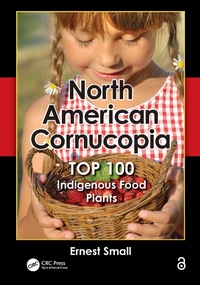
North American Cornucopia
Top 100 Indigenous Food Plants
Published on 23. September 2013
793 pages
978-1-000-21903-6 (ISBN)
Description

Many North American plants have characteristics that are especially promising as candidates for expanding our food supply and generating new economically competitive crops. This book is an informative analysis of the top 100 indigenous food plants of North America, focusing on those species that have achieved commercial success or have substantial market potential. The book's user-friendly format provides concise information on each plant. It examines the geography and ecology, history, economic and social importance, food and industrial uses, and the economic future of each crop.
Reviews / Votes
"... this handsome, scholarly reference describes 100 plants native to North America that have the greatest crop potential. ... Written in clear, accessible prose, this book will be useful to both scholars and general readers. Full-color illustrations include maps, drawings, and photos. ... Small's unique focus on each plant's potential as a major global crop makes this a singular and valuable work. ... Recommended."-J. S. Whelan, Harvard Medical School in CHOICE Magazine, June 2014
"This is large book of 743 pages and will be useful to those interested in edible landscapes, regional cuisine, and Indian lore. The book is well written and interesting and will become a bible among those hardy souls interested in culinary experimentation and the development of new crops"
-Reviewed by Jules Janick, Purdue University, USA
"Who is this book for? Firstly, if you are a bibliophile who enjoys rich books with well researched information, this book is for you. Academically, Small notes early on that the work is not intended to be a textbook, but rather a complement to students taking economic botany, agriculture and resource management courses. Still, the comprehensive references are useful as a starting point for any literature review of these subjects. For those investigating or curious about developing new crops, this is a book to guide you into what has potential. Wildcrafters and their ilk will of course find utility. If you are a natural history interpreter, this book is a treasure trove of information for public engagement. And, if you are a chef, or even a menuwriter for restaurants with locally grown foods, this should both occupy your bookshelf and be used frequently. It ranks in my top ten of plant reference books ..."
-Daniel Mosquin, Research Manager, UBC Botanical Garden in The Canadian Botanical Association Bulletin
"In my opinion, anything written by Ernest Small deserves to be read; the man's scholarship is extraordinary."
-Neil A. Harriman Univeristy of Wisconsin-Oshkosh in Economic Botany
More details
Language
English
Place of publication
London
United Kingdom
Publishing group
Taylor & Francis Ltd
Target group
Professional and scholarly
Product notice
Reflowable
File size
269,44 MB
ISBN-13
978-1-000-21903-6 (9781000219036)
Copyright in bibliographic data and cover images is held by Nielsen Book Services Limited or by the publishers or by their respective licensors: all rights reserved.
Schweitzer Classification
Other editions
Additional editions
Book
09/2013
1st Edition
CRC Press
€244.50
Shipment within 15-20 days
Person
Dr. Ernest Small received a doctorate in plant evolution from the University of California at Los Angeles in 1969 and has since been employed with the Research Branch of Agriculture and Agri- Food Canada, where he presently holds the status of Principal Research Scientist. He is the author of 13 previous books, five of which received or were nominated for major awards. He has also authored more than 300 scientific publications on plants. Dr. Small's career has included dozens of appearances as an expert botanical witness in court cases, acting as an adviser to national governments, presenting numerous invited university and professional association lectures, supervising postgraduate students at various universities, participating in international societies and committees, journal editing, and media interviews.
Content
Introduction. Acerola. American Chestnut. American Ginseng. American Persimmon. Anise Hyssop. Aronia. Azolla (Mosquito Ferns). Bergamot. Bilberry. Black Walnut. Blackberries and Dewberries. Blue Honeysuckle. Blue Waxweed. Blueberries. Buffaloberries. Buffalo Gourd. Butternut. Cabbage Palmetto. Cactus Pear. California Bay. Camas. Canada Garlic. Cattails. Cherries: North American Species. Chinkapin. Chive. Chufa. Cloudberry. Coast Tarweed. Cranberry. (American) Cranberry Bush (Highbush Cranberry). Crowberry. Devil's Claw. Duck Potato. Dwarf Cape Gooseberry. Dwarf Glasswort. Elder. Epazote. Evening Primrose. Fiddlehead Fern (Ostrich Fern). Golden Chia. Golden Currant. Grapes. Groundnut (Apios). Hawthorns (Including Mayhaws). Hazelnuts. Hickories. Hog Peanut. Honewort. Hop. Huckleberries. Jerusalem Artichoke. Jojoba. Joshua Tree. Juniper. Labrador Tea. Lingonberry. May-Apple. Maypop. Mesquite. Mexican Oregano. Mountain Mint. Nettle (Stinging Nettle). Nodding Onion. Northern Gooseberry. Ogechee Lime. Oregon Grape. Paper Birch. Paradise Tree. Pawpaw. Pecan. Pinon Pine. Plums: North American Species. Pokeweed. Prairie Turnip. Raspberries. Red Mulberry. Reed (Common). Roses. Saguaro. Salal. Salmonberry. Saskatoon. Sassafras. Saw Palmetto. Scotch Lovage. Scurvy Grass. Sea Grape. Spicebush. Squash (Cucurbita pepo Squash). Strawberries: North American Species. Sugar Maple. Sunflower. Sweet Gale. Tepary Bean. Wild Leek (Ramp). Wild Rice. Winter Purslane. Yampah. Yerba Buena. Appendix. Index of Common Names. Index of Scientific Names. Index of Culinary Names.
