

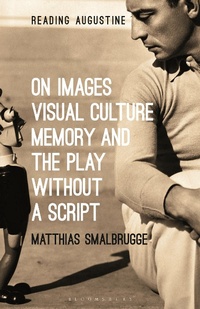
On Images, Visual Culture, Memory and the Play without a Script
1st Edition
Published on 30. December 2021
184 pages
978-1-5013-5888-3 (ISBN)
Description

Matthias Smalbrugge compares modern images to plays without a script: while they appear to refer to a deeper identity or reality, it is ultimately the image itself that truly matters. He argues that our modern society of images is the product of a destructive tendency in the Christian notion of the image in general, and Augustine of Hippo's in particular. This insight enables him to decode our current 'scripts' of image.
As we live in an increasingly visual culture, we are constantly confronted with images that seem to exist without a deeper identity or reality - but did this referential character really get lost over time? Smalbrugge first explores the roots of the modern image by analysing imagery, what it represents, and its moral state within the framework of Platonic philosophy. He then moves to the Augustinian heritage, in particular the Soliloquies, the Confessions and the Trinity, where he finds valuable insights into images and memory. He explores within the trinitarian framework the crossroads of a theology of grace and a theology based on Neoplatonic views. Smalbrugge ultimately answers two questions: what happened to the referential character of the image, and can it be recovered?
As we live in an increasingly visual culture, we are constantly confronted with images that seem to exist without a deeper identity or reality - but did this referential character really get lost over time? Smalbrugge first explores the roots of the modern image by analysing imagery, what it represents, and its moral state within the framework of Platonic philosophy. He then moves to the Augustinian heritage, in particular the Soliloquies, the Confessions and the Trinity, where he finds valuable insights into images and memory. He explores within the trinitarian framework the crossroads of a theology of grace and a theology based on Neoplatonic views. Smalbrugge ultimately answers two questions: what happened to the referential character of the image, and can it be recovered?
Reviews / Votes
In this volume, Matthias Smalbrugge argues convincingly that we have lost track of the fundamentally referential nature of images. That images are referential at best, Smalbrugge argues, is demonstrated by Augustine's doctrine of mankind's fall. By stressing the dogma that sin broke the image of God that mankind possessed in paradise, Augustine focused on dissimilarity, or deconstruction, on an epistemological, moral and ontological level. In the time since Augustine, however, the West has forgotten the notion of the constructive relation of similarity that binds an image and its original. Consequently, we approach images as realities that stand on their own and have lost sight of the originals that stand behind them. This essay - erudite, eloquent, and thoroughly researched - is highly recommended both for specialists in Augustine and ancient thought as well as for anyone who wants to reflect on the history of Western thought and contemporary culture. It invites us to imagine, to hold our images up to the light, and to see them for what they really are.More details
Series
Edition
1. Auflage
Language
English
Place of publication
New York
United States
Publishing group
Bloomsbury Publishing PLC (Digital)
ISBN-13
978-1-5013-5888-3 (9781501358883)
Copyright in bibliographic data and cover images is held by Nielsen Book Services Limited or by the publishers or by their respective licensors: all rights reserved.
Schweitzer Classification
Other editions
Additional editions
Matthias Smalbrugge
On Images, Visual Culture, Memory and the Play without a Script
Book
01/2022
Bloomsbury Academic USA
€39.40
Shipment within 15-20 days
Person
Matthias Smalbrugge is Professor of European Culture and Christianity at Vrije Universiteit Amsterdam, the Netherlands.
Content
1. Introduction: A Play without a Script
2. The Image as a Shadow: Plato's Cave
3. Augustine and the broader focus on Image
4. The Different Forms of Similarity
5. De Trinitate
6. The Final Question: It's all about Language
Conclusion
Bibliography
Index
2. The Image as a Shadow: Plato's Cave
3. Augustine and the broader focus on Image
4. The Different Forms of Similarity
5. De Trinitate
6. The Final Question: It's all about Language
Conclusion
Bibliography
Index
