

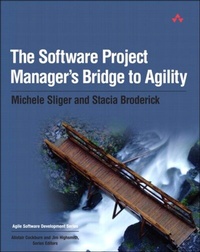
Software Project Manager's Bridge to Agility, The
1st Edition
Published on 19. May 2008
384 pages
978-0-13-270259-1 (ISBN)
Description

When software development teams move to agile methods, experienced project managers often struggle-doubtful about the new approach and uncertain about their new roles and responsibilities. In this book, two long-time certified Project Management Professionals (PMPRs) and Scrum trainers have built a bridge to this dynamic new paradigm. They show experienced project managers how to successfully transition to agile by refocusing on facilitation and collaboration, not "command and control."
The authors begin by explaining how agile works: how it differs from traditional "plan-driven" methodologies, the benefits it promises, and the real-world results it delivers. Next, they systematically map the Project Management Institute's classic, methodology-independent techniques and terminology to agile practices. They cover both process and project lifecycles and carefully address vital issues ranging from scope and time to cost management and stakeholder communication. Finally, drawing on their own extensive personal experience, they put a human face on your personal transition to agile--covering the emotional challenges, personal values, and key leadership traits you'll need to succeed.
Coverage includes
Relating the PMBOKR Guide ideals to agile practices: similarities, overlaps, and differences
Understanding the role and value of agile techniques such as iteration/release planning and retrospectives
Using agile techniques to systematically and continually reduce risk
Implementing quality assurance (QA) where it belongs: in analysis, design, defect prevention, and continuous improvement
Learning to trust your teams and listen for their discoveries
Procuring, purchasing, and contracting for software in agile, collaborative environments
Avoiding the common mistakes software teams make in transitioning to agile
Coordinating with project management offices and non-agile teams
"Selling" agile within your teams and throughout your organization
For every project manager who wants to become more agile.
Part I An Agile Overview 7
Chapter 1 What is "Agile"? 9
Chapter 2 Mapping from the PMBOKR Guide to Agile 25
Chapter 3 The Agile Project Lifecycle in Detail 37
Part II The Bridge: Relating PMBOKR Guide Practices to Agile Practices 49
Chapter 4 Integration Management 51
Chapter 5 Scope Management 67
Chapter 6 Time Management 83
Chapter 7 Cost Management 111
Chapter 8 Quality Management 129
Chapter 9 Human Resources Management 143
Chapter 10 Communications Management 159
Chapter 11 Risk Management 177
Chapter 12 Procurement Management 197
Part III Crossing the Bridge to Agile 215
Chapter 13 How Will My Responsibilities Change? 217
Chapter 14 How Will I Work with Other Teams Who Aren't Agile? 233
Chapter 15 How Can a Project Management Office Support Agile? 249
Chapter 16 Selling the Benefits of Agile 265
Chapter 17 Common Mistakes 285
Appendix A Agile Methodologies 295
Appendix B Agile Artifacts 301
Glossary 321
Bibliography 327
Index 333
The authors begin by explaining how agile works: how it differs from traditional "plan-driven" methodologies, the benefits it promises, and the real-world results it delivers. Next, they systematically map the Project Management Institute's classic, methodology-independent techniques and terminology to agile practices. They cover both process and project lifecycles and carefully address vital issues ranging from scope and time to cost management and stakeholder communication. Finally, drawing on their own extensive personal experience, they put a human face on your personal transition to agile--covering the emotional challenges, personal values, and key leadership traits you'll need to succeed.
Coverage includes
Relating the PMBOKR Guide ideals to agile practices: similarities, overlaps, and differences
Understanding the role and value of agile techniques such as iteration/release planning and retrospectives
Using agile techniques to systematically and continually reduce risk
Implementing quality assurance (QA) where it belongs: in analysis, design, defect prevention, and continuous improvement
Learning to trust your teams and listen for their discoveries
Procuring, purchasing, and contracting for software in agile, collaborative environments
Avoiding the common mistakes software teams make in transitioning to agile
Coordinating with project management offices and non-agile teams
"Selling" agile within your teams and throughout your organization
For every project manager who wants to become more agile.
Part I An Agile Overview 7
Chapter 1 What is "Agile"? 9
Chapter 2 Mapping from the PMBOKR Guide to Agile 25
Chapter 3 The Agile Project Lifecycle in Detail 37
Part II The Bridge: Relating PMBOKR Guide Practices to Agile Practices 49
Chapter 4 Integration Management 51
Chapter 5 Scope Management 67
Chapter 6 Time Management 83
Chapter 7 Cost Management 111
Chapter 8 Quality Management 129
Chapter 9 Human Resources Management 143
Chapter 10 Communications Management 159
Chapter 11 Risk Management 177
Chapter 12 Procurement Management 197
Part III Crossing the Bridge to Agile 215
Chapter 13 How Will My Responsibilities Change? 217
Chapter 14 How Will I Work with Other Teams Who Aren't Agile? 233
Chapter 15 How Can a Project Management Office Support Agile? 249
Chapter 16 Selling the Benefits of Agile 265
Chapter 17 Common Mistakes 285
Appendix A Agile Methodologies 295
Appendix B Agile Artifacts 301
Glossary 321
Bibliography 327
Index 333
All prices
More details
Edition
1. Auflage
Language
English
Place of publication
Boston
United States
Publishing group
Pearson Education (US)
Target group
College/higher education
File size
6,30 MB
ISBN-13
978-0-13-270259-1 (9780132702591)
Copyright in bibliographic data and cover images is held by Nielsen Book Services Limited or by the publishers or by their respective licensors: all rights reserved.
Schweitzer Classification
Other editions
Additional editions
Michele Sliger | Stacia Broderick
Software Project Manager's Bridge to Agility, The
Book
05/2008
Addison Wesley
€52.00
Shipment within 10-20 days
Persons
Michele Sliger has extensive experience in agile software development, having transitioned to Scrum and XP practices in 2000 after starting her career following the traditional waterfall approach. A self-described "bridge builder," her passion lies in helping those in traditional software development environments cross the bridge to agility. Michele is the owner of Sliger Consulting Inc., where she consults with businesses ranging from small startups to Fortune 500 companies, helping teams with their agile adoption, and helping organizations prepare for the changes that agile adoption brings. A frequent conference speaker and regular contributor to software industry publications, Michele is a strong advocate of agile principles and value-driven development practices. She is a certified Project Management Professional (PMPR) and a Certified Scrum Trainer (CST). She has an undergraduate MIS degree and an MBA. When not working, Michele volunteers as a grief facilitator for teens at Judi's House, a nonprofit dedicated to helping children learn how to cope with the loss of a loved one.
Stacia Broderick has worked as a project manager for fifteen years, the last eight in software development. She was fortunate to be helped across the bridge under the mentorship of Ken Schwaber while working for Primavera Systems in 2003 and ever since has helped hundreds of teams the world over embrace the principles of and transition to an agile way of creating products. Stacia founded her company, AgileEvolution, Inc., in 2006 based on the belief that agile practices present a humane, logical way for teams and companies to deliver products. Stacia is a Certified Scrum Trainer as well as a PMPR, a mix that proves valuable when assisting organizations' transition from traditional to modern practices. Stacia enjoys running, playing classical violin, and spending time with her family.
Stacia Broderick has worked as a project manager for fifteen years, the last eight in software development. She was fortunate to be helped across the bridge under the mentorship of Ken Schwaber while working for Primavera Systems in 2003 and ever since has helped hundreds of teams the world over embrace the principles of and transition to an agile way of creating products. Stacia founded her company, AgileEvolution, Inc., in 2006 based on the belief that agile practices present a humane, logical way for teams and companies to deliver products. Stacia is a Certified Scrum Trainer as well as a PMPR, a mix that proves valuable when assisting organizations' transition from traditional to modern practices. Stacia enjoys running, playing classical violin, and spending time with her family.
Content
Preface xvii
Acknowledgments xxiii
About the Authors xxv
Introduction 1
Part I An Agile Overview 7
Chapter 1 What is "Agile"? 9
Chapter 2 Mapping from the PMBOKR Guide to Agile 25
Chapter 3 The Agile Project Lifecycle in Detail 37
Part II The Bridge: Relating PMBOKR Guide Practices to Agile Practices 49
Chapter 4 Integration Management 51
Chapter 5 Scope Management 67
Chapter 6 Time Management 83
Chapter 7 Cost Management 111
Chapter 8 Quality Management 129
Chapter 9 Human Resources Management 143
Chapter 10 Communications Management 159
Chapter 11 Risk Management 177
Chapter 12 Procurement Management 197
Part III Crossing the Bridge to Agile 215
Chapter 13 How Will My Responsibilities Change? 217
Chapter 14 How Will I Work with Other Teams Who Aren't Agile? 233
Chapter 15 How Can a Project Management Office Support Agile? 249
Chapter 16 Selling the Benefits of Agile 265
Chapter 17 Common Mistakes 285
Appendix A Agile Methodologies 295
Appendix B Agile Artifacts 301
Glossary 321
Bibliography 327
Index 333
Acknowledgments xxiii
About the Authors xxv
Introduction 1
Part I An Agile Overview 7
Chapter 1 What is "Agile"? 9
Chapter 2 Mapping from the PMBOKR Guide to Agile 25
Chapter 3 The Agile Project Lifecycle in Detail 37
Part II The Bridge: Relating PMBOKR Guide Practices to Agile Practices 49
Chapter 4 Integration Management 51
Chapter 5 Scope Management 67
Chapter 6 Time Management 83
Chapter 7 Cost Management 111
Chapter 8 Quality Management 129
Chapter 9 Human Resources Management 143
Chapter 10 Communications Management 159
Chapter 11 Risk Management 177
Chapter 12 Procurement Management 197
Part III Crossing the Bridge to Agile 215
Chapter 13 How Will My Responsibilities Change? 217
Chapter 14 How Will I Work with Other Teams Who Aren't Agile? 233
Chapter 15 How Can a Project Management Office Support Agile? 249
Chapter 16 Selling the Benefits of Agile 265
Chapter 17 Common Mistakes 285
Appendix A Agile Methodologies 295
Appendix B Agile Artifacts 301
Glossary 321
Bibliography 327
Index 333
