

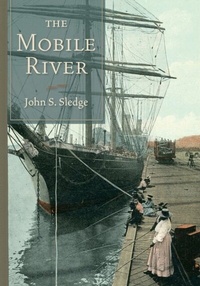
The Mobile River
Description

A historical saga of the river and the colorful characters that inhabit its shores and basin
The Mobile River presents the first-ever narrative history of this important American watercourse. Inspired by the venerable Rivers of America series, John S. Sledge weaves chronological and thematic elements with personal experiences and more than sixty color and black-and-white images for a rich and rewarding read.
The Mobile River appears on the map full and wide at Nannahubba, fifty miles from the coast, where the Alabama and the Tombigbee rivers meet, but because it empties their waters into Mobile Bay and subsequently the Gulf of Mexico, it usurps them and their multitudinous tributaries. If all of the rivers, creeks, streams, bayous, bogues, branches, swamps, sloughs, rivulets, and trickles that ultimately pour into Mobile Bay are factored into the equation, the Mobile assumes awesome importance and becomes the outlet for the sixth largest river basin in the United States and the largest emptying into the Gulf east of the Mississippi River.
Previous historians have paid copious attention to the other rivers that make up the Mobile's basin, but the namesake stream along with its majestic delta and beautiful bay have been strangely neglected. In an attempt to redress the imbalance, Sledge launches this book with a first-person river tour by "haul-ass boat." Along the way he highlights the four diverse personalities of this short stream-upland hardwood forest, upper swamp, lower swamp, and harbor.
In the historical saga that follows, readers learn about colonial forts, international treaties, bloody massacres, and thundering naval battles, as well as what the Mobile River's inhabitants ate and how they dressed through time. A barge load of colorful characters is introduced, including Indian warriors, French diplomats, British cartographers, Spanish tavern keepers, Creole women, steamboat captains, African slaves, Civil War generals and admirals, Apache prisoners, hydraulic engineers, stevedores, banana importers, Rosie Riveters, and even a few river rats subsisting off the grid-all of them actors in a uniquely American pageant of conflict, struggle, and endless opportunity along a river that gave a city its name.
All prices
More details
Other editions
Additional editions
Person
John S. Sledge is senior architectural historian for the Mobile Historic Development Commission and a member of the National Book Critics Circle. He holds a bachelor's in history and Spanish from Auburn University and a master's in historic preservation from Middle Tennessee State University. Sledge is the author of three books on Mobile's historic architecture, as well as a collection of literary criticism, Southern Bound: A Gulf Coast Journalist on Books, Writers, and Literary Pilgrimages of the Heart, published by the University of South Carolina Press. He and his wife, Lynn, live in Fairhope, Alabama, half a mile from Mobile Bay.
Content
- Intro
- Cover
- Half title
- Title
- Copyright
- Dedication
- Contents
- List of Illustrations
- Acknowledgments
- Prologue: Downriver with Cap'n Joe
- Introduction: "A fine, large river"
- Part 1. Coming Ahead
- 1. Indian Stream to Entrada Española
- 2. Colonial Days and Ways
- 3. American Dawn
- 4. Calliope Song
- 5. Rebel River
- 6. Rebel Defeat
- 7. "Mobile Harbor: What shall we do with it?"
- 8. Modern Port, Beleaguered River
- Part 2. Currents
- 9. "Everything down there's big enough to kill you"
- 10. Pleasure and Peril
- 11. Diverse Legacies
- Epilogue: Elegy for a Small Shipyard
- Abbreviations
- Notes
- Bibliography
- Index
- About the Author

