

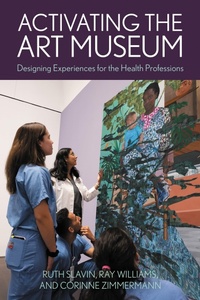
Activating the Art Museum
Designing Experiences for the Health Professions
1st Edition
Published on 12. May 2023
216 pages
979-8-7651-9313-6 (ISBN)
Description

Activating the Art Museum: Designing Experiences for the Health Professions, the first book on this subject, offers an argument for collaboration between educators in art museums and healthcare professionals. Through descriptions of teaching practices, the authors bring us into the galleries along with participants to demonstrate the value of art museums in supporting humanism in healthcare for the benefit of both practitioners and their patients.
It includes advice on selecting meaningful and provocative works of art; models of responsive workshop design; compelling descriptions of gallery experiences; references to supporting medical literature; and the voices of medical students, physicians, and other health professionals.
Chapters address key topics including tolerating ambiguity; empathy; interprofessional teamwork; confronting bias; the power of story; caring for the spirit; wellbeing and mindfulness.
This inspiring and practical resource, written by three respected museum educators, is grounded in their experience with multiple individual and institutional partnerships and in designing hundreds of gallery experiences for healthcare trainees and practitioners. This book will be valuable to educators, leaders, and policy-makers in museums and health care. These readers, as well as general audiences with an interest in art and health will be inspired by the potential of art museums to activate our empathetic imaginations and remind us of our shared humanity.
It includes advice on selecting meaningful and provocative works of art; models of responsive workshop design; compelling descriptions of gallery experiences; references to supporting medical literature; and the voices of medical students, physicians, and other health professionals.
Chapters address key topics including tolerating ambiguity; empathy; interprofessional teamwork; confronting bias; the power of story; caring for the spirit; wellbeing and mindfulness.
This inspiring and practical resource, written by three respected museum educators, is grounded in their experience with multiple individual and institutional partnerships and in designing hundreds of gallery experiences for healthcare trainees and practitioners. This book will be valuable to educators, leaders, and policy-makers in museums and health care. These readers, as well as general audiences with an interest in art and health will be inspired by the potential of art museums to activate our empathetic imaginations and remind us of our shared humanity.
More details
Other editions
Additional editions
Ruth Slavin | Ray Williams | Corinne Zimmermann
Activating the Art Museum
Designing Experiences for the Health Professions
Book
05/2023
American Alliance of Museums
€53.50
Shipment within 3-4 weeks
Persons
Ruth Slavin has thirty years of leadership experience in art museums, most recently as deputy director for education at the University of Michigan Museum of Art (UMMA) where she initiated partnerships with faculty in medicine, nursing and social work. Since 2009, she has designed gallery experiences, workshops, and elective courses with and for physicians, residents, and medical students on topics including empathy, complexity and ambiguity in medicine, personal narratives in medical education, and mindfulness.
Ray Williams has established robust partnerships with medical educators and clinicians as the director of education at both the Harvard Art Museums and, since 2012, the Blanton Museum of Art at The University of Texas at Austin. He participated in the American Academy of Medical College's committee on integrating the arts and humanities in medical education and has consulted to the Kern National Network for Caring and Character in Medicine. His work with health professionals in museum settings has focused on interprofessional teamwork, empathic communication, religion and spirituality, and wellbeing. He has a particular commitment to supporting clinicians dealing with grief and loss.
Corinne Zimmermann has been a museum educator for thirty years. Through Corinne Zimmermann Consultancy, she custom designs trainings and workshops for the health professions and business organizations focused on improving communication and team dynamics; cultivating leadership skills and empathic capacities; mitigating biases; and promoting well-being. She is a founding co-director of the Harvard Macy Institute's Art Museum-based Health Professions Education Fellowship and co-founder of VTS@Work, which offers interprofessional training and certification in the Visual Thinking Strategies.
Ray Williams has established robust partnerships with medical educators and clinicians as the director of education at both the Harvard Art Museums and, since 2012, the Blanton Museum of Art at The University of Texas at Austin. He participated in the American Academy of Medical College's committee on integrating the arts and humanities in medical education and has consulted to the Kern National Network for Caring and Character in Medicine. His work with health professionals in museum settings has focused on interprofessional teamwork, empathic communication, religion and spirituality, and wellbeing. He has a particular commitment to supporting clinicians dealing with grief and loss.
Corinne Zimmermann has been a museum educator for thirty years. Through Corinne Zimmermann Consultancy, she custom designs trainings and workshops for the health professions and business organizations focused on improving communication and team dynamics; cultivating leadership skills and empathic capacities; mitigating biases; and promoting well-being. She is a founding co-director of the Harvard Macy Institute's Art Museum-based Health Professions Education Fellowship and co-founder of VTS@Work, which offers interprofessional training and certification in the Visual Thinking Strategies.
Content
List of Figures
Acknowledgements
Foreword: Lisa Howley, American Association of Medical Colleges
Preface
Chapter 1: Why Art Museums?
Chapter 2: Thinking in the Art Museum
Chapter 3: Cultivating Empathy
Chapter 4: The Power of Story
Chapter 5: Strengthening Interprofessional Teams
Chapter 6: Confronting Bias
Chapter 7: Caring for the Spirit
Chapter 8: Nurturing Wellness
Chapter 9: Practicing Mindfulness
Chapter 10: Building a Community of Practice
Afterword: Kaywin Feldman, National Gallery of Art
Recommended Reading
About the Authors
Acknowledgements
Foreword: Lisa Howley, American Association of Medical Colleges
Preface
Chapter 1: Why Art Museums?
Chapter 2: Thinking in the Art Museum
Chapter 3: Cultivating Empathy
Chapter 4: The Power of Story
Chapter 5: Strengthening Interprofessional Teams
Chapter 6: Confronting Bias
Chapter 7: Caring for the Spirit
Chapter 8: Nurturing Wellness
Chapter 9: Practicing Mindfulness
Chapter 10: Building a Community of Practice
Afterword: Kaywin Feldman, National Gallery of Art
Recommended Reading
About the Authors
