

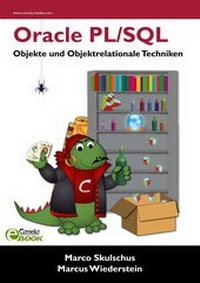
Oracle PL/SQL
Objekte und objektrelationale Techniken
1st Edition
Published in May 2011
200 pages
978-3-939701-48-4 (ISBN)
Description

Die Oracle 11g-Datenbank ist gemeinhin als relationale Datenbank bekannt. Sie bietet jedoch auch eine umfangreiche Syntax für die Erstellung von Objekten und die Nutzung von objektorientierten Techniken und ist damit auch eine objektrelationale Datenbank. Dieses Buch zeigt PL/SQL-Programmierern, wie sie Objekte erstellen und in SQL und PL/SQL nutzen können.
All prices
More details
Other editions
Additional editions
Book
05/2011
1st Edition
Comelio
€24.95
Shipment within 10-20 days
Persons
Marco Skulschus studierte Ökonomie in Wuppertal und Paris und setzt im Rahmen seiner Arbeit.NET und Java sowie XML für das Datenbanksystem Oracle ein. Er arbeitet als Dozent und Projektleiter für Business Intelligence-Anwendungen und betriebliche Software. Marcus Wiederstein studierte Elektrotechnik in Bochum und Dortmund und ist verantwortlich für die Durchführung von Projekten im Bereich Systemintegration und Datenbanken (Sicherheit, Hochverfügbarkeit, Datenintegration). Zusammen haben sie eine Reihe von Büchern zu Datenbanken (Oracle und MS SQL Server) sowie zu XML geschrieben.
Content
1 - Inhaltsverzeichnis [Seite 6]
2 - Vorwort [Seite 10]
3 - 1. Einführung [Seite 16]
3.1 - 1. 1. Beispieldatenbank [Seite 16]
3.1.1 - 1. 1. 1. Entitäten [Seite 16]
3.1.2 - 1. 1. 2. Tabellen und Beziehungen [Seite 17]
3.2 - 1. 2. Einrichtung der Beispiel-Datenbank [Seite 19]
3.2.1 - 1. 2. 1. Dateien [Seite 20]
3.2.2 - 1. 2. 2. Tabellen und Daten aufspielen [Seite 20]
3.3 - 1. 3. Allgemeine Konzepte [Seite 22]
3.3.1 - 1. 3. 1. Überblick zur Objektorientierung [Seite 23]
3.3.2 - 1. 3. 2. Relationales Mapping mit PL/SQL [Seite 35]
3.3.3 - 1. 3. 3. Objektrelationalität [Seite 41]
4 - 2. Objekte für PL/SQL und die DB [Seite 57]
4.1 - 2. 1. Einleitung [Seite 57]
4.1.1 - 2. 1. 1. Grundprinzipien von Objekttypen und Objekten [Seite 58]
4.1.2 - 2. 1. 2. Definition von Objekttypen [Seite 64]
4.2 - 2. 2. Objekte in der Datenbank [Seite 68]
4.2.1 - 2. 2. 1. Erstellung eines Objekttyps [Seite 69]
4.2.2 - 2. 2. 2. Objekte und SQL-Anweisungen [Seite 72]
4.2.3 - 2. 2. 3. Objekte in PL/SQL [Seite 76]
4.2.4 - 2. 2. 4. Methoden von Objekten [Seite 78]
5 - 3. Vererbung [Seite 93]
5.1 - 3. 1. Vererbungshierarchien bei Objekttypen [Seite 93]
5.1.1 - 3. 1. 1. Einfache Vererbungsstruktur [Seite 94]
5.1.2 - 3. 1. 2. Überschreiben von Methoden [Seite 96]
5.1.3 - 3. 1. 3. Ersetzungsprinzip und Dynamische Bindung [Seite 102]
5.1.4 - 3. 1. 4. Überladung [Seite 106]
5.1.5 - 3. 1. 5. Vererbung verhindern [Seite 108]
5.2 - 3. 2. Abstraktion [Seite 109]
5.2.1 - 3. 2. 1. Prinzip der Abstraktion [Seite 109]
5.2.2 - 3. 2. 2. Ersetzungsprinzip bei Abstraktion [Seite 113]
5.3 - 3. 3. Tabellen und Vererbung [Seite 116]
5.3.1 - 3. 3. 1. Ersetzungsprinzip bei Tabellen [Seite 117]
5.3.2 - 3. 3. 2. Ersetzbarkeit kontrollieren [Seite 120]
5.3.3 - 3. 3. 3. Wichtige Funktionen [Seite 122]
6 - 4. Objekte und Collections [Seite 126]
6.1 - 4. 1. Collections mit Objekttypen erstellen [Seite 126]
6.1.1 - 4. 1. 1. Einsatz von Varrays [Seite 127]
6.1.2 - 4. 1. 2. Einsatz von verschachtelten Tabellen [Seite 132]
6.2 - 4. 2. Einsatz von Collections in Tabellen [Seite 133]
6.2.1 - 4. 2. 1. Tabellen mit Collection-Typen [Seite 133]
6.2.2 - 4. 2. 2. Collections mit primitiven Datentyp [Seite 137]
6.2.3 - 4. 2. 3. DML-Operationen [Seite 138]
6.3 - 4. 3. Collections und Objekte in PL/SQL [Seite 141]
6.3.1 - 4. 3. 1. Einsatz von Collections und Cursorn [Seite 141]
6.3.2 - 4. 3. 2. Verschachtelte Tabellen [Seite 143]
6.3.3 - 4. 3. 3. Collections [Seite 144]
6.3.4 - 4. 3. 4. Verschachtelte Strukturen [Seite 146]
7 - 5. Verwaltung von Objektstrukturen [Seite 152]
7.1 - 5. 1. Berechtigungen und Sicherheit [Seite 152]
7.1.1 - 5. 1. 1. System-Rechte für Objekttypen [Seite 152]
7.1.2 - 5. 1. 2. Schema-Rechte für Objekttypen [Seite 153]
7.1.3 - 5. 1. 3. Beispiele [Seite 154]
7.2 - 5. 2. Allgemeine Verwaltung [Seite 157]
7.2.1 - 5. 2. 1. Abhängigkeiten [Seite 157]
7.2.2 - 5. 2. 2. Synonyme [Seite 164]
7.2.3 - 5. 2. 3. Systemsichten für Objekte [Seite 166]
8 - 6. Objekte und XML-Einsatz [Seite 175]
8.1 - 6. 1. XML Schema [Seite 176]
8.1.1 - 6. 1. 1. Übersicht [Seite 176]
8.1.2 - 6. 1. 2. Globale/Lokale Elemente und Attribute [Seite 176]
8.1.3 - 6. 1. 3. Datentypen [Seite 183]
8.1.4 - 6. 1. 4. Globale komplexe Typen [Seite 186]
8.2 - 6. 2. Verwendung von XML Schema in Oracle [Seite 189]
8.2.1 - 6. 2. 1. XML Schema registrieren [Seite 189]
8.2.2 - 6. 2. 2. Objekttypen und XML Schema generieren [Seite 193]
8.3 - 6. 3. Relationale Daten in XML [Seite 203]
8.3.1 - 6. 3. 1. Einsatz von Objekt- und Tabellentypen [Seite 204]
8.3.2 - 6. 3. 2. XML-Dokumentvorgaben [Seite 208]
9 - 7. Object Views und OR-Mapping [Seite 211]
9.1 - 7. 1. Object Views und ihr Einsatz [Seite 211]
9.1.1 - 7. 1. 1. Allgemeine Vorgehensweise [Seite 212]
9.1.2 - 7. 1. 2. Verschachtelte Strukturen [Seite 215]
9.2 - 7. 2. Hierarchien und Beziehungen [Seite 219]
9.2.1 - 7. 2. 1. Einstufige Hierarchien mit Collections [Seite 219]
9.2.2 - 7. 2. 2. Mehrstufige Hierarchie mit und ohne Collections [Seite 222]
9.2.3 - 7. 2. 3. Beziehungen [Seite 230]
9.3 - 7. 3. Arbeit mit Objekt-Sichten [Seite 237]
9.3.1 - 7. 3. 1. Schlüssel in Sichten [Seite 237]
9.3.2 - 7. 3. 2. NULL-Werte [Seite 239]
9.3.3 - 7. 3. 3. Referenzen [Seite 242]
9.3.4 - 7. 3. 4. Vererbungshierarchien und Sichten [Seite 245]
9.3.5 - 7. 3. 5. Datenmanipulation über Sichten [Seite 254]
10 - Index [Seite 259]
2 - Vorwort [Seite 10]
3 - 1. Einführung [Seite 16]
3.1 - 1. 1. Beispieldatenbank [Seite 16]
3.1.1 - 1. 1. 1. Entitäten [Seite 16]
3.1.2 - 1. 1. 2. Tabellen und Beziehungen [Seite 17]
3.2 - 1. 2. Einrichtung der Beispiel-Datenbank [Seite 19]
3.2.1 - 1. 2. 1. Dateien [Seite 20]
3.2.2 - 1. 2. 2. Tabellen und Daten aufspielen [Seite 20]
3.3 - 1. 3. Allgemeine Konzepte [Seite 22]
3.3.1 - 1. 3. 1. Überblick zur Objektorientierung [Seite 23]
3.3.2 - 1. 3. 2. Relationales Mapping mit PL/SQL [Seite 35]
3.3.3 - 1. 3. 3. Objektrelationalität [Seite 41]
4 - 2. Objekte für PL/SQL und die DB [Seite 57]
4.1 - 2. 1. Einleitung [Seite 57]
4.1.1 - 2. 1. 1. Grundprinzipien von Objekttypen und Objekten [Seite 58]
4.1.2 - 2. 1. 2. Definition von Objekttypen [Seite 64]
4.2 - 2. 2. Objekte in der Datenbank [Seite 68]
4.2.1 - 2. 2. 1. Erstellung eines Objekttyps [Seite 69]
4.2.2 - 2. 2. 2. Objekte und SQL-Anweisungen [Seite 72]
4.2.3 - 2. 2. 3. Objekte in PL/SQL [Seite 76]
4.2.4 - 2. 2. 4. Methoden von Objekten [Seite 78]
5 - 3. Vererbung [Seite 93]
5.1 - 3. 1. Vererbungshierarchien bei Objekttypen [Seite 93]
5.1.1 - 3. 1. 1. Einfache Vererbungsstruktur [Seite 94]
5.1.2 - 3. 1. 2. Überschreiben von Methoden [Seite 96]
5.1.3 - 3. 1. 3. Ersetzungsprinzip und Dynamische Bindung [Seite 102]
5.1.4 - 3. 1. 4. Überladung [Seite 106]
5.1.5 - 3. 1. 5. Vererbung verhindern [Seite 108]
5.2 - 3. 2. Abstraktion [Seite 109]
5.2.1 - 3. 2. 1. Prinzip der Abstraktion [Seite 109]
5.2.2 - 3. 2. 2. Ersetzungsprinzip bei Abstraktion [Seite 113]
5.3 - 3. 3. Tabellen und Vererbung [Seite 116]
5.3.1 - 3. 3. 1. Ersetzungsprinzip bei Tabellen [Seite 117]
5.3.2 - 3. 3. 2. Ersetzbarkeit kontrollieren [Seite 120]
5.3.3 - 3. 3. 3. Wichtige Funktionen [Seite 122]
6 - 4. Objekte und Collections [Seite 126]
6.1 - 4. 1. Collections mit Objekttypen erstellen [Seite 126]
6.1.1 - 4. 1. 1. Einsatz von Varrays [Seite 127]
6.1.2 - 4. 1. 2. Einsatz von verschachtelten Tabellen [Seite 132]
6.2 - 4. 2. Einsatz von Collections in Tabellen [Seite 133]
6.2.1 - 4. 2. 1. Tabellen mit Collection-Typen [Seite 133]
6.2.2 - 4. 2. 2. Collections mit primitiven Datentyp [Seite 137]
6.2.3 - 4. 2. 3. DML-Operationen [Seite 138]
6.3 - 4. 3. Collections und Objekte in PL/SQL [Seite 141]
6.3.1 - 4. 3. 1. Einsatz von Collections und Cursorn [Seite 141]
6.3.2 - 4. 3. 2. Verschachtelte Tabellen [Seite 143]
6.3.3 - 4. 3. 3. Collections [Seite 144]
6.3.4 - 4. 3. 4. Verschachtelte Strukturen [Seite 146]
7 - 5. Verwaltung von Objektstrukturen [Seite 152]
7.1 - 5. 1. Berechtigungen und Sicherheit [Seite 152]
7.1.1 - 5. 1. 1. System-Rechte für Objekttypen [Seite 152]
7.1.2 - 5. 1. 2. Schema-Rechte für Objekttypen [Seite 153]
7.1.3 - 5. 1. 3. Beispiele [Seite 154]
7.2 - 5. 2. Allgemeine Verwaltung [Seite 157]
7.2.1 - 5. 2. 1. Abhängigkeiten [Seite 157]
7.2.2 - 5. 2. 2. Synonyme [Seite 164]
7.2.3 - 5. 2. 3. Systemsichten für Objekte [Seite 166]
8 - 6. Objekte und XML-Einsatz [Seite 175]
8.1 - 6. 1. XML Schema [Seite 176]
8.1.1 - 6. 1. 1. Übersicht [Seite 176]
8.1.2 - 6. 1. 2. Globale/Lokale Elemente und Attribute [Seite 176]
8.1.3 - 6. 1. 3. Datentypen [Seite 183]
8.1.4 - 6. 1. 4. Globale komplexe Typen [Seite 186]
8.2 - 6. 2. Verwendung von XML Schema in Oracle [Seite 189]
8.2.1 - 6. 2. 1. XML Schema registrieren [Seite 189]
8.2.2 - 6. 2. 2. Objekttypen und XML Schema generieren [Seite 193]
8.3 - 6. 3. Relationale Daten in XML [Seite 203]
8.3.1 - 6. 3. 1. Einsatz von Objekt- und Tabellentypen [Seite 204]
8.3.2 - 6. 3. 2. XML-Dokumentvorgaben [Seite 208]
9 - 7. Object Views und OR-Mapping [Seite 211]
9.1 - 7. 1. Object Views und ihr Einsatz [Seite 211]
9.1.1 - 7. 1. 1. Allgemeine Vorgehensweise [Seite 212]
9.1.2 - 7. 1. 2. Verschachtelte Strukturen [Seite 215]
9.2 - 7. 2. Hierarchien und Beziehungen [Seite 219]
9.2.1 - 7. 2. 1. Einstufige Hierarchien mit Collections [Seite 219]
9.2.2 - 7. 2. 2. Mehrstufige Hierarchie mit und ohne Collections [Seite 222]
9.2.3 - 7. 2. 3. Beziehungen [Seite 230]
9.3 - 7. 3. Arbeit mit Objekt-Sichten [Seite 237]
9.3.1 - 7. 3. 1. Schlüssel in Sichten [Seite 237]
9.3.2 - 7. 3. 2. NULL-Werte [Seite 239]
9.3.3 - 7. 3. 3. Referenzen [Seite 242]
9.3.4 - 7. 3. 4. Vererbungshierarchien und Sichten [Seite 245]
9.3.5 - 7. 3. 5. Datenmanipulation über Sichten [Seite 254]
10 - Index [Seite 259]
