

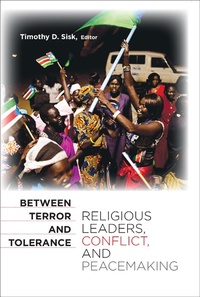
Between Terror and Tolerance
Description

Civil war and conflict within countries is the most prevalent threat to peace and security in the opening decades of the twenty-first century. A pivotal factor in the escalation of tensions to open conflict is the role of elites in exacerbating tensions along identity lines by giving the ideological justification, moral reasoning, and call to violence. Between Terror and Tolerance examines the varied roles of religious leaders in societies deeply divided by ethnic, racial, or religious conflict. The chapters in this book explore cases when religious leaders have justified or catalyzed violence along identity lines, and other instances when religious elites have played a critical role in easing tensions or even laying the foundation for peace and reconciliation.
This volume features thematic chapters on the linkages between religion, nationalism, and intolerance, transnational intra-faith conflict in the Shi'a-Sunni divide, and country case studies of societal divisions or conflicts in Egypt, Israel and Palestine, Kashmir, Lebanon, Nigeria, Northern Ireland, Sri Lanka, Sudan, and Tajikistan. The concluding chapter explores the findings and their implications for policies and programs of international non-governmental organizations that seek to encourage and enhance the capacity of religious leaders to play a constructive role in conflict resolution.
More details
Other editions
Additional editions
Person
Timothy D. Sisk is a professor of international and comparative politics and director of the Center for Sustainable Development and International Peace at the Joseph Korbel School of International Studies, University of Denver. He is the author or editor of several books including International Mediation in Civil Wars: Bargaining with Bullets.
Content
Introduction: Religious Leaders, Conflict, and Peacemaking
Timothy D. Sisk
1. Religion, Nationalism, and Intolerance
David Little
2. Religious Leaders, Sectarianism, and the Sunni-Shia Divide in Islam
Nader Hashemi
3. Between Intolerance and Coexistence: The Vatican, Maronites, and the War in Lebanon
George Emile Irani
4. Globalization, Religion, and Nationalism in Israel and Palestine
Micheline Ishay
5. Egypt and the Legacy of Sectarianism
Scott W. Hibbard
6. Religion, War, and Peacemaking in Sudan: Shari'a, Identity Politics, and Human Rights
Carolyn Fluehr-Lobban
7. Nigeria's Religious Leaders in an Age of Radicalism and Neoliberalism
Rosalind I. J. Hackett
8. Just Enough to Hate?Not Enough to Love: Religious Leaders in Northern Ireland
Mari Fitzduff
9. Religion, War, and Peace in Tajikistan
Karina Korostelina
10. The Spoiler and the Reconciler: Buddhism and the Peace Process in Sri Lanka
Susan Hayward
11. Piety and Politics: Religious Leadership and the Conflict in Kashmir
Sumit Ganguly and Praveen Swami
Conclusion: From Terror to Tolerance to Coexistence in Deeply Divided Societies
Timothy D. Sisk
List of Contributors
Index
