

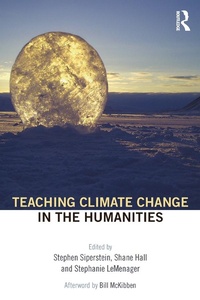
Teaching Climate Change in the Humanities
Published on 4. October 2016
320 pages
978-1-317-42323-2 (ISBN)
Description

Climate change is an enormous and increasingly urgent issue. This important book highlights how humanities disciplines can mobilize the creative and critical power of students, teachers, and communities to confront climate change. The book is divided into four clear sections to help readers integrate climate change into the classes and topics they are already teaching as well as engage with interdisciplinary methods and techniques. Teaching Climate Change in the Humanities constitutes a map and toolkit for anyone who wishes to draw upon the strengths of literary and cultural studies to teach valuable lessons that engage with climate change.
More details
Language
English
Place of publication
London
United Kingdom
Publishing group
Taylor & Francis Ltd
Target group
College/higher education
Professional and scholarly
Illustrations
8 s/w Abbildungen, 7 s/w Photographien bzw. Rasterbilder, 1 s/w Zeichnung
1 Line drawings, black and white; 7 Halftones, black and white; 8 Illustrations, black and white
File size
3,51 MB
ISBN-13
978-1-317-42323-2 (9781317423232)
Copyright in bibliographic data and cover images is held by Nielsen Book Services Limited or by the publishers or by their respective licensors: all rights reserved.
Schweitzer Classification
Other editions
Additional editions
Stephen Siperstein | Shane Hall | Stephanie LeMenager
Teaching Climate Change in the Humanities
Book
09/2016
1st Edition
Routledge
€206.90
Shipment within 10-20 days
Stephen Siperstein | Shane Hall | Stephanie LeMenager
Teaching Climate Change in the Humanities
Book
09/2016
1st Edition
Routledge
€63.80
Shipment within 10-20 days
Persons
Stephen Siperstein has a PhD from the University of Oregon and teaches English and Environmental Humanities at Choate Rosemary Hall in Wallingford, Connecticut, USA.
Shane Hall is a doctoral candidate in the Environmental Studies Program and Department of English at the University of Oregon, USA.
Stephanie LeMenager is Moore Professor of English at the University of Oregon, USA. She is widely involved in outreach projects and regularly engages with the press.
Shane Hall is a doctoral candidate in the Environmental Studies Program and Department of English at the University of Oregon, USA.
Stephanie LeMenager is Moore Professor of English at the University of Oregon, USA. She is widely involved in outreach projects and regularly engages with the press.
Content
Introduction, Stephen Siperstein, Shane Hall, Stephanie LeMenager
Part 1: Who We Are
1. Making Climate Change Our Job, SueEllen Campbell
2. Climate Disruption Involves All Disciplines: Who Becomes a Mentor? James Engell
3. When the Newt Shut Off the Lights: Scale, Practice, Politics, Stacy Alaimo
4. Known and Not Knowing Climate Change: Pedagogy for a New Dispensation, Matthew Kearnes
5. Energy, Climate and the Classroom: A Letter, Imre Szeman
6. Will the End of the World Be on the Final Exam? Bob Wilson
7. Teaching Climate Crisis in the Neoliberal University: On the Poverty of the Environmental Humanities, Upamanyu Pablo Mukherjee, Graeme Macdonald, Nicholas Lawrence, and Jonathan Skinner
8. Climate Change, Public Engagement and Integrated Environmental Humanities, Steven Hartman
Part 2: Teaching and Learning Climate Change Head On
9. Thinking Climate Change Like a Planet: Notes From an Environmental Philosopher, J. Baird Callicott
10. Teaching About Climate Change and Indigenous Peoples: Decolonizing Research and Broadening Knowledge, Mark Carey, Kathy Lynn, Kevin Hatfield, and Jennifer O'Neal
11. Teaching Teleconnection, Gillen D'Arcy Wood
12. Building Paradise in the Classroom, Janet Fiskio
13. Learning in the Anthropocene: Environmental Justice and Climate Pedagogy, Robert Figueroa
14. In-Flight Behaviour: Teaching Climate Change Literature in First Year Intro English, Greg Garrard
15. Learning from the past - teaching past climate change and catastrophes as windows onto vulnerability and resilience, Felix Riede, Annette Hojen Sorensen, Jan Dietrich, Mogens S. Hogsberg, Mathias V. Nordvig, and Esben B. Niels
16. Climate Visualizations as Cultural Objects, Heather Houser
17. Engaging the 'Eaarth': Teaching and Making Climate Change Cultures in an Art and Design, Nicole Merola
18. Signs, Images, and Narratives: Climate Change Across Languages and Cultures, Uwe Kuechler
Part 3: Teaching and Learning Climate Change Sideways
19. The Elephant in the Room: Acknowledging Global Climate Change in Courses Not Focused on Climate, Scott Slovic
20. Teaching Climate Change Otherwise, Swayam Bagaria and Naveeda Kahn
21. Teaching Ecological Restoration in the Climate Change Century, Cheryll Glotfelty
22. Exploratory Concepts, Case Studies, and Keywords for Teaching Environmental Justice and Climate Change in a lower-level Humanities classroom, Julie Sze
23. Garbage and Literature: Generating Narrative from a Culture of Waste, Stephanie Foote
24. Teaching literature as climate changes: ecological presence, a globalized world, and Helon Habila's Oil on Water, Anthony Vital
25. Looking Back to Look Ahead: Climate Change and US Literary History, William Gleason
26. Atlas' Shifting Shoulders: Teaching Climate Change and Classics, Darragh Martin
27. Stealing the Apocalypse: Myths of Resistance in Contemporary Popular Culture, Anthony Lioi
28. Teaching Climate Change and Film, Stephen Rust
Part 4: Archives and Contexts for Teaching and Learning Climate Change
29. The Persuasive Force of the Right Supplementary Materials for Climate Change Humanities Courses, Patrick D. Murphy
30. Vanishing Sounds: Thoreau and the Sixth Extinction, Wai Chee Dimock
31. Teaching climate change at end of nature: Post-colonial Australia, Indigenous realism, and Alexis Wright's The Swan Book, Emily Potter
32. When Sea Levels Rise: Writing/Righting Climate Change in Pacific Islanders' Literature, Hsinya Huang
33. Climate Change and Changing World Literature, Karen Thornber
34. Untangling Intentions: Teaching History of Climate Politics, Peder Anker
Afterword, Bill McKibben
Part 1: Who We Are
1. Making Climate Change Our Job, SueEllen Campbell
2. Climate Disruption Involves All Disciplines: Who Becomes a Mentor? James Engell
3. When the Newt Shut Off the Lights: Scale, Practice, Politics, Stacy Alaimo
4. Known and Not Knowing Climate Change: Pedagogy for a New Dispensation, Matthew Kearnes
5. Energy, Climate and the Classroom: A Letter, Imre Szeman
6. Will the End of the World Be on the Final Exam? Bob Wilson
7. Teaching Climate Crisis in the Neoliberal University: On the Poverty of the Environmental Humanities, Upamanyu Pablo Mukherjee, Graeme Macdonald, Nicholas Lawrence, and Jonathan Skinner
8. Climate Change, Public Engagement and Integrated Environmental Humanities, Steven Hartman
Part 2: Teaching and Learning Climate Change Head On
9. Thinking Climate Change Like a Planet: Notes From an Environmental Philosopher, J. Baird Callicott
10. Teaching About Climate Change and Indigenous Peoples: Decolonizing Research and Broadening Knowledge, Mark Carey, Kathy Lynn, Kevin Hatfield, and Jennifer O'Neal
11. Teaching Teleconnection, Gillen D'Arcy Wood
12. Building Paradise in the Classroom, Janet Fiskio
13. Learning in the Anthropocene: Environmental Justice and Climate Pedagogy, Robert Figueroa
14. In-Flight Behaviour: Teaching Climate Change Literature in First Year Intro English, Greg Garrard
15. Learning from the past - teaching past climate change and catastrophes as windows onto vulnerability and resilience, Felix Riede, Annette Hojen Sorensen, Jan Dietrich, Mogens S. Hogsberg, Mathias V. Nordvig, and Esben B. Niels
16. Climate Visualizations as Cultural Objects, Heather Houser
17. Engaging the 'Eaarth': Teaching and Making Climate Change Cultures in an Art and Design, Nicole Merola
18. Signs, Images, and Narratives: Climate Change Across Languages and Cultures, Uwe Kuechler
Part 3: Teaching and Learning Climate Change Sideways
19. The Elephant in the Room: Acknowledging Global Climate Change in Courses Not Focused on Climate, Scott Slovic
20. Teaching Climate Change Otherwise, Swayam Bagaria and Naveeda Kahn
21. Teaching Ecological Restoration in the Climate Change Century, Cheryll Glotfelty
22. Exploratory Concepts, Case Studies, and Keywords for Teaching Environmental Justice and Climate Change in a lower-level Humanities classroom, Julie Sze
23. Garbage and Literature: Generating Narrative from a Culture of Waste, Stephanie Foote
24. Teaching literature as climate changes: ecological presence, a globalized world, and Helon Habila's Oil on Water, Anthony Vital
25. Looking Back to Look Ahead: Climate Change and US Literary History, William Gleason
26. Atlas' Shifting Shoulders: Teaching Climate Change and Classics, Darragh Martin
27. Stealing the Apocalypse: Myths of Resistance in Contemporary Popular Culture, Anthony Lioi
28. Teaching Climate Change and Film, Stephen Rust
Part 4: Archives and Contexts for Teaching and Learning Climate Change
29. The Persuasive Force of the Right Supplementary Materials for Climate Change Humanities Courses, Patrick D. Murphy
30. Vanishing Sounds: Thoreau and the Sixth Extinction, Wai Chee Dimock
31. Teaching climate change at end of nature: Post-colonial Australia, Indigenous realism, and Alexis Wright's The Swan Book, Emily Potter
32. When Sea Levels Rise: Writing/Righting Climate Change in Pacific Islanders' Literature, Hsinya Huang
33. Climate Change and Changing World Literature, Karen Thornber
34. Untangling Intentions: Teaching History of Climate Politics, Peder Anker
Afterword, Bill McKibben
