

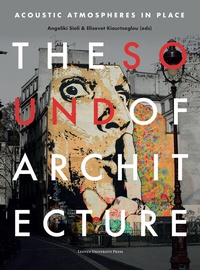
The Sound of Architecture
Acoustic Atmospheres in Place
Published on 18. May 2022
304 pages
978-94-6166-456-3 (ISBN)
Description

How sound and its atmospheres transform architecture
Acoustic atmospheres can be fleeting, elusive, or short-lived. Sometimes they are constant, but more often they change from one moment to the next, forming distinct impressions each time we visit certain places. Stable or dynamic, acoustic atmospheres have a powerful effect on our spatial experience, sometimes even more so than architecture itself. This book explores the acoustic atmospheres of diverse architectural environments, in terms of scale, program, location, or historic period-providing an overview of how acoustic atmospheres are created, perceived, experienced, and visualized. The contributors explore how sound and its atmospheres transform architecture and space. Their essays demonstrate that sound is a tangible element in the design and staging of atmospheres and that it should become a central part of the spatial explorations of architects, designers, and urban planners.
The Sound of Architecture will be of interest to architectural historians, theorists, students, and practicing architects, who will discover how acoustic atmospheres can be created without complex and specialized engineering. It will also be of value to scholars working in the field of history of emotions, as it offers evocative descriptions of acoustic atmospheres from diverse cultures and time periods.
Contributors: Anna Ulrikke Andersen (University of Oxford), Timothy Carey (Independent Scholar), Ricardo L. Castro (McGill University), Joseph L. Clarke (University of Toronto), Carlotta Darò (ENSA Paris-Malaquais), Michael de Beer (Independent Scholar), James Deaville (Carleton University), Ross K. Elfline (Carleton College), Clemens Finkelstein (Princeton University), Federica Goffi (Carleton University), Klaske Havik (TU Delft), Paul Holmquist (Louisiana State University), Pamela Jordan (University of Amsterdam), Elisavet Kiourtsoglou (University of Thessaly), Alberto Pérez-Gómez (McGill University), Cécile Regnault (Lyon School of Architecture), Angeliki Sioli (TU Delft), Karen Van Lengen (University of Virginia), Michael Windover (Carleton University).
This publication is GPRC-labeled (Guaranteed Peer-Reviewed Content).
"We need to
pay attention to sound. We need to tune our body in the sound vibrations of
place, be attentive to them, and try to understand how they influence us.". Read
a Q&A with the editors Angeliki Sioli and Elisavet Kiourtsoglou
Acoustic atmospheres can be fleeting, elusive, or short-lived. Sometimes they are constant, but more often they change from one moment to the next, forming distinct impressions each time we visit certain places. Stable or dynamic, acoustic atmospheres have a powerful effect on our spatial experience, sometimes even more so than architecture itself. This book explores the acoustic atmospheres of diverse architectural environments, in terms of scale, program, location, or historic period-providing an overview of how acoustic atmospheres are created, perceived, experienced, and visualized. The contributors explore how sound and its atmospheres transform architecture and space. Their essays demonstrate that sound is a tangible element in the design and staging of atmospheres and that it should become a central part of the spatial explorations of architects, designers, and urban planners.
The Sound of Architecture will be of interest to architectural historians, theorists, students, and practicing architects, who will discover how acoustic atmospheres can be created without complex and specialized engineering. It will also be of value to scholars working in the field of history of emotions, as it offers evocative descriptions of acoustic atmospheres from diverse cultures and time periods.
Contributors: Anna Ulrikke Andersen (University of Oxford), Timothy Carey (Independent Scholar), Ricardo L. Castro (McGill University), Joseph L. Clarke (University of Toronto), Carlotta Darò (ENSA Paris-Malaquais), Michael de Beer (Independent Scholar), James Deaville (Carleton University), Ross K. Elfline (Carleton College), Clemens Finkelstein (Princeton University), Federica Goffi (Carleton University), Klaske Havik (TU Delft), Paul Holmquist (Louisiana State University), Pamela Jordan (University of Amsterdam), Elisavet Kiourtsoglou (University of Thessaly), Alberto Pérez-Gómez (McGill University), Cécile Regnault (Lyon School of Architecture), Angeliki Sioli (TU Delft), Karen Van Lengen (University of Virginia), Michael Windover (Carleton University).
This publication is GPRC-labeled (Guaranteed Peer-Reviewed Content).
"We need to
pay attention to sound. We need to tune our body in the sound vibrations of
place, be attentive to them, and try to understand how they influence us.". Read
a Q&A with the editors Angeliki Sioli and Elisavet Kiourtsoglou
More details
Other editions
Additional editions
Book
05/2022
Leuven University Press
€70.84
Article not available at the moment
Persons
Content
Acknowledgements Angeliki Sioli and Elisavet Kiourtsoglou
Introduction01. Atmospheres that Touch Angeliki Sioli and Elisavet Kiourtsoglou
Section #01: Room Vibrations02. Listening with Christian Norberg-Schulz: Sonic Experience and Music Theory in his Writings Anna Ulrikke Andersen03. Setting the Tone in Early 20th-century North American Living Rooms: The Parlor Piano Michael Windover and James Deaville04. Playing to the Room: The Recording Studio as Instrument Timothy Carey05. Vibe, c. 1969: The Technicity of Operative Ambience in Jimi Hendrix's Electric Lady Studios Clemens Finkelstein06. Resonant Rooms as Tuning Forks: Architectural Implications of Sound Art Ross K. Elfline
Section #02: Building Pitches07. The Happiness of the World at its Birth: Acoustic Atmosphere in the 'General Effect' of Ledoux's Theater of Besançon Paul Holmquist08. Acoustics at 1:10: Miniaturizing Atmosphere Carlotta Darò09. The Electronic Campanile at Ronchamp Joseph L. Clarke10. Chromesthesia and the Multiverse of Listening in Music and Architecture: Luigi Nono in Collaboration with Renzo Piano Federica Goffi11. Tools of Immersion: Drawing the Acoustic Atmosphere of the Philips Pavilion Elisavet Kiourtsoglou
Section #03: City Tunes12. The Instrumentarium of Kircher: Premises of a Universal Phonurgy Cécile Regnault13. Dissolving in the Air: Mrs. Dalloway's Sonorous Modern London Angeliki Sioli14. Lacrimae Rerum and Tears of Memory: Sonic Encounters in the Public Realm Karen Van Lengen15. The Border between Sound and Silence: Sonic Preservation at the Berlin Wall Pamela Jordan16. Listen and Write! Addressing Urban Soundscapes in Architectural Education Klaske Havik and Michael de Beer
Echoes17. On Atmospheres and Other Difficulties: A Conversation with Alberto Pérez-Gómez Angeliki Sioli18. Places where Silence is Eloquent Ricardo L. Castro
About the Editors About the Authors List of illustrations BibliographyIndexColor Plates
Introduction01. Atmospheres that Touch Angeliki Sioli and Elisavet Kiourtsoglou
Section #01: Room Vibrations02. Listening with Christian Norberg-Schulz: Sonic Experience and Music Theory in his Writings Anna Ulrikke Andersen03. Setting the Tone in Early 20th-century North American Living Rooms: The Parlor Piano Michael Windover and James Deaville04. Playing to the Room: The Recording Studio as Instrument Timothy Carey05. Vibe, c. 1969: The Technicity of Operative Ambience in Jimi Hendrix's Electric Lady Studios Clemens Finkelstein06. Resonant Rooms as Tuning Forks: Architectural Implications of Sound Art Ross K. Elfline
Section #02: Building Pitches07. The Happiness of the World at its Birth: Acoustic Atmosphere in the 'General Effect' of Ledoux's Theater of Besançon Paul Holmquist08. Acoustics at 1:10: Miniaturizing Atmosphere Carlotta Darò09. The Electronic Campanile at Ronchamp Joseph L. Clarke10. Chromesthesia and the Multiverse of Listening in Music and Architecture: Luigi Nono in Collaboration with Renzo Piano Federica Goffi11. Tools of Immersion: Drawing the Acoustic Atmosphere of the Philips Pavilion Elisavet Kiourtsoglou
Section #03: City Tunes12. The Instrumentarium of Kircher: Premises of a Universal Phonurgy Cécile Regnault13. Dissolving in the Air: Mrs. Dalloway's Sonorous Modern London Angeliki Sioli14. Lacrimae Rerum and Tears of Memory: Sonic Encounters in the Public Realm Karen Van Lengen15. The Border between Sound and Silence: Sonic Preservation at the Berlin Wall Pamela Jordan16. Listen and Write! Addressing Urban Soundscapes in Architectural Education Klaske Havik and Michael de Beer
Echoes17. On Atmospheres and Other Difficulties: A Conversation with Alberto Pérez-Gómez Angeliki Sioli18. Places where Silence is Eloquent Ricardo L. Castro
About the Editors About the Authors List of illustrations BibliographyIndexColor Plates
