

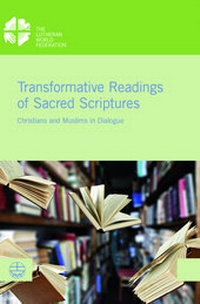
Transformative Readings of Sacred Scriptures
Christians and Muslims in Dialogue
1st Edition
Published in January 2018
200 pages
978-3-374-05431-2 (ISBN)
Description

The interpretation of sacred scriptures engenders vivid debates in religious communities, both at the scholarly and grass-roots levels. Issues of debate are the hermeneutical assumptions, the methods of interpretation, and the constructive and harmful implications of certain readings. For Christian and Muslim communities, themes related to God's grace, violence, gender relations and ecology, are topical. As scholars from different contexts and faith backgrounds together interpret sacred texts they gain fresh insights into their meaning and their transformative dynamics. Essays by authors with expertise in scriptural interpretation, religious studies, pastoral care, philosophical theology, gender studies and pedagogy explore Christian and Muslim perspectives on scriptural interpretation, and discuss how to understand how God communicates with the world today.
[Heilige Schriften heute verstehen. Christen und Muslime im Dialog]
Die Interpretation heiliger Schriften löst lebhafte Debatten innerhalb der Religionsgemeinschaften aus, sowohl unter Gelehrten wie an der Basis. Diskutiert werden die hermeneutischen Grundannahmen, die Methoden der Interpretation und die konstruktiven und destruktiven Wirkungen bestimmter Lesarten. Für Christen und Muslime sind Themen wie Gottes Gnade, Gewalt, Geschlechterverhältnisse und Ökologie aktuell geworden. Indem die Gelehrten aus verschiedenen Kontexten und mit unterschiedlicher Religionszugehörigkeit gemeinsam die Interpretation heiliger Texte diskutieren, gewinnen sie neue Einsichten in ihre Bedeutung und ihre transformative Dynamik. Die Autorinnen und Autoren mit ihrem jeweiligen Fachwissen in Exegese, Religionswissenschaft, Seelsorge, philosophischer Theologie, Gender Studies und Pädagogik erforschen christliche und muslimische Perspektiven auf Schriftinterpretation und erörtern, wie Gottes Kommunikation mit der Welt heute verstanden werden kann.
[Heilige Schriften heute verstehen. Christen und Muslime im Dialog]
Die Interpretation heiliger Schriften löst lebhafte Debatten innerhalb der Religionsgemeinschaften aus, sowohl unter Gelehrten wie an der Basis. Diskutiert werden die hermeneutischen Grundannahmen, die Methoden der Interpretation und die konstruktiven und destruktiven Wirkungen bestimmter Lesarten. Für Christen und Muslime sind Themen wie Gottes Gnade, Gewalt, Geschlechterverhältnisse und Ökologie aktuell geworden. Indem die Gelehrten aus verschiedenen Kontexten und mit unterschiedlicher Religionszugehörigkeit gemeinsam die Interpretation heiliger Texte diskutieren, gewinnen sie neue Einsichten in ihre Bedeutung und ihre transformative Dynamik. Die Autorinnen und Autoren mit ihrem jeweiligen Fachwissen in Exegese, Religionswissenschaft, Seelsorge, philosophischer Theologie, Gender Studies und Pädagogik erforschen christliche und muslimische Perspektiven auf Schriftinterpretation und erörtern, wie Gottes Kommunikation mit der Welt heute verstanden werden kann.
More details
Other editions
Additional editions
Simone Sinn | Dina El Omari | Anne Hege Grung
Transformative Readings of Sacred Scriptures
Christians and Muslims in Dialogue
Book
12/2017
1st Edition
Evangelische Verlagsanstalt
from
€20.00
Article exhausted; check different version
Content
- Cover
- Title
- Imprint
- Contents
- Preface (Martin Junge)
- Introduction (Simone Sinn)
- Reading Sacred Scriptures in Dialogue
- Handling Problematic Texts: Ethical Critique and Moral Enrichment (Oddbjørn Leirvik)
- Transformative Hermeneutics in the Making through the Co-Reading of Biblical and Qur'anic texts by Muslim and Christian Women (Anne Hege Grung)
- The Interrelatedness of the Holy Scriptures: the Qur'an as an Interpretation of the Bible (Stefan Schreiner)
- The Suspension of Expertise in Scriptural Reasoning (Nicholas Adams)
- On the Way Towards a Dialogical Theology (Katja Drechsler and Thorsten Knauth)
- Transformative Readings of the Qur'an
- Developing Islamic Theology in the European Context (Safet Bektovic)
- The Authors of the Qur'an are Still Alive: The Qur'an as an Act of Communication (Mouhanad Khorchide)
- The Qur'an on the Exclusivist Religious Truth Claim: A Ma'nacum-Maghza Approach and its Application to Q 2:111-113 (Sahiron Syamsuddin)
- Adam and Eve from the Perspective of Contemporary Feminist Exegesis of the Qur'an (Dina El Omari)
- Holy Scriptures and the Challenge of Animal Ethics: Fundamental Guidelines of Animal Ethics in Islam (Asmaa El Maaroufi-Ulzheimer)
- Images of God in Crisis Situations (Naveed Baig)
- Transformative Readings of the Bible
- Reading Genesis - An Invitation to Dialogue (Clare Amos)
- Implications of Divine Communication in the Christian Tradition: The case of 1 Samuel 1-7 (Kenneth Mtata)
- Dealing with Sacred Scripture: New Testament, Otherness and Intersectionality (Marianne Bjelland Kartzow)
- "Choose Life so that you and your Descendants may Live": Climate Change as a Case Study for a Contextual Hermeneutics (Martin Kopp)
- List of contributors
