

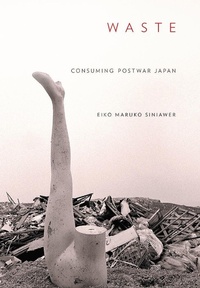
Waste
Description

In Waste, Eiko Maruko Siniawer innovatively explores the many ways in which the Japanese have thought about waste-in terms of time, stuff, money, possessions, and resources-from the immediate aftermath of World War II to the present. She shows how questions about waste were deeply embedded in the decisions of everyday life, reflecting the priorities and aspirations of the historical moment, and revealing people's ever-changing concerns and hopes.
Over the course of the long postwar, Japanese society understood waste variously as backward and retrogressive, an impediment to progress, a pervasive outgrowth of mass consumption, incontrovertible proof of societal excess, the embodiment of resources squandered, and a hazard to the environment. Siniawer also shows how an encouragement of waste consciousness served as a civilizing and modernizing imperative, a moral good, an instrument for advancement, a path to self-satisfaction, an environmental commitment, an expression of identity, and more. From the late 1950s onward, a defining element of Japan's postwar experience emerged: the tension between the desire for the privileges of middle-class lifestyles made possible by affluence and dissatisfaction with the logics, costs, and consequences of that very prosperity. This tension complicated the persistent search for what might be called well-being, a good life, or a life well lived. Waste is an elegant history of how people lived-how they made sense of, gave meaning to, and found value in the acts of the everyday.
More details
Other editions
Person
Eiko Maruko Siniawer is Class of 1955 Memorial Professor of History at Williams College. She is the author of Ruffians, Yakuza, Nationalists.
Content
Introduction: Meaning and Value in the Everyday
Part One: Re-Civilization and Re-Enlightenment: Transitions of the Early Postwar Period, 1945-1971
1. The Imperatives of Waste
2. Better Living through Consumption
Part Two: Shocks, Shifts, and Safeguards: Defending the Middle-Class Lifestyles, 1971-1981
3. Wars against Waste
4. A Bright Stinginess
Part Three: Abundant Dualities: Wealth and its Discontents in the 1980s and Beyond
5. Consuming Desires
6. Living the Good Life?
7. Battling the Time Thieves
Part Four: Affluence of the Heart: Identities and Values in the Slow-Growth Era, 1991-Present
8. Greening Consciousness
9. We Are All Waste Conscious Now
10. Sorting Things Out
Afterword: Waste and Well-Being
Notes
Bibliography
Index
