

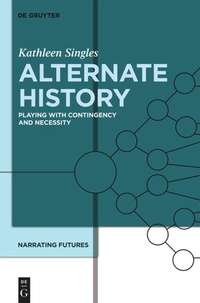
Alternate History
Playing with Contingency and Necessity
1st Edition
Published on 14. October 2013
VII, 312 pages
978-3-11-027247-5 (ISBN)
Description

While, strictly speaking, Alternate Histories are not Future Narratives, their analysis can shed a clear light on why Future Narratives are so different from past narratives. Trying to have it both ways, most Alternate Histories subscribe to a conflicting set of beliefs concerning determinism and freedom of choice, contingency and necessity. For the very first time, Alternate Histories are here discussed against the backdrop of their Other, Future Narratives. The volume contains in-depth analyses of the classics of the genre,such as Philip K. Dick's The Man in the High Castle and Philip Roth's The Plot against America, as well as less widely-discussed manifestations of the genre, such as Dieter Kühn's N, Christian Kracht's Ich werde hier sein im Sonnenschein und im Schatten, and Quentin Tarantino's film Inglourious Basterds.
Reviews / Votes
"Still, Alternate History: Playing with Contingency and Necessity is recommended reading for those interested in the burgeoning field of alternate-history studies. "Francisco J. López Arias in: Science Fiction Studies 3/2016
More details
Other editions
Additional editions
Book
09/2013
1st Edition
De Gruyter
€149.95
Shipment within 7-9 days
Person
Kathleen Singles, Ludwig-Maximilians-Universität München, Germany.
Content
1 - 1 Introduction [Seite 9]
1.1 - 1.1 Contexts: Alternate Histories and Future Narratives [Seite 9]
1.2 - 1.2 Methodology [Seite 12]
1.3 - 1.3 Proceedings and Theses [Seite 14]
1.4 - 1.4 Selection of Primary Sources [Seite 18]
1.4.1 - 1.4.1 Medium vs. Genre [Seite 18]
1.4.2 - 1.4.2 The International Spectrum [Seite 19]
2 - 2 The Poetics of Alternate History [Seite 22]
2.1 - 2.1 'History' in Alternate History [Seite 34]
2.1.1 - 2.1.1 The Postmodern Challenge to History [Seite 34]
2.1.2 - 2.1.2 Referentiality: Possible-worlds Theory [Seite 41]
2.1.3 - 2.1.3 'History' as the Normalized Narrative of the Past [Seite 51]
2.1.4 - 2.1.4 The Selection and Emplotment of Historical Events in Alternate History [Seite 56]
2.1.5 - 2.1.5 Nineteenth-century Paradigms of History in Alternate History [Seite 64]
2.2 - 2.2 Alternate History and Other Kinds of Past Narrative [Seite 66]
2.2.1 - 2.2.1 The Epistemology of History: Alternate History in the Context of Postmodern Historical Fiction [Seite 66]
2.2.2 - 2.2.2 Alternate Histories versus Secret History, "Plot-type" Counterfactual Histories, and Historical Fiction with "neokausale Verfremdungsverfahren" [Seite 81]
2.2.3 - 2.2.3 Alternate Histories versus 'framed' Alternate Histories [Seite 89]
2.2.4 - 2.2.4 Alternate History versus Counterfactual History [Seite 93]
2.2.5 - 2.2.5 Hybrids and Overlap [Seite 104]
2.2.5.1 - 2.2.5.1 The 'Y': Structure vs. Reception Models [Seite 104]
2.2.5.2 - 2.2.5.2 Alternate History as Fantasy [Seite 107]
2.2.5.3 - 2.2.5.3 Alternate History as Science Fiction [Seite 111]
2.3 - 2.3 Alternate History and Future Narrative [Seite 117]
2.3.1 - 2.3.1 Activation of the Reader: Text Strategies of Alternate History [Seite 117]
2.3.2 - 2.3.2 Alternate History as Non-interactive game: Points of Divergence versus Nodes [Seite 127]
2.3.3 - 2.3.3 Bifurcation vs. Divergence from History [Seite 129]
2.3.3.1 - 2.3.3.1 Alternate History versus Forking-paths Narratives [Seite 129]
2.3.3.2 - 2.3.3.2 Alternate-history FNs [Seite 132]
2.3.4 - 2.3.4 The Paradox of Alternate History: Contingency and Necessity [Seite 137]
2.3.5 - 2.3.5 The 'Open' Alternate History? [Seite 142]
2.3.5.1 - 2.3.5.1 The Open Artwork [Seite 142]
2.3.5.2 - 2.3.5.2 The Closed Alternate History [Seite 146]
3 - 3 Case Studies [Seite 155]
3.1 - 3.1 Philip K. Dick's The Man in the High Castle [Seite 155]
3.1.1 - 3.1.1 The Alternate History [Seite 155]
3.1.2 - 3.1.2 Piecing It All Together: the Exposition [Seite 156]
3.1.3 - 3.1.3 The Alternate History within the Alternate History [Seite 163]
3.1.4 - 3.1.4 The Nature of Reality [Seite 169]
3.1.5 - 3.1.5 Human Agency [Seite 173]
3.2 - 3.2 The 'Flawed' Alternate History: Philip Roth's The Plot against America [Seite 177]
3.2.1 - 3.2.1 Roth's Novel as Alternate History [Seite 177]
3.2.2 - 3.2.2 The Alternate-history Autobiography: the National/Political and the Familial/Personal Stages [Seite 181]
3.2.3 - 3.2.3 Undermined Authenticity [Seite 187]
3.2.4 - 3.2.4 The Question of Causal Logic [Seite 192]
3.3 - 3.3 Of Dead Messiahs and Alaskan Dreams: Michael Chabon's The Yiddish Policemen's Union [Seite 197]
3.3.1 - 3.3.1 Alternate History Integrated [Seite 197]
3.3.2 - 3.3.2 The Detective Game [Seite 199]
3.3.3 - 3.3.3 "Strange times to be a Jew": in Search of a Homeland [Seite 205]
3.3.3.1 - 3.3.3.1 Yiddishland [Seite 205]
3.3.3.2 - 3.3.3.2 Trouble in Yiddishland: "No future here for any Jew" [Seite 208]
3.3.4 - 3.3.4 The Chess Metaphor [Seite 212]
3.3.4.1 - 3.3.4.1 Zugzwang [Seite 212]
3.3.4.2 - 3.3.4.2 Landsman Plays [Seite 213]
3.3.4.3 - 3.3.4.3 Others Play: Saviors and Holy Lands [Seite 216]
3.3.5 - 3.3.5 Stories Already Told [Seite 220]
3.4 - 3.4 Time Travel and "to the present": Stephen Fry's Making History [Seite 223]
3.4.1 - 3.4.1 A New Take on a Popular Premise [Seite 223]
3.4.2 - 3.4.2 "The true story of what never happened": Making Sense of Making History [Seite 227]
3.4.3 - 3.4.3 The Meisterwerk and Mastering Academia [Seite 231]
3.4.4 - 3.4.4 The Historian as God? Agency, Free Will, and Determinism [Seite 234]
3.4.5 - 3.4.5 Historical Sensitivity [Seite 238]
3.5 - 3.5 An Exceptional Hybrid: Dieter Kühn's N [Seite 241]
3.5.1 - 3.5.1 Alternate History as FN [Seite 241]
3.5.2 - 3.5.2 The Structure of a 'True' Forking-paths Alternate History [Seite 243]
3.5.3 - 3.5.3 The Historiographical Shortcomings of the Past Narrative [Seite 245]
3.5.4 - 3.5.4 Big Plans, Little N [Seite 249]
3.5.5 - 3.5.5 The Narrator as 'Great Man'? [Seite 252]
3.6 - 3.6 The Mock Alternate History: Inglourious Basterds [Seite 255]
3.6.1 - 3.6.1 A New Kind of World-War-II Movie, a New Kind of Alternate History [Seite 255]
3.6.2 - 3.6.2 Contingency and the Point of Divergence [Seite 257]
3.6.3 - 3.6.3 Metacinema: Competing Director-figures in the Film [Seite 261]
3.6.4 - 3.6.4 The Art of Direction: Authority and Authorization of the Film [Seite 268]
3.7 - 3.7 Alternate History as Apotheosis of Representation: Christian Kracht's Ich werde hier sein im Sonnenschein und im Schatten [Seite 271]
3.7.1 - 3.7.1 Krachtian Alternate History [Seite 271]
3.7.2 - 3.7.2 School of KrachtKracht, Christian (Ich werde hier sein im Sonnenschein und im Schatten) [Seite 273]
3.7.3 - 3.7.3 Hyperreality and Alternate History [Seite 275]
3.7.4 - 3.7.4 Rauchsprache - Krachtsprache [Seite 277]
3.7.5 - 3.7.5 Literary Evolution? [Seite 280]
3.7.6 - 3.7.6 Regress and Dissolution [Seite 283]
4 - 4 Conclusion [Seite 287]
4.1 - 4.1 What if this study had never been written? [Seite 287]
4.2 - 4.2 The History (and Future) of Alternate History [Seite 290]
5 - Works Cited [Seite 293]
5.1 - Primary Literature [Seite 293]
5.2 - Secondary Literature [Seite 297]
5.3 - Studies on Indivudual Works [Seite 304]
6 - Index [Seite 318]
1.1 - 1.1 Contexts: Alternate Histories and Future Narratives [Seite 9]
1.2 - 1.2 Methodology [Seite 12]
1.3 - 1.3 Proceedings and Theses [Seite 14]
1.4 - 1.4 Selection of Primary Sources [Seite 18]
1.4.1 - 1.4.1 Medium vs. Genre [Seite 18]
1.4.2 - 1.4.2 The International Spectrum [Seite 19]
2 - 2 The Poetics of Alternate History [Seite 22]
2.1 - 2.1 'History' in Alternate History [Seite 34]
2.1.1 - 2.1.1 The Postmodern Challenge to History [Seite 34]
2.1.2 - 2.1.2 Referentiality: Possible-worlds Theory [Seite 41]
2.1.3 - 2.1.3 'History' as the Normalized Narrative of the Past [Seite 51]
2.1.4 - 2.1.4 The Selection and Emplotment of Historical Events in Alternate History [Seite 56]
2.1.5 - 2.1.5 Nineteenth-century Paradigms of History in Alternate History [Seite 64]
2.2 - 2.2 Alternate History and Other Kinds of Past Narrative [Seite 66]
2.2.1 - 2.2.1 The Epistemology of History: Alternate History in the Context of Postmodern Historical Fiction [Seite 66]
2.2.2 - 2.2.2 Alternate Histories versus Secret History, "Plot-type" Counterfactual Histories, and Historical Fiction with "neokausale Verfremdungsverfahren" [Seite 81]
2.2.3 - 2.2.3 Alternate Histories versus 'framed' Alternate Histories [Seite 89]
2.2.4 - 2.2.4 Alternate History versus Counterfactual History [Seite 93]
2.2.5 - 2.2.5 Hybrids and Overlap [Seite 104]
2.2.5.1 - 2.2.5.1 The 'Y': Structure vs. Reception Models [Seite 104]
2.2.5.2 - 2.2.5.2 Alternate History as Fantasy [Seite 107]
2.2.5.3 - 2.2.5.3 Alternate History as Science Fiction [Seite 111]
2.3 - 2.3 Alternate History and Future Narrative [Seite 117]
2.3.1 - 2.3.1 Activation of the Reader: Text Strategies of Alternate History [Seite 117]
2.3.2 - 2.3.2 Alternate History as Non-interactive game: Points of Divergence versus Nodes [Seite 127]
2.3.3 - 2.3.3 Bifurcation vs. Divergence from History [Seite 129]
2.3.3.1 - 2.3.3.1 Alternate History versus Forking-paths Narratives [Seite 129]
2.3.3.2 - 2.3.3.2 Alternate-history FNs [Seite 132]
2.3.4 - 2.3.4 The Paradox of Alternate History: Contingency and Necessity [Seite 137]
2.3.5 - 2.3.5 The 'Open' Alternate History? [Seite 142]
2.3.5.1 - 2.3.5.1 The Open Artwork [Seite 142]
2.3.5.2 - 2.3.5.2 The Closed Alternate History [Seite 146]
3 - 3 Case Studies [Seite 155]
3.1 - 3.1 Philip K. Dick's The Man in the High Castle [Seite 155]
3.1.1 - 3.1.1 The Alternate History [Seite 155]
3.1.2 - 3.1.2 Piecing It All Together: the Exposition [Seite 156]
3.1.3 - 3.1.3 The Alternate History within the Alternate History [Seite 163]
3.1.4 - 3.1.4 The Nature of Reality [Seite 169]
3.1.5 - 3.1.5 Human Agency [Seite 173]
3.2 - 3.2 The 'Flawed' Alternate History: Philip Roth's The Plot against America [Seite 177]
3.2.1 - 3.2.1 Roth's Novel as Alternate History [Seite 177]
3.2.2 - 3.2.2 The Alternate-history Autobiography: the National/Political and the Familial/Personal Stages [Seite 181]
3.2.3 - 3.2.3 Undermined Authenticity [Seite 187]
3.2.4 - 3.2.4 The Question of Causal Logic [Seite 192]
3.3 - 3.3 Of Dead Messiahs and Alaskan Dreams: Michael Chabon's The Yiddish Policemen's Union [Seite 197]
3.3.1 - 3.3.1 Alternate History Integrated [Seite 197]
3.3.2 - 3.3.2 The Detective Game [Seite 199]
3.3.3 - 3.3.3 "Strange times to be a Jew": in Search of a Homeland [Seite 205]
3.3.3.1 - 3.3.3.1 Yiddishland [Seite 205]
3.3.3.2 - 3.3.3.2 Trouble in Yiddishland: "No future here for any Jew" [Seite 208]
3.3.4 - 3.3.4 The Chess Metaphor [Seite 212]
3.3.4.1 - 3.3.4.1 Zugzwang [Seite 212]
3.3.4.2 - 3.3.4.2 Landsman Plays [Seite 213]
3.3.4.3 - 3.3.4.3 Others Play: Saviors and Holy Lands [Seite 216]
3.3.5 - 3.3.5 Stories Already Told [Seite 220]
3.4 - 3.4 Time Travel and "to the present": Stephen Fry's Making History [Seite 223]
3.4.1 - 3.4.1 A New Take on a Popular Premise [Seite 223]
3.4.2 - 3.4.2 "The true story of what never happened": Making Sense of Making History [Seite 227]
3.4.3 - 3.4.3 The Meisterwerk and Mastering Academia [Seite 231]
3.4.4 - 3.4.4 The Historian as God? Agency, Free Will, and Determinism [Seite 234]
3.4.5 - 3.4.5 Historical Sensitivity [Seite 238]
3.5 - 3.5 An Exceptional Hybrid: Dieter Kühn's N [Seite 241]
3.5.1 - 3.5.1 Alternate History as FN [Seite 241]
3.5.2 - 3.5.2 The Structure of a 'True' Forking-paths Alternate History [Seite 243]
3.5.3 - 3.5.3 The Historiographical Shortcomings of the Past Narrative [Seite 245]
3.5.4 - 3.5.4 Big Plans, Little N [Seite 249]
3.5.5 - 3.5.5 The Narrator as 'Great Man'? [Seite 252]
3.6 - 3.6 The Mock Alternate History: Inglourious Basterds [Seite 255]
3.6.1 - 3.6.1 A New Kind of World-War-II Movie, a New Kind of Alternate History [Seite 255]
3.6.2 - 3.6.2 Contingency and the Point of Divergence [Seite 257]
3.6.3 - 3.6.3 Metacinema: Competing Director-figures in the Film [Seite 261]
3.6.4 - 3.6.4 The Art of Direction: Authority and Authorization of the Film [Seite 268]
3.7 - 3.7 Alternate History as Apotheosis of Representation: Christian Kracht's Ich werde hier sein im Sonnenschein und im Schatten [Seite 271]
3.7.1 - 3.7.1 Krachtian Alternate History [Seite 271]
3.7.2 - 3.7.2 School of KrachtKracht, Christian (Ich werde hier sein im Sonnenschein und im Schatten) [Seite 273]
3.7.3 - 3.7.3 Hyperreality and Alternate History [Seite 275]
3.7.4 - 3.7.4 Rauchsprache - Krachtsprache [Seite 277]
3.7.5 - 3.7.5 Literary Evolution? [Seite 280]
3.7.6 - 3.7.6 Regress and Dissolution [Seite 283]
4 - 4 Conclusion [Seite 287]
4.1 - 4.1 What if this study had never been written? [Seite 287]
4.2 - 4.2 The History (and Future) of Alternate History [Seite 290]
5 - Works Cited [Seite 293]
5.1 - Primary Literature [Seite 293]
5.2 - Secondary Literature [Seite 297]
5.3 - Studies on Indivudual Works [Seite 304]
6 - Index [Seite 318]
