

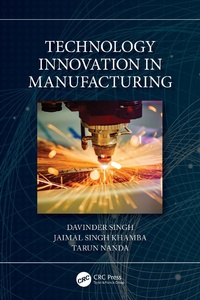
Technology Innovation in Manufacturing
1st Edition
Published on 14. December 2022
160 pages
978-1-000-80971-8 (ISBN)
Description

This text identifies and discusses different technology innovation initiatives (TIIs) such as entrepreneurial capability, technology infrastructure capability, organizational culture and climate, and government initiatives. It further evaluates the relationship between various technology innovation initiatives and manufacturing performances using multi-criteria decision-making techniques such as fuzzy set theory (FST), structural equation modeling (SEM), and analytic hierarchy process (AHP). It will serve as an ideal reference text for graduate students and academic researchers in the field of industrial engineering, manufacturing engineering, mechanical engineering, automotive engineering.
This book:
Discusses technology innovation initiatives such as entrepreneurial capability, technology infrastructure capability, and organizational culture
Highlights technology innovation-strategy model in assisting manufacturing industries for enhancing their performance in today's competitive environment
Examines the effect of technology innovation initiatives on the performance of manufacturing industries
Covers multi-criteria decision-making techniques such as fuzzy set theory, structural equation modeling, and analytic hierarchy process
Explores the validation of fuzzy-based technology innovation model through structural equation modeling
This book:
Discusses technology innovation initiatives such as entrepreneurial capability, technology infrastructure capability, and organizational culture
Highlights technology innovation-strategy model in assisting manufacturing industries for enhancing their performance in today's competitive environment
Examines the effect of technology innovation initiatives on the performance of manufacturing industries
Covers multi-criteria decision-making techniques such as fuzzy set theory, structural equation modeling, and analytic hierarchy process
Explores the validation of fuzzy-based technology innovation model through structural equation modeling
More details
Edition
1. Auflage
Language
English
Place of publication
London
United Kingdom
Publishing group
Taylor & Francis Ltd
Target group
College/higher education
Professional and scholarly
Illustrations
34 Tables, black and white; 17 Line drawings, black and white; 6 Halftones, black and white; 23 Illustrations, color
ISBN-13
978-1-000-80971-8 (9781000809718)
Copyright in bibliographic data and cover images is held by Nielsen Book Services Limited or by the publishers or by their respective licensors: all rights reserved.
Schweitzer Classification
Other editions
Additional editions
Davinder Singh | Jaimal Singh Khamba | Tarun Nanda
Technology Innovation in Manufacturing
Book
10/2024
1st Edition
CRC Press
€70.80
Shipment within 10-20 days
Davinder Singh | Jaimal Singh Khamba | Tarun Nanda
Technology Innovation in Manufacturing
Book
01/2023
1st Edition
CRC Press
€175.40
Shipment within 10-20 days
Persons
Dr. Davinder Singh is working as assistant professor in Department of Mechanical Engineering, Punjabi University, Patiala, Punjab (India) since 2011. He has completed his Ph.D. in November, 2016 from the same institution. He has done M.Tech (Production and Industrial Engineering) from Thapar University, Patiala, Punjab (India), completed in 2009. He completed B.Tech in Mechanical Engineering from Giani Zail Singh College of Engineering and Technology, Bathinda, Punjab (India). He has guided more than 30 students for M.Tech thesis. He has published around 35 research papers in various international journals and conferences. Presently, 4 students are working under him for their Ph.D. and 2 for their M.Tech. His main research areas are Production & Industrial Engineering, Manufacturing Technology and Innovation Management. He has held numerous charges in Department of Mechanical Engineering, Punjabi University, Patiala, Punjab (India).
Dr. Jaimal Singh Khamba is working as a Professor in the Department of Mechanical Engineering, Punjabi University, Patiala. He has guided a number of students for their M.Tech. and Ph.D. work. Many students are pursuing their Ph.D. work under him. He has a large number of research projects, conferences and consultancies to his credit. He has published many Research papers in National/International Journals & conferences.
Dr. Tarun Nanda is working as an Associate Professor in the Department of Mechanical Engineering, Thapar University, Patiala. He has guided a number of students for their M.Tech. and Ph.D. work. Many students are pursuing their Ph.D. work under him. He has published many Research papers in National/International Journals and Conferences.
Dr. Jaimal Singh Khamba is working as a Professor in the Department of Mechanical Engineering, Punjabi University, Patiala. He has guided a number of students for their M.Tech. and Ph.D. work. Many students are pursuing their Ph.D. work under him. He has a large number of research projects, conferences and consultancies to his credit. He has published many Research papers in National/International Journals & conferences.
Dr. Tarun Nanda is working as an Associate Professor in the Department of Mechanical Engineering, Thapar University, Patiala. He has guided a number of students for their M.Tech. and Ph.D. work. Many students are pursuing their Ph.D. work under him. He has published many Research papers in National/International Journals and Conferences.
Content
Chapter 1
TECHNOLOGY INNOVATION AND ITS SIGNIFICANCE
1.1 Introduction
1.2 Innovation Typology
1.3 Technology Innovation Defined
1.4 Important sources of Technology Innovation
1.5 Significance of Technological Innovation
1.6 Technological Innovation in Manufacturing Industries
1.7 Concluding Remarks
Chapter 2
GLOBALIZATION AND ITS IMPACT ON TECHNOLOGY INNOVATION
2.1 Introduction
2.2 Globalization and Fourth Industrial Revolution
2.3 Positive and negative consequences of Globalization
2.4 Effect of Globalization on Technology Innovation in Manufacturing Industries
2.5 Need for Technology Innovation in the era of Globalization
2.6 Concluding Remarks
Chapter 3
TECHNOLOGY INNOVATION INITIATIVES IN MANUFACTURING INDUSTRIES
3.1 Introduction
3.2 Technology Innovation Initiatives (TIIs)
3.2.1 Entrpreneurial Capability
3.2.2 Technology Infrastructure Capability
3.2.3 Organizational Culture and Climate
3.2.4 Government Initiatives
3.3 Concluding Remarks
Chapter 4
RELIABILITY ANALYSIS OF TECHNOLOGY INNOVATION INITIATIVES
4.1 Introduction
4.2 Analyses of Preliminary Data
4.2.1 Entrepreneurial Capability (EC) Issues
4.2.2 Technology Infrastructure Capability (TIC) Issues
4.2.3 Organization Culture and Climate (OCC) Issues
4.2.4 Government Initiative (GI) Issues
4.2.5 Manufacturing Performance Parameter (MPP) issues
4.3 Relationship between various Technology Innovation Initiatives (TIIs) and Manufacturing Performance Parameters (MPPs)
4.4 Contribution of TIIs in achieving Manufacturing Performance Enhancement
4.5 Concluding Remarks
Chapter 5
MULTI-CRITERIA DECISION-MAKING TECHNIQUES
5.1 Introduction
5.2 Evaluation of TIIs using Fuzzy Based Model
5.3 Fuzzy Interface Systems
5.3.1 Fuzzification
5.3.2 Rule Evaluation
5.3.3 Defuzzification
5.3.4 Result: Checking the Suitability of TI Measures
5.3.5 Fuzzy Evaluation Rules and Solution
5.4 Analytic Hierarchy Process (AHP)
5.4.1 Describing model structure: the sub-objectives for decision making
5.4.2 Hierarchy Formulated
5.4.3 Scale used for Pair Wise Comparison of Attributes
5.4.4 Pair-wise Comparison of Different Attributes
5.4.5 Normalization of Comparison Matrix
5.4.6 Checking for Consistency
5.4.7 Priority Weights for Alternatives
5.5 Concluding Remarks
Chapter 6
STRUCTURAL EQUATION MODELING
6.1 Introduction
6.2 Validation of Fuzzy Based TI Model through Structural Equation Modeling (SEM)
6.2.1 Instrument used: AMOS 22.0 software
6.2.2 Independent and Dependent Variables
6.2.3 Structural Equation Modeling of TI Model
6.2.4 Screening of the Data with Preliminary Analysis
6.2.5 Confirmatory Factor Analysis
6.2.6 SEM_TI Model and Result Analysis
6.2.7 Modification Indices of SEM_TI Model
6.3 Concluding Remarks
Chapter 7
Case studies
7.1 Introduction
7.2 Introduction to Industry 'A'
7.2.1 Quality Policy
7.2.2 Mission
7.2.3 Product Range
7.2.4 SWOT Analysis at Industry 'A'
7.2.5 SAP Analysis of Industry 'A'
7.2.6 LAP Synthesis of Industry 'A'
7.3 Introduction to Industry 'B'
7.3.1 Milestones
7.3.2 Product Range
7.3.3 SWOT Analysis at Industry 'B'
7.3.4 SAP Analysis of Industry 'B'
7.3.5 LAP Synthesis of Industry 'B'
7.4 Suggestions and Recommendations
7.4.1 Suggestions to the Entrepreneurs
7.4.2 Suggestions to the Government
7.4.1 Suggestions to the Banks and other Financial Institutes
7.5 Concluding Remarks
Chapter 8
CONCLUSIONS AND RECOMMENDATIONS
8.1 Introduction
8.2 Summary of the Study
8.3 Research Contribution
8.3.1 PPS Results
8.3.2 Statistical Analysis Results
8.3.3 Qualitative Analysis Results
8.3.4 Technology Innovation Implementation Model
8.4 Major findings of the study
8.5 Limitations of the study
8.6 Suggestions for future research
TECHNOLOGY INNOVATION AND ITS SIGNIFICANCE
1.1 Introduction
1.2 Innovation Typology
1.3 Technology Innovation Defined
1.4 Important sources of Technology Innovation
1.5 Significance of Technological Innovation
1.6 Technological Innovation in Manufacturing Industries
1.7 Concluding Remarks
Chapter 2
GLOBALIZATION AND ITS IMPACT ON TECHNOLOGY INNOVATION
2.1 Introduction
2.2 Globalization and Fourth Industrial Revolution
2.3 Positive and negative consequences of Globalization
2.4 Effect of Globalization on Technology Innovation in Manufacturing Industries
2.5 Need for Technology Innovation in the era of Globalization
2.6 Concluding Remarks
Chapter 3
TECHNOLOGY INNOVATION INITIATIVES IN MANUFACTURING INDUSTRIES
3.1 Introduction
3.2 Technology Innovation Initiatives (TIIs)
3.2.1 Entrpreneurial Capability
3.2.2 Technology Infrastructure Capability
3.2.3 Organizational Culture and Climate
3.2.4 Government Initiatives
3.3 Concluding Remarks
Chapter 4
RELIABILITY ANALYSIS OF TECHNOLOGY INNOVATION INITIATIVES
4.1 Introduction
4.2 Analyses of Preliminary Data
4.2.1 Entrepreneurial Capability (EC) Issues
4.2.2 Technology Infrastructure Capability (TIC) Issues
4.2.3 Organization Culture and Climate (OCC) Issues
4.2.4 Government Initiative (GI) Issues
4.2.5 Manufacturing Performance Parameter (MPP) issues
4.3 Relationship between various Technology Innovation Initiatives (TIIs) and Manufacturing Performance Parameters (MPPs)
4.4 Contribution of TIIs in achieving Manufacturing Performance Enhancement
4.5 Concluding Remarks
Chapter 5
MULTI-CRITERIA DECISION-MAKING TECHNIQUES
5.1 Introduction
5.2 Evaluation of TIIs using Fuzzy Based Model
5.3 Fuzzy Interface Systems
5.3.1 Fuzzification
5.3.2 Rule Evaluation
5.3.3 Defuzzification
5.3.4 Result: Checking the Suitability of TI Measures
5.3.5 Fuzzy Evaluation Rules and Solution
5.4 Analytic Hierarchy Process (AHP)
5.4.1 Describing model structure: the sub-objectives for decision making
5.4.2 Hierarchy Formulated
5.4.3 Scale used for Pair Wise Comparison of Attributes
5.4.4 Pair-wise Comparison of Different Attributes
5.4.5 Normalization of Comparison Matrix
5.4.6 Checking for Consistency
5.4.7 Priority Weights for Alternatives
5.5 Concluding Remarks
Chapter 6
STRUCTURAL EQUATION MODELING
6.1 Introduction
6.2 Validation of Fuzzy Based TI Model through Structural Equation Modeling (SEM)
6.2.1 Instrument used: AMOS 22.0 software
6.2.2 Independent and Dependent Variables
6.2.3 Structural Equation Modeling of TI Model
6.2.4 Screening of the Data with Preliminary Analysis
6.2.5 Confirmatory Factor Analysis
6.2.6 SEM_TI Model and Result Analysis
6.2.7 Modification Indices of SEM_TI Model
6.3 Concluding Remarks
Chapter 7
Case studies
7.1 Introduction
7.2 Introduction to Industry 'A'
7.2.1 Quality Policy
7.2.2 Mission
7.2.3 Product Range
7.2.4 SWOT Analysis at Industry 'A'
7.2.5 SAP Analysis of Industry 'A'
7.2.6 LAP Synthesis of Industry 'A'
7.3 Introduction to Industry 'B'
7.3.1 Milestones
7.3.2 Product Range
7.3.3 SWOT Analysis at Industry 'B'
7.3.4 SAP Analysis of Industry 'B'
7.3.5 LAP Synthesis of Industry 'B'
7.4 Suggestions and Recommendations
7.4.1 Suggestions to the Entrepreneurs
7.4.2 Suggestions to the Government
7.4.1 Suggestions to the Banks and other Financial Institutes
7.5 Concluding Remarks
Chapter 8
CONCLUSIONS AND RECOMMENDATIONS
8.1 Introduction
8.2 Summary of the Study
8.3 Research Contribution
8.3.1 PPS Results
8.3.2 Statistical Analysis Results
8.3.3 Qualitative Analysis Results
8.3.4 Technology Innovation Implementation Model
8.4 Major findings of the study
8.5 Limitations of the study
8.6 Suggestions for future research
