

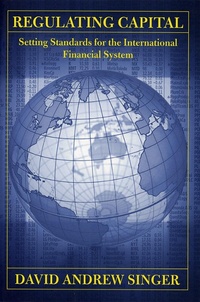
Regulating Capital
Description

Financial instability threatens the global economy. The volatility of capital movements across national borders has led many observers to argue for a reformed "global financial architecture," a body of consistent rules and institutions to prevent financial crises. Yet regulators have a decidedly mixed record in their attempts to create global standards for the financial system. David Andrew Singer seeks to explain the varying pressures on regulatory agencies to negotiate internationally acceptable rules and suggests that the variation is largely traceable to the different domestic political pressures faced by regulators. In Regulating Capital, Singer provides both a theory of the effects of domestic pressures on international regulation and a detailed analysis of regulators' attempts at international rulemaking in banking, securities, and insurance. Singer addresses the complexities of global finance in an accessible style, and he does not turn away from the more dramatic aspects of globalization; he makes clear the international implications of bank failures and stock-market crashes, the rise of derivatives, and the catastrophic financial losses caused by Hurricane Katrina and the events of September 11.
More details
Other editions
Additional editions
Person
David Andrew Singer is Associate Professor of Political Science at the Massachusetts Institute of Technology.
Content
1. Introduction: Financial Regulators and International Relations2. Capital Regulation: A Brief Primer3. Regulators, Legislatures, and Domestic Balancing4. Banking: The Road to the Basel Accord5. Securities: Financial Instability and Regulatory Divergence6. Insurance: Domestic Fragmentation and Regulatory Divergence7. Conclusion: The Future of International Regulatory HarmonizationNotes
Reference
Index
