

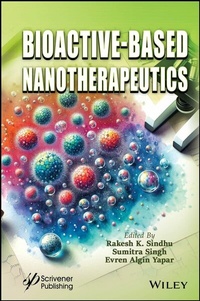
Bioactive-Based Nanotherapeutics
Description

The book provides essential insights into the revolutionary potential of nanotechnology in medicine, exploring innovative approaches that harness natural materials for targeted and effective disease management.
Nanotechnology has emerged as an innovative field with the potential to transform various sectors, including medicine and allied health sciences. Bioactive nanotherapeutics, a specific area within nanotherapeutics, utilizes natural materials or biomimetic designs to offer distinct advantages such as targeted drug delivery, biocompatibility, and improved therapeutic efficacy. These bioactive-based nanotherapeutics are used in the treatment and management of various diseases.
Bioactive-Based Nanotherapeutics explores this rapidly growing field of therapeutics. It presents a broad overview of the fundamentals of bioactive nanomaterials, their design strategies, and their therapeutic applications. Leading experts from different disciplines have contributed chapters that explore a diverse range of topics, including the basics of bioactive nanotherapeutics, isolation methods of different bioactive compounds, and formulation developments. This volume addresses the importance of nanotechnology for the treatment and management of different diseases, including nasal, gastrointestinal, rectal, and transdermal diseases.
Readers will find the book:
- Provides scientific research and evidence that supports the effectiveness of bioactive-based nanocarriers in treating diseases;
- Explores actionable steps and real-life scenarios to illustrate the practical benefits;
- Provides a comprehensive guide that explains the holistic approach, explaining health-related applications of bioactive-based nanoformulations.
Audience
Pharmacists, biologists, chemists, doctors, academics, and industry professionals interested in holistic and bioactive-based methods for disease treatment.
More details
Other editions
Additional editions
Persons
Rakesh K. Sindhu, PhD is a professor and a research and development co-coordinator in the School of Pharmacy at Sharda University, India, with 16 years of experience. He has filed 20 patents, five of which have been granted. He has also published over 90 papers in reputed journals, ten papers in international conferences, 30 in national conferences, eight books, and 25 book chapters. His research interests include pharmacological evaluation of herbal drugs and products, nanoformulation development and evaluation, standardization of herbal products, and phytochemical screening.
Sumitra Singh, PhD is as a professor and dean in the Department of Pharmaceutical Sciences at the Guru Jambheshwar University of Science and Technology, India, with over 23 years of research and teaching experience. She has published over 50 research papers in reputed national and international journals, three books, and five book chapters. She has also filed five patents. Her expertise is in standardization, pharmacological evaluation, and formulation development of herbal drugs and natural products.
Evren Algin Yapar, PhD is a professor, vice dean, and Head of the Department of Pharmaceutical Technology at Sivas Cumhuriyet University, Turkey. She is a member of the National Accreditation Council for Pharmacy Education and a several associations and professional organizations in addition to serving on several advisory and refer boards for international journals. She is involved in research regarding drug design and delivery, nanomaterials and carrier systems, cosmetics, herbal sources, and products.
Content
Preface xxxi
1 Basics of Nano-Bioactive Compounds and Their Therapeutic Potential 1
Jannat ul Firdaus, Sumitra Singh and Rakesh K. Sindhu
1.1 Introduction 2
1.2 Therapeutic Potential of Bioactive Compounds 3
1.3 Extraction Techniques for Obtaining Bioactive Compound 8
1.4 Novel Delivery Approach for Bioactive Compounds 9
1.5 Electrospinning 11
1.6 Micro- and Nanoencapsulation of Bioactive Compounds 11
1.7 Polymeric Nanoparticles (NPs) 12
1.8 Solid Lipid Nanoparticles 12
1.9 Nanoemulsions 12
1.10 Nanocrystals 13
1.11 Phytosomes 13
1.12 Therapeutic Potential of Nano-Bioactive Compounds 14
1.13 Conclusion 17
References 18
2 Recent Techniques for Isolation of Bioactive Components from Plants 27
Omonike O. Ogbole, Oluwagbenga V. Kayode, Feranmi J. Adelowokan and Oluwatoyin A. Odeku
2.1 Introduction 28
2.2 Extraction Methods 30
2.3 Recent Chromatographic Methods 35
2.4 Applications of Two-Dimensional Chromatographic Approaches 40
2.5 Hyphenated Techniques 40
2.6 Conclusion 43
References 43
3 Bioactive-Based Nanocarriers for Inflammatory Diseases 55
Jasdev Singh Tuteja, Supriya Shidhaye, Anamika Singh and Tamanna Narsinghani
3.1 Inflammation and Diseases 56
3.2 Nanocarriers as Drug Delivery System 58
3.3 Nanocarriers and Inflammation 59
3.4 Inflammation in Central Nervous System 60
3.5 Ophthalmological Inflammation 63
3.6 Cardiovascular Inflammation 65
3.7 Respiratory Inflammation 68
3.8 Inflammation in Gastric System 73
3.9 Excretory System Inflammation 77
3.10 Inflammation of the Reproductive System 81
3.11 Inflammation Associated with Dermatology 85
3.12 Muscular Inflammation 89
3.13 Skeletal Inflammation 92
3.14 Applications of Nanocarriers in Inflammation 96
3.15 Conclusion 101
References 102
4 Bioactive-Based Nanocarriers for Dermal Diseases 115
Nitika Garg, Sanchit Dhankhar, Samrat Chauhan and Suresh Beniwal
4.1 Introduction 116
4.2 Skin Anatomy and Physiology: Implications for Drug Delivery 117
4.3 Barrier Functions of the Skin 119
4.4 Transdermal Permeation Challenges 119
4.5 Factors Influencing Dermal Drug Penetration 120
4.6 Role of Nanocarriers in Enhancing Drug Penetration 122
4.7 Types of Bioactive-Based Nanocarriers 129
4.8 Design Principles and Fabrication Techniques 129
4.9 Characterization of Bioactive-Based Nanocarriers 130
4.10 Applications in Diverse Dermal Diseases 132
4.11 Preclinical Studies: In Vivo and In Vitro 140
4.12 Challenges and Future Directions 142
4.13 Conclusion 143
References 144
5 Nano-Based Nasal Delivery of Biomacromolecules: A Myriad of Opportunities 151
Genada Sinani, Sevgi Güngör, Yildiz Özsoy and Erdal Cevher
5.1 Biomacromolecules 152
5.2 Characteristics of Biomacromolecules and Delivery Challenges 153
5.3 Opportunities of Nasal Route 156
5.4 Main Factors in Nasal Cavity Affecting Delivery of Biomacromolecules 157
5.5 Nano-Based Delivery Systems as an Efficient Strategy to Improve Intranasal Administration of Biomacromolecules 160
5.6 Proof of Concept: Biomacromolecules Administered by Intranasal Nano-Based Delivery Systems 167
5.7 Safety Considerations 184
5.8 Conclusion 185
References 187
6 Bioactive-Based Nanocarriers for Ocular Application 199
Ishita Bhardwaj, Atifa Haseeb Ansari, Swayam Prabha Rai, Durgesh Singh and Sippy Singh
6.1 Introduction 200
6.2 Barriers and Route of Ocular Drug Delivery 200
6.3 Nanoparticles in Ocular Diseases Therapy 201
6.4 Organic Nanocarriers 202
6.5 Inorganic Nanocarriers 207
6.6 Benefits of Bioactive-Based Nanoparticles for Occular Application 210
6.7 Challenges and Future Considerations 211
6.8 Conclusion 212
Acknowledgment 212
References 213
7 Bioactive-Based Nanocarriers for Gastrointestinal System Disease 223
Phool Chandra, Rashmi Pathak, Neetu Sachan, Ashok Kumar Gupta and Anurag Verma
7.1 Introduction 224
7.2 Types of Bioactive-Based Nanocarriers 231
7.3 Design and Fabrication of Bioactive-Based Nanocarriers 236
7.4 Bioactive Molecules for Targeting Gastrointestinal Diseases 238
7.5 Preclinical Studies and Clinical Trials 242
7.6 Therapeutic Applications of Bioactive-Based Nanocarriers 245
7.7 Safety and Toxicity Considerations 250
7.8 Challenges and Future Perspectives 253
7.9 Conclusion 254
References 255
8 Bioactive-Based Nanocarriers for Cancer Treatment and Targeting 265
Petra O. Nnamani, Ozioma B. Onokala and Oluwatoyin A. Odeku
8.1 Overview of Current Global Epidemiology and Prevalence of Cancer 266
8.2 Comparison and Contrast Between Bioactive-Based Nanocarriers and Other Cancer Treatment 266
8.3 Mechanism(s) for Cancer Treatment and Targeting Using Bioactive Compounds 270
8.4 Bioactive-Based Nanocarriers for Treatment and Targeting of Different Categories of Cancer 277
8.5 Limitations of Bioactive-Based Nanocarriers for Cancer Treatment and Targeting 285
8.6 Future prospects 285
8.7 Conclusion 286
References 286
9 Bioactive-Based Nanocarrier for the Management of Infectious Diseases 299
Manisha Pandey, Pooja, Deepika Sharma, Sunita Nirban, Ashwani Arya, Suchitra Nishal, Manish Dhall, Neha Jain and Tarun Kumar
9.1 Introduction 300
9.2 Factors Influencing Bioactive Nanocarriers 304
9.3 Mechanism of Action of Bioactive Nanocarriers in Infection 307
9.4 Recent Advancements in Bioactive-Based Nanocarrier for Infections 314
9.5 Beneficial Aspects of Bioactive-Based Nanocarrier Over Conventional Treatment 323
9.6 Conclusion and Future Prospects 329
References 329
10 Bioactive-Based Nanocarriers for Cosmeceuticals 339
Bhavana Singh, Gautam Kumar, Vandana, Hema Arya, Deepika Joshi, Urvashi Saxena, Sumitra Singh and Rakesh K. Sindhu
10.1 Introduction 340
10.2 Nanotechnology in Cosmeceuticals 342
10.3 Bioactive Ingredients in Cosmeceuticals 346
10.4 Nanocarriers for Bioactive Delivery 351
10.5 Applications of Bioactive-Based Nanocarriers in Cosmeceuticals 354
10.6 Challenges and Future Perspectives 361
References 364
11 Bioactive-Based Nanocarriers for CVD 369
Swapnali Patil, Pranali Pangam and Poournima Sankpal
11.1 Introduction 370
11.2 The Ongoing CVD Crisis 370
11.3 Bioactive Compounds and Their Role in Cardiovascular Disease (CVD) Prevention and Treatment 374
11.4 Role of Bioactive Compounds in CVD Prevention 374
11.5 Bioactive-Based Nanocarriers for Enhanced Drug Delivery 377
11.6 Challenges and Future Directions 380
11.7 Conclusion 383
References 384
12 Bioactive-Based Nanocarriers for Diabetes 389
Deepak Kumar, Ankit Kumar Singh, Adarsh Kumar, Harshwardhan Singh, Jagat Pal Yadav and Pradeep Kumar
Abbreviations 390
12.1 Introduction 390
12.2 Bioactive-Based Nanocarriers in Medicine and Healthcare Including Diabetes 394
12.3 Significance of Material Selection in Bioactive-Based Nanocarriers 399
12.4 Targeting Strategies for Diabetes Therapy 399
12.5 Benefits of Targeted Drug Delivery in Diabetes 401
12.6 Factors Affecting Drug Loading Efficiency and Stability in Encapsulation Systems 403
12.7 Opportunities for Improving Nanocarrier Performance and Targeting Specificity 406
12.8 Ethical and Regulatory Considerations 407
12.9 Challenges and Future Perspectives 409
12.10 Conclusion 410
Acknowledgments 410
References 411
13 Bioactive-Based Nanocarriers in Management of CNS Diseases 417
Satish Polshettiwar, Pankaj Khuspe, Amol Gholap, Prasad Aldar and Mangesh Godbole
13.1 Introduction 418
13.2 Principles of Bioactive-Based Nanocarriers 422
13.3 Overcoming the Blood-Brain Barrier 428
13.4 Nanocarriers of Hope: Revolutionizing Neurodegenerative Disease Management 435
13.5 Applications in Neurodegenerative Diseases 436
13.6 Bioactive-Based Nanocarriers for Brain Tumor Therapy 438
13.7 Bioactive-Based Nanocarriers in Stroke Management 439
13.8 Traumatic Brain Injury and Nanocarrier Interventions 440
13.9 Imaging and Diagnostic Capabilities 441
13.10 Current Preclinical and Clinical Advancements 442
13.11 Future Prospects and Challenges 443
13.12 Conclusion 444
References 445
14 Nanocarrier Applications for the Delivery of Bioactives for Topical Wound Healing 461
Imren Esentürk-Güzel, Merve Nur Özdemir, Evren Algin Yapar and Meryem Sedef Erdal
14.1 Introduction 462
14.2 Physiology of Wound Healing 463
14.3 Skin Drug Delivery for Wound-Healing Applications 465
14.4 Research on Wound Healing Using Nanocarriers Loaded with Bioactive Materials 468
14.5 Prospects and Challenges of Nanocarriers in Future Wound Healing 493
References 494
15 Bioactive-Based Nanocarriers for Targeting Antimicrobial Resistance 509
Paka Sravan Kumar, Farmiza Begum, Chaman Bala, Bhavana Singh, Rakesh Kumar Sindhu and Gautam Kumar
15.1 Introduction 510
15.2 Development of Antibiotic Resistance 510
15.3 Mechanism of Antibiotic Resistance 511
15.4 Current Treatment Approaches to Management Antibiotic Resistance and Challenges 514
15.5 Phytochemicals in the Management of Antibiotic Resistance 517
15.6 Phytochemical-Based Nanocarriers for the Management of Antibiotic Resistance 520
15.7 Mechanism of Phytochemical-Based Nanocarriers in Combating Antibiotic Resistance 521
15.8 Conclusion and Future Perspectives 522
References 522
16 Bioactive Phytochemical-Based Nanocarriers for Targeting Non-Alcoholic Fatty Liver Disease (NAFLD) 525
Gautam Kumar, Sara Fathima, Prasada Chowdari Gurram, Chaman Bala, Rakesh Kumar Sindhu and Farmiza Begum
16.1 Introduction 526
16.2 Etiology and Pathophysiology 526
16.3 Current Treatment Options Available for NAFLD 528
16.4 Bioactive-Based Nanocarriers: A Treatment Option for NAFLD as Smart Drug Carriers 541
16.5 Toxicological Concerns of Nanocarriers for NAFLD Therapy 548
16.6 Merits and Demerits of Bioactive-Based Nanocarriers for NAFLD Treatment 550
16.7 Conclusion and Future Perspectives 551
References 552
17 Bioactive Peptide-Based Nanocarrier and Its Application 563
Sailee Chowdhury, Subhabrota Majumdar, Dipanjan Karati, Koyel Kar and Rana Mazumder
17.1 Introduction 564
17.2 Brief Attention on Peptides 564
17.3 Bioactive Peptide as Nanocarriers 565
17.4 Conclusion and Future Outlook 577
References 578
18 Bioactive-Based Nanocarriers for the Treatment of Lung Disorders 587
Shayeri Chatterjee Ganguly, Sumon Giri and Moumita Kundu
18.1 Introduction 588
18.2 Advantages and Challenges of Nanocarriers in Lung Disease Treatment 589
18.3 Role of Bioactive Nanocarriers in Lung Disease Management 590
18.4 Bioactive-Based Nanocarriers in Asthma Management 591
18.5 Bioactive-Based Nanocarriers in COPD Treatment 595
18.6 Pulmonary Fibrosis and Bioactive Nanocarrier Approaches 598
18.7 Bioactive Nanocarriers for Cystic Fibrosis Treatment 600
18.8 Tuberculosis Management with Bioactive-Based Nanocarriers 603
18.9 Future Perspectives and Conclusion 605
References 606
19 Bioactive-Based Nanotherapeutics in Pain Management: A Revolutionary Approach 619
Sumon Giri, Zainab Irfan, Shaikh Ershadul Haque, Shayeri Chatterjee Ganguly and Stabak Das
19.1 Introduction 619
19.2 Pathophysiology of Pain 620
19.3 Pain Biomarkers 622
19.4 Treatment for Pain Management 627
19.5 Significance of Bioactive Compound-Based Nanotherapeutics in Pain Therapy 629
19.6 Nanotherapeutics: A New Strategy from the Bioactive Compounds for the Treatment of Pain 632
19.7 Conclusion 647
References 648
20 Bioactive-Based Nanocarriers for Neonatal Drug Delivery System: Enhancing Efficacy and Safety in Neonatal Medicine 663
A. Mohamed Noufal, R. Sabitha and S. Akilandeswari
20.1 Introduction 664
20.2 Nanocarrier Design Considerations for Neonatal Use 665
20.3 Bioactive Components in Nanocarrier Systems 667
20.4 Enhancing Drug Encapsulation, Stability, and Sustained Release 670
20.5 Minimizing Toxicity and Immunogenicity 672
20.6 Exploiting Neonatal Physiology for Targeted Delivery 674
20.7 Nanocarrier Surface Modification and Ligand Conjugation 675
20.8 Improving Drug Bioavailability in Neonatal Populations 678
20.9 Promising Applications of Bioactive-Based Nanocarriers in Neonatal Medicine 679
20.10 Advancements and Future Perspectives 681
20.11 Conclusion 681
References 682
21 Bioactive-Based Nanocarriers for the Treatments of Obesity: A Novel Approach 691
Loveleen Kaur, Baljinder Singh, Raghav Tandon, Reecha Madaan, Rakesh K. Sindhu and Sumitra Singh
21.1 Introduction 692
21.2 Pathophysiology 693
21.3 Management of Obesity 695
21.4 Bioactive Compounds 699
21.5 Nanotechnology 701
21.6 Conclusion/Future Perspectives 704
References 705
22 Regulatory Aspects of Bioactive-Based Nanocarriers 715
Farmiza Begum, Chaman Bala, Fathima Beegum, Sara Fathima, Rakesh Kumar Sindhu and Gautam Kumar
22.1 Introduction 716
22.2 The Necessity of Regulating Nanomedicine 717
22.3 Worldwide Strategies for the Regulation of Nanopharmaceuticals 717
22.4 Conclusion 724
References 725
Index 727
1
Basics of Nano-Bioactive Compounds and Their Therapeutic Potential
Jannat ul Firdaus1, Sumitra Singh2 and Rakesh K. Sindhu3*
1School of Pharmacy, Sharda University, Gr. Noida, Gautam Buddha Nagar, Uttar Pradesh, India
2Department of Pharmaceutical Sciences, Guru Jambheshawar University of Science and Technology, Hisar, Haryana, India
3Department of Pharmaceutical Sciences, Guru Jambheshwar University of Science and Technology, Hisar, Haryana, India
Abstract
In a broad way, bioactive compounds can be classified into two forms, essential and nonessential compounds obtained from nature, and are a part of the food chain. Bioactive compounds carry numerous health benefits for the body that promotes good health. Nowadays, these compounds are studied as they prevent many dreadful diseases such as malignant tumors, and cardiovascular disease. These compounds also show free radical scavenging properties and antiphlogistic properties, immunomodulatory potential, as well as antimicrobial properties. These compounds are chemically unstable, susceptible to oxidation, and insoluble in body fluids; therefore, their delivery is a cause of concern. Plant-based bioactive compounds impart therapeutic effects and adverse effects on humans and animals. There is an extensive range of advantages of bioactive compounds in food technology, plant science, geoscience, plant science, biophysical and computational sciences, agrochemicals, cosmetics, and nanobioscience. Bioactive compounds include terpenoids, polyphenols, alkaloids, and other nitrogen-containing compounds. These are generally secondary metabolites. This chapter includes an introduction, medicinal uses of bioactive compounds, extraction techniques, carrier approach for bioactive compounds, and therapeutic potential of nano-bioactive compounds. Diet provides proper nutrients to cover the metabolic requirements and also improves human health.
Keywords: Bioactive compounds, health, nanotherapeutics, nanobioscience, toxicological effects
1.1 Introduction
Bioactive compounds, rich in nature, are molecules with significant impacts on living organisms across plants, animals, and microorganisms. These compounds, various in structure and function, play pivotal roles in biological processes and good health benefits. Various groups of bioactive compounds are phytochemicals, microbial toxins, nutraceuticals, and secondary products. A wide range of biological roles are played by bioactive compounds such as antioxidant, anti-inflammatory, antimicrobial, and anticancer properties. Phytochemicals, such as flavonoids and alkaloids, contribute to plant characteristics and provide health benefits, whereas nutraceuticals offer health advantages beyond basic nutrition [1]. Microbial and secondary metabolites, including antibiotics and plant-derived compounds, hold therapeutic promise. Ongoing research continues to uncover the multifaceted functionalities of natural biologically active compound, facilitating the production of pharmaceuticals and nutraceuticals to enhance human health and well-being. Various plant sources from which bioactive compounds can be obtained are fruits, vegetables, seaweeds, herbs, broccoli, carrots, and cereals. These compounds possess anti-inflammatory and antioxidant potential. These are the secondary metabolites that have health-promoting effects. Bioactive compounds have a diverse range of pharmacological activity as a remedy to treat various disorders. An extensive range of these compounds is available, which can be mainly obtained from plants, vegetables, and whole grains [2], as shown in Figure 1.1.
Figure 1.1 Various types of bioactive compounds.
1.2 Therapeutic Potential of Bioactive Compounds
Bioactive compounds affect living organisms, tissues, or cells. They are generally sold as dietary supplements [3, 4]. Bioactive compounds may be found in various natural foods. These compounds are used to improve health and chronic disease prevention as mentioned in Figure 1.2. Sources for obtaining bioactive compounds are plant, animal, and synthetic way [5, 6]. There is a wide range of therapeutic potentials of bioactive compounds in the extracts and compounds in the anticancer, antidiuretic, antipyretic, free radical scavengers, treat bacterial infections, anti-convulsant, prevention of blood clots [7].
Figure 1.2 Therapeutic application of bioactive compounds.
1.2.1 Alkaloids
Alkaloids have basic nitrogen atoms in their structure, they are mainly amines. Alkaloids can be obtained from plant families such as Solanaceae, Ranunculaceae, Papaveraceous, and Amaryllidaceae. Lysine, ornithine, terpenoid, and polyketide pathways are different pathways by which alkaloids can be obtained [8]. Natural alkaloids include vincristine, hydroxy camptothecin, and ligustrazine. The molecular weight of alkaloids is less than 1 kDa. Alkaloids can be obtained from the stem, root, rhizome, fruit, and bark of medicinal plants [9].
1.2.1.1 Medicinal Use of Alkaloids as Bioactive Molecule
Strychnine, quinine, and nicotine are some well-known alkaloids that have beneficial effects.
Alkaloids possess many pharmacological consequences such as reducing myocardial damage, reducing inflammation, anaesthetics, and antiviral [10].
1.2.2 Antibiotics
Medicines that are used to treat bacterial infections are antibiotics. Antibiotics hamper bacterial growth. Pathogens including prions, viruses, parasites, bacteria, protozoa, worms and mould cause infectious diseases. Through the cardiovascular system, infectious microorganisms spread throughout the body. Bone marrow plays a crucial role in eliminating these deadly pathogens. In reducing the side effects of drugs, resistance, and cost of treatment antimicrobial nanoparticles play a very important role [11].
1.2.2.1 Medicinal Use of Antibiotics as Bioactive Molecule
Bioactive comopounds are used as antibiotics to treat various diseases like Pneumonia, typhoid fever, or gonorrhea [12].
1.2.3 Mycotoxins
Mycotoxins are naturally producing toxins, found in food and cause kidney damage and DNA damage on exposure, resulting into death. Mycotoxins have some pharmacological properties, which act as antibiotics and growth promotants [13].
1.2.3.1 Medicinal Use of Mycotoxins as Bioactive Molecule
1.2.4 Growth Factors
Growth factors are a large group of bioactive macromolecular drugs used for peripheral nerve injuries. Growth factors play an important role in nerve regeneration, which includes nerve cell growth and survival, regeneration of axon and myelin sheath, cell differentiation, and angiogenesis [14].
1.2.4.1 Medicinal Use of Growth Factors as Bioactive Compounds
Growth factors are macromolecules that promote cell survival and proliferation, and they also treat peripheral nerve injuries [14].
1.2.5 Phenolics
Phenolics also known as phenol carboxylic acids are a plant-based phenolic compound found in many plant source foods such as seeds, fruit peel, and vegetable leaves [15].
1.2.5.1 Medicinal Use of Phenolics as Bioactive Compounds
Phenolics are originated form plants and used to treat conditions like free radical damage. These compounds can be used alone or in combination of vitamins [16]. Diet contributes to meeting daily metabolic requirements as well as improvement of human health. Extracts of plants need to be identified and developed that benefit human health [17]. Many chronic diseases can be treated by consumption of plant-based products. Nutraceutical and pharmaceutical sectors are now focusing on these plant-based products for developing food products and natural medicines, having therapeutic effects with less or no side effects [18]. Fruits, vegetables, and nuts play a crucial role in decreasing the risk of neoplasm and heart diseases. Taking one portion of fruits and vegetables in a meal will decrease hazard of heart disease by up to 7%. There are many roles of having healthy food such as improving immunity, healthy hairs, nails, etc., with a decreased carcinoma risk [19]. Secondary metabolites are formed in plants by primary biosynthetic and metabolic routes. They are regarded as biochemical products. Many plant species tend to produce such compounds [20]. The effects of bioactive compounds are shown in Table 1.1 with their beneficial effect.
Table 1.1 Table showing various condition treated by bioactive compound.
Condition Bioactive compound Source References Inhibiting cancer cell growth Vincristine, vinblastine, irinotecan, etoposide, podophyllotoxin, and paclitaxel -Catharanthus roseus-Camptothecacuminata
-Rhizomes of podophyllum peltatum [21] For treating epilepsy Alkaloids, flavonoids, terpenoids, saponins, and coumarins Aconitum species
Passiflora caerulea L.
Cannabis sativa
Cynanchumotophyllum schneid
Coumarona odorata [22] Antiviral activity Betulin -Euphorbia denticulara Lam. [23] Antimicrobial...
