

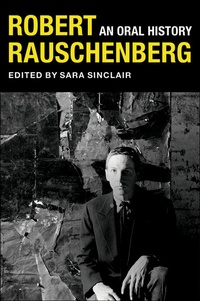
Robert Rauschenberg
An Oral History
1st Edition
Published on 19. August 2019
320 pages
978-0-231-54995-0 (ISBN)
Description

Robert Rauschenberg (1925-2008) was a breaker of boundaries and a consummate collaborator. He used silk-screen prints to reflect on American promise and failure, melded sculpture and painting in works called combines, and collaborated with engineers and scientists to challenge our thinking about art. Through collaborations with John Cage, Merce Cunningham, and others, Rauschenberg bridged the music, dance, and visual-art worlds, inventing a new art for the last half of the twentieth century.
Robert Rauschenberg is a work of collaborative oral biography that tells the story of one of the twentieth century's great artists through a series of interviews with key figures in his life-family, friends, former lovers, professional associates, studio assistants, and collaborators. The oral historian Sara Sinclair artfully puts the narrators' reminiscences in conversation, with a focus on the relationship between Rauschenberg's intense social life and his art. The book opens with a prologue by Rauschenberg's sister and then shifts to New York City's 1950s and '60s art scene, populated by the luminaries of abstract expressionism. It follows Rauschenberg's eventual move to Florida's Captiva Island and his trips across the globe, illuminating his inner life and its effect on his and others' art.
The narrators share their views on Rauschenberg's work, explore the curatorial thinking behind exhibitions of his art, and reflect on the impact of the influx of money into the contemporary art market. Included are artists famous in their own right, such as Laurie Anderson and Brice Marden, as well as art-world insiders and lesser-known figures who were part of Rauschenberg's inner circle. Beyond considering Rauschenberg as an artist, this book reveals him as a man embedded in a series of art worlds over the course of a long and rich life, demonstrating the complex interaction of business and personal, public and private in the creation of great art.
Robert Rauschenberg is a work of collaborative oral biography that tells the story of one of the twentieth century's great artists through a series of interviews with key figures in his life-family, friends, former lovers, professional associates, studio assistants, and collaborators. The oral historian Sara Sinclair artfully puts the narrators' reminiscences in conversation, with a focus on the relationship between Rauschenberg's intense social life and his art. The book opens with a prologue by Rauschenberg's sister and then shifts to New York City's 1950s and '60s art scene, populated by the luminaries of abstract expressionism. It follows Rauschenberg's eventual move to Florida's Captiva Island and his trips across the globe, illuminating his inner life and its effect on his and others' art.
The narrators share their views on Rauschenberg's work, explore the curatorial thinking behind exhibitions of his art, and reflect on the impact of the influx of money into the contemporary art market. Included are artists famous in their own right, such as Laurie Anderson and Brice Marden, as well as art-world insiders and lesser-known figures who were part of Rauschenberg's inner circle. Beyond considering Rauschenberg as an artist, this book reveals him as a man embedded in a series of art worlds over the course of a long and rich life, demonstrating the complex interaction of business and personal, public and private in the creation of great art.
More details
Other editions
Additional editions
Book
03/2021
Columbia University Press
€27.24
Shipment within 10-20 days
Book
08/2019
Columbia University Press
€37.14
Shipment within 10-20 days
Persons
Sinclair Sara :
Sara Sinclair is the project coordinator for the Robert Rauschenberg Oral History Project at INCITE / Columbia Center for Oral History Research, Columbia University.Bearman Peter :
Peter Bearman (Ph.D. Harvard University) is the Jonathan R. Cole Professor of the Social Sciences, Director of INCITE, Director of the Paul F. Lazarsfeld Center for the Social Sciences, and the Director of the Mellon Training Program in the Humanities and Social Sciences at Columbia University, the Centennial Professor of Methodology and Sociology at the London School of Economics. He is the author of Doormen (Chicago, 2005) and the co-editor of The Middle Range Series for Columbia University Press.Clark Mary Marshall :
Mary Marshall Clark is the Director of the Columbia Center for Oral History Research and the codirector of the Columbia Oral History Master of Arts Program. She has directed numerous oral history projects and is the coeditor of After the Fall: New Yorkers Remember September 11, 2001 and the Years that Followed (New Press, 2011).Sara Sinclair was project manager and lead interviewer for the Robert Rauschenberg Oral History Project at the Columbia Center for Oral History Research.
Peter Bearman is the Cole Professor of the Social Sciences and director of the Interdisciplinary Center for Innovative Theories and Empirics at Columbia University. He is the author of Doormen (2005) and coauthor of Working for Respect: Community and Conflict at Walmart (Columbia, 2018).
Mary Marshall Clark is the director of the Columbia Center for Oral History Research and codirector of the Oral History Master of Arts Program at Columbia University. She is coeditor of After the Fall: New Yorkers Remember September 11, 2001, and the Years That Followed (2011).
Sara Sinclair is the project coordinator for the Robert Rauschenberg Oral History Project at INCITE / Columbia Center for Oral History Research, Columbia University.Bearman Peter :
Peter Bearman (Ph.D. Harvard University) is the Jonathan R. Cole Professor of the Social Sciences, Director of INCITE, Director of the Paul F. Lazarsfeld Center for the Social Sciences, and the Director of the Mellon Training Program in the Humanities and Social Sciences at Columbia University, the Centennial Professor of Methodology and Sociology at the London School of Economics. He is the author of Doormen (Chicago, 2005) and the co-editor of The Middle Range Series for Columbia University Press.Clark Mary Marshall :
Mary Marshall Clark is the Director of the Columbia Center for Oral History Research and the codirector of the Columbia Oral History Master of Arts Program. She has directed numerous oral history projects and is the coeditor of After the Fall: New Yorkers Remember September 11, 2001 and the Years that Followed (New Press, 2011).Sara Sinclair was project manager and lead interviewer for the Robert Rauschenberg Oral History Project at the Columbia Center for Oral History Research.
Peter Bearman is the Cole Professor of the Social Sciences and director of the Interdisciplinary Center for Innovative Theories and Empirics at Columbia University. He is the author of Doormen (2005) and coauthor of Working for Respect: Community and Conflict at Walmart (Columbia, 2018).
Mary Marshall Clark is the director of the Columbia Center for Oral History Research and codirector of the Oral History Master of Arts Program at Columbia University. She is coeditor of After the Fall: New Yorkers Remember September 11, 2001, and the Years That Followed (2011).
Content
Preface
Reader's Guide
Acknowledgments
Prologue
1. Small World
2. Collaborations
3. 381 Lafayette Street
4. Captiva
5. Travelogue
6. Rauschenberg Overseas Culture Interchange (ROCI)
7. Curating and Installations
8. An Expanding American Art Market
9. No One Wanted It to End
Network Diagrams
Narrators
Notes
Index
