

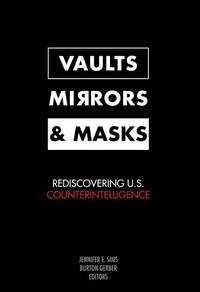
Vaults, Mirrors, and Masks
Description

Decision makers matching wits with an adversary want intelligence-good, relevant information to help them win. Intelligence can gain these advantages through directed research and analysis, agile collection, and the timely use of guile and theft. Counterintelligence is the art and practice of defeating these endeavors. Its purpose is the same as that of positive intelligence-to gain advantage-but it does so by exploiting, disrupting, denying, or manipulating the intelligence activities of others. The tools of counterintelligence include security systems, deception, and disguise: vaults, mirrors, and masks.
In one indispensable volume, top practitioners and scholars in the field explain the importance of counterintelligence today and explore the causes of-and practical solutions for-U.S. counterintelligence weaknesses. These experts stress the importance of developing a sound strategic vision in order to improve U.S. counterintelligence and emphasize the challenges posed by technological change, confused purposes, political culture, and bureaucratic rigidity. Vaults, Mirrors, and Masks skillfully reveals that robust counterintelligence is vital to ensuring America's security.
Published in cooperation with the Center for Peace and Security Studies and the George T. Kalaris Memorial Fund, Edmund A. Walsh School of Foreign Service, Georgetown University.
More details
Other editions
Additional editions
Persons
Jennifer E. Sims is professor in residence, director of intelligence studies, and member of the core faculty with the Security Studies Program, Edmund A. Walsh School of Foreign Service, Georgetown University. She has served as deputy assistant secretary of state for intelligence coordination and as the Department of State's first coordinator for intelligence resources and planning. She has also served on the staff of the Senate Select Committee on Intelligence.
Burton Gerber served for 39 years as an operations officer in the Central Intelligence Agency and now teaches at Georgetown University.
Content
Preface
Introduction
Democracies and Counterintelligence: The Enduring Challenge
Jennifer E. Sims
Part One: Framing the Problem
1. Twenty-first Century Counterintelligence: The Theoretical Basis for Reform
Jennifer E. Sims
2. Counterintelligence: The American Experience
John Fox Jr. and Michael Warner
3. Intelligence, Counterintelligence, Perception, and Deception
Robert Jervis
4. Counterintelligence and U. S. Strategic Culture
Austin K. Yamada
Part Two: Tools and Tactics
5. A Time for Counterespionage
Robert Wallace
6. Defense Counterintelligence, Reconceptualized
Vincent H. Bridgeman
7. Counterintelligence and Law Enforcement
Kathleen L. Kiernan
8. Counterintelligence: Too Narrowly Practiced
James R. Gosler
9. Economic or Industrial Espionage: Who is Eating America's Lunch, and How Do We Stop It?
Harvey Rishikof
Part Three: Strategies
10. Private-Sector Counterintelligence Strategies: Principles for Consideration
Rodney Faraon
11. A Federal Approach to Domestic Intelligence
Timothy R. Sample
12. Counterintelligence, Counterterrorism, Civil Liberties, and the Domestic Intelligence Controversy
Richard A. Posner
13. The Way Ahead
Jennifer E. Sims and Burton Gerber
Contributors
Index
