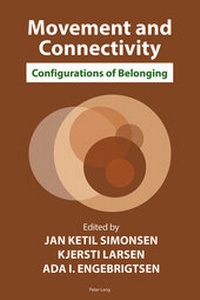
Movement and Connectivity
Description

Through a series of case studies from Southern and Eastern Africa, Oceania, and Europe, Movement and Connectivity: Configurations of Belonging explores the analytical usefulness of the concept of «mobility» for anthropological thought and theorization.
The book scrutinizes mobility through long-term ethnographies that encompass life histories of individual persons, cyclical household developments, and the evolution of communities and networks. It shows how the social and spatial complexity of mobility increases with time and how socio-political and economic changes affect values, ideas, and practices in local life-worlds.
The case studies examines mobility from below and as processes constitutive of society and identity - processes through which mobility is perceived and experienced as part of life. How do people see their own local life-world and its (un)connectedness to other societies? To what extent can a mobility approach advance our understanding of the complex relationship between migratory practices, experiences of belonging, and the kinds of movement and connectivity that make and re-make people as well as their societies?
Movement and Connectivity: Configurations of Belonging re-questions and re-thinks relationships between space, time, and livelihoods and explores how differently motivated geographical movements may be perceived and lived as part of wider social complexities.
More details
Other editions
Additional editions