

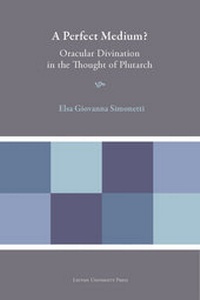
A Perfect Medium?
Oracular Divination in the Thought of Plutarch
Published on 24. September 2017
256 pages
978-94-6166-236-1 (ISBN)
Description

An in-depth analysis of oracular divination in Plutarch's thought
Oracular divination was of special concern for Plutarch of Chaeronea (45-120 AD), Platonic philosopher as well as priest at the oracle of Apollo in Delphi. The peculiar nature of Delphic divination as an (im)perfect intermediary between the material and the immaterial world is fathomed in a thorough study of Plutarch's Delphic dialogues. This in-depth philosophical-conceptual analysis will disclose an original interpretation of oracular divination in Plutarch as interconnected with his psychological and cosmological conceptions. A Perfect Medium? reveals the Delphic temple as a crucial element in Plutarch's philosophy, as a microcosm reflecting the cosmic dynamics, and as a symbol embodying the relationship between human thirst for knowledge and divine absolute wisdom.
This publication is GPRC-labeled (Guaranteed Peer-Reviewed Content).
Oracular divination was of special concern for Plutarch of Chaeronea (45-120 AD), Platonic philosopher as well as priest at the oracle of Apollo in Delphi. The peculiar nature of Delphic divination as an (im)perfect intermediary between the material and the immaterial world is fathomed in a thorough study of Plutarch's Delphic dialogues. This in-depth philosophical-conceptual analysis will disclose an original interpretation of oracular divination in Plutarch as interconnected with his psychological and cosmological conceptions. A Perfect Medium? reveals the Delphic temple as a crucial element in Plutarch's philosophy, as a microcosm reflecting the cosmic dynamics, and as a symbol embodying the relationship between human thirst for knowledge and divine absolute wisdom.
This publication is GPRC-labeled (Guaranteed Peer-Reviewed Content).
More details
Other editions
Additional editions
Book
09/2017
Leuven University Press
€102.94
Shipment within 10-20 days
Person
Content
Acknowledgements
Introduction
1. An analysis of De Pythiae oraculis
1. Introduction
1.1. The character of Diogenianus and the style of philosophy
1.2 The role of the symbol
1.3 The function of the temple
2. The concept of krâsis
3. Prodigies
4. From poetry to prose
5. Enthusiasm
5.1 Body and soul
5.2 The soul of the Pythia
5.3 The dynamic of enthusiasm
5.4 The features of the Pythia
6. The history of the oracle
7. Solar symbolism
2. An analysis of De defectu oraculorum
1. Introduction
2. The character of Didymus and the style of philosophy
3. Narratives and inquiries
4. God's responsibility
4.1. A plurality of worlds
5. The demons and the moon
5.1 Demonology, the kinds of divination and the structure of the soul
6. The psychology of divination
7. The sun and god
8. The theory of double causation
9. The theory of double causation applied on oracular divination
9.1 The pneûma
9.2 The role of the demons in the temple
9.3 Preliminary sacrifices and the concept of 'kairos'
9.4 Delphi as a unique place
10. The Pythia
3. An analysis of De E apud Delphos
1. Introduction
2. Importance of symbols and riddles for philosophy and rational reflection
3. Tentative solutions
3.1. Apollo. The god of popular devotion
3.2. Religion and logic
3.3. Numerology and Pythagoreanism
4. Ammonius' explanation
4.1. Ammonius: Apollo and the sun
4.2. Ammonius' explanation of the 'E'
5. The final image of Apollo and Plutarch's god
5.1. Fate-providence-freedom
6. Plutarch's dualism
6.1. Egypt and Oriental religions
7. 'Conclusion' and value of the dialogue
4. Divination and the soul
1. Plutarch's psychology: the individual soul and the world soul
1.1. The individual soul
1.2. The cosmic soul
1.3. The analogy between the individual and the cosmic soul
2. The psychology of individual divination
3. Plutarch and the Timaeus
3.1. A 'likely account'
3.2. Some remarks on the practical dynamics of Delphic divination
4. The "matter" of divination
4.1. The multiple characters of the Pythia
5. Apollo and the oracle: from chaos to harmony
6. The importance of studying the oracle
Conclusion
Bibliography
Abbreviations
Dictionaries
References
Index Locorum
Introduction
1. An analysis of De Pythiae oraculis
1. Introduction
1.1. The character of Diogenianus and the style of philosophy
1.2 The role of the symbol
1.3 The function of the temple
2. The concept of krâsis
3. Prodigies
4. From poetry to prose
5. Enthusiasm
5.1 Body and soul
5.2 The soul of the Pythia
5.3 The dynamic of enthusiasm
5.4 The features of the Pythia
6. The history of the oracle
7. Solar symbolism
2. An analysis of De defectu oraculorum
1. Introduction
2. The character of Didymus and the style of philosophy
3. Narratives and inquiries
4. God's responsibility
4.1. A plurality of worlds
5. The demons and the moon
5.1 Demonology, the kinds of divination and the structure of the soul
6. The psychology of divination
7. The sun and god
8. The theory of double causation
9. The theory of double causation applied on oracular divination
9.1 The pneûma
9.2 The role of the demons in the temple
9.3 Preliminary sacrifices and the concept of 'kairos'
9.4 Delphi as a unique place
10. The Pythia
3. An analysis of De E apud Delphos
1. Introduction
2. Importance of symbols and riddles for philosophy and rational reflection
3. Tentative solutions
3.1. Apollo. The god of popular devotion
3.2. Religion and logic
3.3. Numerology and Pythagoreanism
4. Ammonius' explanation
4.1. Ammonius: Apollo and the sun
4.2. Ammonius' explanation of the 'E'
5. The final image of Apollo and Plutarch's god
5.1. Fate-providence-freedom
6. Plutarch's dualism
6.1. Egypt and Oriental religions
7. 'Conclusion' and value of the dialogue
4. Divination and the soul
1. Plutarch's psychology: the individual soul and the world soul
1.1. The individual soul
1.2. The cosmic soul
1.3. The analogy between the individual and the cosmic soul
2. The psychology of individual divination
3. Plutarch and the Timaeus
3.1. A 'likely account'
3.2. Some remarks on the practical dynamics of Delphic divination
4. The "matter" of divination
4.1. The multiple characters of the Pythia
5. Apollo and the oracle: from chaos to harmony
6. The importance of studying the oracle
Conclusion
Bibliography
Abbreviations
Dictionaries
References
Index Locorum
