

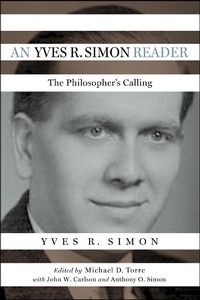
An Yves R. Simon Reader
The Philosopher's Calling
1st Edition
Published on 15. May 2021
514 pages
978-0-268-10831-1 (ISBN)
Description

An Yves R. Simon Reader is the first collection of texts from the entirety of the philosopher's work.
French Catholic (and then American) political philosopher Yves R. Simon was a student of Jacques Maritain and one of the most important figures in the revival of Thomism. His work, however, is still little known in English, and there is as yet no English biography of him. In An Yves R. Simon Reader: The Philosopher's Calling, Michael D. Torre provides an erudite and helpful introduction to Simon's life and thought. The volume contains selected key texts from all of Simon's twenty books, half of which were published posthumously, dividing them into three sections. The first fundamentally defends the Aristotelian and Thomistic account of human knowing. The second begins with his groundbreaking discussion of human freedom and ends with his account of practical wisdom. The third then expands this account to cover the chief concerns of his social and political philosophy. The selections are long enough to be substantive and contain sustained and complete arguments. Each selection has its own foreword by an eminent commentator, familiar with Simon's work, who lays out the necessary context for the reader.
An Yves R. Simon Reader includes sections from several of Simon's last and most important essays: on sensitive knowledge and on the analogous nature of "act." It includes a number of excerpts from his justly famous account and defense of democratic government. The hallmarks of his work-his careful conceptual analysis, his genius for finding undervalued examples, and his talent for creating expressions that revivified an outworn idea-are on display throughout. Indeed, as one of the book's contributors says, Simon touched nothing that he did not adorn. The result is a highly readable introduction to the thought of a key and underappreciated modern philosopher.
Contributors: Michael D. Torre, Jude P. Dougherty, Raymond Dennehy, John C. Cahalan, Steven A. Long, Ralph Nelson, John P. Hittinger, Ralph McInerny, David B. Burrell, CSC, Laurence Berns, Catherine Green, W. David Solomon, V. Bradley Lewis, Joseph W. Koterski, SJ, James V. Schall, SJ, George Anastaplo, Walter J. Nicgorski, John A. Gueguen, Jr., Thomas R. Rourke, Jeanne Heffernan Schindler, and Robert Royal.
French Catholic (and then American) political philosopher Yves R. Simon was a student of Jacques Maritain and one of the most important figures in the revival of Thomism. His work, however, is still little known in English, and there is as yet no English biography of him. In An Yves R. Simon Reader: The Philosopher's Calling, Michael D. Torre provides an erudite and helpful introduction to Simon's life and thought. The volume contains selected key texts from all of Simon's twenty books, half of which were published posthumously, dividing them into three sections. The first fundamentally defends the Aristotelian and Thomistic account of human knowing. The second begins with his groundbreaking discussion of human freedom and ends with his account of practical wisdom. The third then expands this account to cover the chief concerns of his social and political philosophy. The selections are long enough to be substantive and contain sustained and complete arguments. Each selection has its own foreword by an eminent commentator, familiar with Simon's work, who lays out the necessary context for the reader.
An Yves R. Simon Reader includes sections from several of Simon's last and most important essays: on sensitive knowledge and on the analogous nature of "act." It includes a number of excerpts from his justly famous account and defense of democratic government. The hallmarks of his work-his careful conceptual analysis, his genius for finding undervalued examples, and his talent for creating expressions that revivified an outworn idea-are on display throughout. Indeed, as one of the book's contributors says, Simon touched nothing that he did not adorn. The result is a highly readable introduction to the thought of a key and underappreciated modern philosopher.
Contributors: Michael D. Torre, Jude P. Dougherty, Raymond Dennehy, John C. Cahalan, Steven A. Long, Ralph Nelson, John P. Hittinger, Ralph McInerny, David B. Burrell, CSC, Laurence Berns, Catherine Green, W. David Solomon, V. Bradley Lewis, Joseph W. Koterski, SJ, James V. Schall, SJ, George Anastaplo, Walter J. Nicgorski, John A. Gueguen, Jr., Thomas R. Rourke, Jeanne Heffernan Schindler, and Robert Royal.
Reviews / Votes
"This is a highly accessible introduction to the profound thought of a first-class mind. Anyone interested in Thomism or the subjects treated by Simon, including freedom, authority, and the common good, will find it very readable." -Giuseppe Butera, editor of Reading the CosmosAll prices
More details
Series
Language
English
Place of publication
Notre Dame IN
United States
Target group
Professional and scholarly
Product notice
Reflowable
ISBN-13
978-0-268-10831-1 (9780268108311)
Copyright in bibliographic data and cover images is held by Nielsen Book Services Limited or by the publishers or by their respective licensors: all rights reserved.
Schweitzer Classification
Other editions
Additional editions
Book
05/2021
University of Notre Dame Press
€112.50
Shipment within 10-20 days
Persons
Yves R. Simon (1903-1961) was professor of philosophy at the University of Notre Dame and the University of Chicago. He was the author of numerous books, including A General Theory of Authority (1991) and Philosophy of Democratic Government (1993), both published by the University of Notre Dame Press.
Michael D. Torre is associate professor of philosophy at the University of San Francisco. He is the author and editor of twelve books, including Do Not Resist the Spirit's Call: Francisco Marin-Sola on Sufficient Grace.
John W. Carlson (1943-2012) was professor emeritus of philosophy at Creighton University. He was the author of several books, including Words of Wisdom: A Philosophical Dictionary for the Perennial Tradition (University of Notre Dame Press, 2012).
Anthony O. Simon (1936-2012) was director of the Yves R. Simon Institute and for many years the secretary of the American Maritain Association.
Michael D. Torre is associate professor of philosophy at the University of San Francisco. He is the author and editor of twelve books, including Do Not Resist the Spirit's Call: Francisco Marin-Sola on Sufficient Grace.
John W. Carlson (1943-2012) was professor emeritus of philosophy at Creighton University. He was the author of several books, including Words of Wisdom: A Philosophical Dictionary for the Perennial Tradition (University of Notre Dame Press, 2012).
Anthony O. Simon (1936-2012) was director of the Yves R. Simon Institute and for many years the secretary of the American Maritain Association.
Content
An Account of the Reader, by Way of Acknowledgment
Simon's Works In The Reader: Summary And Guide
Part I. Introduction
1. The Philosophy of Yves R. Simon
Introduction by Michael D. Torre
2. Method in Philosophy
by Jude P. Dougherty
Part II. Knowledge
3. Knowledge as Immanent Action
Introduction by Raymond Dennehy
4. The Distinction of Thing and Object
Introduction by John C. Cahalan
5. Analogy and Metaphysical Knowledge
Introduction by Steven A. Long
6. Sensation and Physical Knowledge
Introduction by Ralph Nelson
7. Knowledge of Persons and Society
Introduction by John P. Hittinger Jr.
8. Moral Knowledge
Introduction by Ralph McInerny
Part III. Freedom
9. Human Freedom
Introduction by David B. Burrell, CSC
10. Human Reason and Will
Introduction by Laurence Berns
11. Good Use and Habitus
Introduction by Catherine Green
12. The Definition of Moral Virtue
Introduction by W. David Solomon
13. Freedom of Intellect
Introduction by V. Bradley Lewis
14. Society and the Formation of Free Persons
Introduction by Joseph W. Koterski, SJ
Part IV. Community
15. Political Society
Introduction by James V. Schall, SJ
16. The Definition of Law
Introduction by George Anastaplo
viii Contents
17. The Common Good and Authority
Introduction by Walter J. Nicgorski
18. Work and Society
Introduction by John A. Gueguen Jr.
19. Economic Justice
Introduction by Thomas R. Rourke
20. Community, Truth, and Culture
Introduction by Jeanne Heffernan Schindler
Epilogue: Problems in International Order
Introduction by Robert Royal
Select Bibliography
Contributors
Index
Simon's Works In The Reader: Summary And Guide
Part I. Introduction
1. The Philosophy of Yves R. Simon
Introduction by Michael D. Torre
2. Method in Philosophy
by Jude P. Dougherty
Part II. Knowledge
3. Knowledge as Immanent Action
Introduction by Raymond Dennehy
4. The Distinction of Thing and Object
Introduction by John C. Cahalan
5. Analogy and Metaphysical Knowledge
Introduction by Steven A. Long
6. Sensation and Physical Knowledge
Introduction by Ralph Nelson
7. Knowledge of Persons and Society
Introduction by John P. Hittinger Jr.
8. Moral Knowledge
Introduction by Ralph McInerny
Part III. Freedom
9. Human Freedom
Introduction by David B. Burrell, CSC
10. Human Reason and Will
Introduction by Laurence Berns
11. Good Use and Habitus
Introduction by Catherine Green
12. The Definition of Moral Virtue
Introduction by W. David Solomon
13. Freedom of Intellect
Introduction by V. Bradley Lewis
14. Society and the Formation of Free Persons
Introduction by Joseph W. Koterski, SJ
Part IV. Community
15. Political Society
Introduction by James V. Schall, SJ
16. The Definition of Law
Introduction by George Anastaplo
viii Contents
17. The Common Good and Authority
Introduction by Walter J. Nicgorski
18. Work and Society
Introduction by John A. Gueguen Jr.
19. Economic Justice
Introduction by Thomas R. Rourke
20. Community, Truth, and Culture
Introduction by Jeanne Heffernan Schindler
Epilogue: Problems in International Order
Introduction by Robert Royal
Select Bibliography
Contributors
Index
