

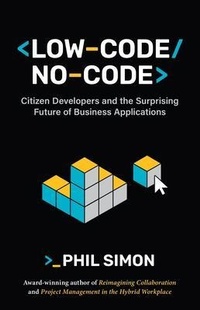
Low-Code/No-Code
Citizen Developers and the Surprising Future of Business Applications
1st Edition
Published on 2. November 2022
278 pages
979-8-9858147-4-3 (ISBN)
Description

For decades, our relationship with workplace technology has been, in a word, complicated. The pandemic only made it more so. The stats are astonishing. Two in three employers cannot find qualified candidates to fill their open IT positions. By 2024, the deficit of software developers in the US alone will hit 500,000. Supply and demand for techies are out of whack and, most alarmingly, there's no end in sight. The effects of this labor market imbalance are profound and difficult to overstate. Nearly three in four technology leaders cannot focus on their strategic priorities. Countless other firms, departments, teams, and leaders have struggled because IT can't deliver the tools they so desperately need. Adding salt to the wound, business units now need new applications to address the logistical challenges posed by pervasive remote and hybrid work. Brass tacks: Organizations are at a crossroads. They need to solve these thorny tech problems. Now. But how? In Low-Code/No-Code: Citizen Developers and the Surprising Future of Business Applications, world-renowned workplace technology expert and award-winning author Phil Simon squares this circle. His thirteenth book deftly illustrates how, thanks to powerful new tools and a new breed of employees, organizations are finally fulfilling critical business needs and reducing their reliance on pricey software developers. Low-Code/No-Code is an invaluable treasure trove of insightful analysis, synthesis, examples, and advice that has arrived at the perfect time.
More details
Content
- Intro
- Half Title Page
- Title Page
- Copyright
- Also by Phil Simon
- Dedication
- Epigraph
- Contents
- List of Figures and Tables
- Part I: Application Development in the Here and Now
- Chapter 1: Workplace Tech: The Struggle Is Real
- Isolating Cause and Effect
- Who's to Blame for the Status Quo?
- The Pandemic Validated the Importance of Workplace Tech
- Understanding the Dual Nature of Contemporary IT
- Shadow IT
- The Interminable War for Tech and Data Talent
- Retention Issues and Remote Work
- A Way Forward
- Chapter 2: A Comically Brief Overview of Conventional Business Technology
- Defining Our Terms
- How Organizations Launch New Workplace Technologies
- Development Methods
- Part II: Reimagining Application Development
- Chapter 3: Why Low-Code/No-Code Changes Everything
- Low-Code/No-Code: Building Blocks and Precursors
- The Great LC/NC Rebranding
- Letters Matter: Distinguishing Between NC and LC Tools
- The Major Characteristics of Today's LC/NC Tools
- A Quick Note for the Low-Code/No-Code Skeptics
- Chapter 4:The Current LC/NC Market and Vendor Landscape
- A Burgeoning Industry
- Major LC/NC Subcategories
- Contextualizing Low-Code/No-Code
- Chapter 5: Introducing the Citizen Developer
- History and Definition
- The Rise of the Citizen Developer
- Common Attributes of Citizen Developers
- Chapter 6: The Benefits of Citizen Development
- IT Benefits
- Organizational Benefits
- Individual and Team Benefits
- Part III: Unleashing LC/NC and Citizen Developers
- Chapter 7: Citizen Development in Action
- The Municipality of Rotterdam
- A Bubbly Outcome for a Budding Entrepreneur
- Low-Code/No-Code Powers Up Synergis Education
- Low-Code/No-Code Transforms a Family Business
- Chapter 8: Approaches to Citizen Development
- All-In: The Single-Vendor Approach
- Let's Experiment: The Skunkworks Approach
- Curated Vendors: The Best-of-Breed Approach
- The Laissez Faire Approach
- The Wait-and-See Approach
- The Universal Ban
- Chapter 9: How to Evaluate Low-Code/No-Code Tools and Learn New Ones
- Evaluating Existing Tools
- Learning New LC/NC Tools
- Chapter 10: Successfully Navigating the LC/NC App Lifecycle
- Planning and Gathering Requirements
- Design and Development
- Testing
- Launch
- Support, Maintenance, and Documentation
- Retirement
- Chapter 11: Low-Code/No-Code and Citizen Developers: Myths and Realities
- LC/NC Tools and Their Offspring
- Citizen Developers
- Chapter 12: Playing the Long Game
- The Resistance Is Real
- Management Strategies
- Tech Strategies
- Epilogue: Where Do We Go From Here?
- Low-Code/No-Code Grows in Scope and Sophistication
- Smarter Software
- The Next Frontier in Business Applications?
- Parting Words
- Thank-You
- Acknowledgments
- Bibliography
- About the Author
- Index
- Endnotes
