

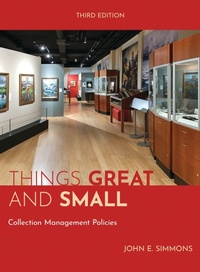
Things Great and Small
Collection Management Policies
3rd Edition
Published on 18. March 2024
312 pages
979-8-7651-9200-9 (ISBN)
Description

Collection care is a fundamental responsibility for museums and other collecting institutions, and the foundation of collection stewardship is good collection management policies. The new third edition of Things Great and Small continues to be a comprehensive resource for developing, implementing, and revising collection management policies and includes new information for addressing prolonged or permanent closure of museums, wider parameters for collection storage environments, and sustainable collection management practices to cope with climate change. Drawing on more than 50 years of experience as a collection manager, educator, consultant, and AAM Museum Assessment Program peer reviewer, John E. Simmons reviews the most recent collection management thinking and literature, helps determine which policies an institution needs, and provides guidance on policy content. In this new edition, coverage of critical areas is expanded, including digital objects, intellectual property rights, deaccessioning, decolonization, standards and best practices, collection storage environment parameters, managing off-site storage facilities, health and safety, laws and regulations, risk management, and sustainable collection management practices. With more than 50 tables and charts and model policy templates, this major publication is aimed at museums of all kinds, historic houses and sites, and other collecting institutions.
More details
Series
Edition
3rd edition
Language
English
Place of publication
New York
United States
Publishing group
Bloomsbury Publishing Plc
Illustrations
15 b/w illustrations; 46 tables; 39 textboxes;
ISBN-13
979-8-7651-9200-9 (9798765192009)
Copyright in bibliographic data and cover images is held by Nielsen Book Services Limited or by the publishers or by their respective licensors: all rights reserved.
Schweitzer Classification
Other editions
Additional editions
Book
04/2024
3rd Edition
American Alliance of Museums
€53.40
Shipment within 3-4 weeks
Previous edition
E-Book
12/2017
2nd Edition
American Alliance Of Museums
€45.99
Available for download
Person
John E. Simmons (BA, Systematics & Ecology; MA, Museum Studies) has worked in museums for more than 50 years. He began his career as a zoo keeper before becoming collections manager at the California Academy of Sciences and later at the Natural History Museum at the University of Kansas, where he also served as Director of the Museum Studies Program until 2007. He is the recipient of the Superior Voluntary Service Award from the American Association of Museums (2001), the Chancellor's Award for Outstanding Mentoring of Graduate Students from the University of Kansas (2005), the Carolyn L. Rose Award for Outstanding Commitment to Natural History Collections and Management from the Society for the Preservation of Natural History Collections (2011), the Dudley-Wilkinson Award of Distinction from the Registrars Committee of the American Alliance of Museums (2016), and the Spiritus Award for Excellence in Service and Management of Herpetological and Ichthyological Collections from American Society of Ichthyologists and Herpetologists (2019). John has published more than 150 papers and several books, including Cuidado, Manejo y Conservación de las Colecciones Biológicas (2005, with Yaneth Munoz-Saba), Fluid Preservation: A Comprehensive Reference (2014), Foundations of Museum Studies: Evolving Systems of Knowledge (2014, with Kiersten Latham), Herpetological Collecting and Collections Management (3rd edition, 2015), Museums: A History (2016), Things Great and Small: Collections Management Policies (2nd edition, 2017), the chapter on "Collections Management: History, Theory, and Practice" in The International Handbook of Museum Studies (2015), Best Practices in the Preservation and Management of Fluid-Preserved Biological Collections (with Dirk Neumann, Julian Carter, and Oliver Crimmen), and he edited the 6th edition of Museum Registration Methods in 2020 (with Toni Kiser). John's research interests include the conservation of natural history and anatomical specimens, the history of museums, and the development of sustainable collections management practices. John currently runs Museologica museum consulting and teaches museology workshops and university classes.
Content
- Cover
- Half-title
- Title Page
- Copyright
- Contents
- List of Figures
- List of Text Boxes
- List of Tables
- Acknowledgments
- Introduction
- What Collection Management Policies Are Needed?
- Collection Management Policy Resources
- How to Use This Book
- Chapter 1. Considering Collection Management Policies
- Collection Management Policies in For-Profit Museums and Privately Owned Collections
- Collecting Institutions
- What Is a Collection?
- What Is Collection Management?
- Who Manages the Collection?
- What Is a Collection Management Policy?
- Collection Management Policy or Policies?
- What Do Collection Management Policies Do?
- What Is the Public Trust?
- Policy, Procedure, or Plan?
- Determining the Content
- History, Tradition, and Ethics
- The Collection Management Workload
- Standards and Best Practices
- How to Use This Book
- Chapter 2. Preparing Collection Management Policies
- Methods of Preparing Collection Management Policies
- Describing the Collection Components
- Grammar and Style
- Preparing and Implementing Collection Management Policies
- Step One: Assemble the Writing Team
- Step Two: Policy Development
- Step Three: Standards and Best Practices Review
- Step Four: Staff Feedback
- Step Five: Governance Endorsement
- Step Six: Procedures Development
- Step Seven: Implementation
- Step Eight: Periodic Review and Revision
- Chapter 3. Introductory Sections
- Mission and Vision Statements
- Institution and Collection History
- Legal Organization of Museums
- For-Profit Museums
- Institutional Commitment to Collection Stewardship
- Purpose of the Collection Management Policies
- How the Collection Management Policies Were Prepared
- Chapter 4. Authority
- Governing Authority
- Statement of Authority
- Chapter 5. Scope of Collections and Categories of Collections
- Scope
- Categories of Collections
- Chapter 6. Acquisition, Accession, and Registration
- Accession Terminology
- Provenance
- Condition Reports
- Collection Impact Statements
- Unaccessioned Acquisitions
- How Museums Acquire Objects
- Gifts, Donations, and Bequests
- Joint Ownership
- Purchases
- Exchanges
- Collecting and Fieldwork
- Appraisals and Donor Tax Benefits
- Documenting Gifts and Donations
- Accession Policy
- Policy Issues
- Purchases
- Objects on Loan
- Repository Agreements
- Other Accession Policy Considerations
- Authenticity, Accuracy, Fakes, and Forgeries
- Who Makes Accession Decisions?
- Collection Management Systems
- Chapter 7. Deaccessions and Disposal
- The Context for Deaccessioning
- Public Accountability
- The Deaccessioning Policy
- Missing Objects
- Notification of Deaccessioning
- Objects Found in Collection (FIC)
- Deaccessioning of Objects with Restrictions
- Disposal Policy
- Use of Proceeds Resulting from Deaccessioning
- Deaccessioning Procedures
- Chapter 8. Loans
- What Is a Loan?
- Types of Loans
- Internal Loans of Collection Objects
- The Loan Policy
- Transfer of Loans
- "Permanent Loans"
- Incoming Loans
- Internal Loan Policy
- Old Loans and Abandoned Loans Policy
- Chapter 9. Objects in Custody
- The Objects in Custody Policy
- Found in Collection (FIC) and Abandoned Property Policy
- Old Loans, Unclaimed Loans, and Objects Found in Collection
- Disposal of Objects in Custody
- Chapter 10. Documentation
- What Is Collection Documentation?
- Categories of Documentation
- Best Practices
- Clarity
- Permanence
- Legibility
- Comprehensiveness
- The Fragility of Digital (Electronic) Information
- The Documentation Policy
- Document Retention Schedule
- Chapter 11. Storage Organization, Storage Furniture, and Collection Storage Arrays
- Selection of Storage Space
- Storage Organization Policy
- Storage Furniture Design and Function
- Collection Storage Arrays
- The Test of a Storage System
- Acceptable Level of Entropy
- Storage of Promised Gifts and Donor-Owned Objects
- Chapter 12. Collection Care
- The Collection Care Policy
- Preventive Conservation
- Long-Range Conservation or Preservation Plan
- Staff Responsibilities
- Materials for Collection Care
- Parameters for Storage and Exhibition Environments
- Environmental Monitoring Policy
- Integrated Pest Management Policy
- Object Handling
- Special Care of Sacred or Culturally Sensitive Objects
- Moving Collections Policy
- Off-Site Storage
- Collection Inventories
- Conservation Treatments
- Management of Rapidly Growing Collections
- Preservation Policy
- Chapter 13. Collection Object and Information Access and Use
- Concerns about Access to Collection Objects and Information
- Use of Collection Objects and Collection Information
- Security
- Who Has Access to Collections and Records?
- Photography of Collection Objects
- The Access and Use Policy
- Authority for Approval of Access and Use
- Access to Collections
- Collection Tours
- Events
- Film and Other Media Access
- Access to Sacred and Culturally Sensitive Collection Objects
- Policy for Access to Collection Records
- Exhibition and Research
- Exhibition Policy
- Destructive and Consumptive Sampling Policy
- Chapter 14. Risk Management and Insurance
- Assessing Risks to Museum Collections
- 1: Determine the Potential Risks to the Collections
- 2: Assess the Magnitude of Each Risk
- 3: Strategies to Avoid or Ameliorate the Risks
- 4: Estimate the Costs, Benefits, and Drawbacks of the Risk Strategies
- 5: Set Priorities for the Risk Management Plan
- Physical Defense and Alarms
- Disaster Prevention
- Fire Detection and Suppression
- Emergency Kits
- Security
- Food, Drink, and Plants
- Health and Safety
- Insurance
- Risk Management Policy
- Chapter 15. Intellectual Property
- Information and Intellectual Property
- Copyright
- Moral Rights (VARA)
- Intellectual Property Rights Policy
- Chapter 16. Digitization and the Care of Digital Objects Policy
- Digitization and the Care of Digital Objects Policy
- Digital Conversion of Information
- Conservation of Digital Objects and Information
- Chapter 17. Cultural Property, Repository Agreements, Decolonization, and Orphaned Collections
- Cultural Property and Cultural Heritage
- Cultural Property Acquisition and Management Policy
- Repository Agreements
- Collection Management Practice and the Decolonization of Collections
- The Decolonization Policy
- Orphaned Collections
- Chapter 18. Ethics
- What Is a Code of Ethics?
- The Role of Ethics in the Museum Profession
- The Institutional Ethics Policy
- Collecting
- Conflicts of Interest
- Personal Collecting
- Use of Personal Objects
- Storage of Personal Objects
- Acquisition of Deaccessioned Objects
- Appraisals and Authentication
- Personal Activities and Behavior
- Application of the Ethics Policy in Collection Care
- Chapter 19. Appraisals, Identifications, and Research Services
- Appraisals
- Appraisals for Donors
- Appraisals for Outside Parties Other Than Donors
- Authentications
- Research Services
- Chapter 20. Closing Collections
- Prepare for Unexpected Temporary Closure
- Reopening the Collection Following a Temporary Closure
- Permanent Closure of Collections or Museums
- Summary
- Chapter 21. Policy Review and Revision
- When a Policy Fails
- Periodic Policy Review
- How to Know When a Good Policy Goes Bad
- Policy for Policy Review and Revision
- Chapter 22. Accreditation and Sustainability
- Collection Management Policies and Accreditation
- Collection Management Policies and Sustainability
- Museum Lighting
- Heating and Cooling the Museum
- Building Integrity
- Storage Environments
- Microenvironments
- Reducing Waste
- The Carbon Footprint of Digital Information Storage
- Epilogue: When Policy Meets Reality
- Getting People to Follow the Policies
- Appendix A. Glossary
- Appendix B. American Alliance of Museums Code of Ethics and Professional Practices for Collections Professionals (revised 2021)
- Introduction
- History
- The Roles of Collections Professionals and Definitions of Terms
- Diversity, Equity, Accessibility, and Inclusion
- Collections Professionals, Records, and Objects
- Records Management
- Truth in Presentation
- Collections/Objects Management
- Acquisition, Accession, Deaccession, and Disposal
- Provenance and Collecting
- Restitution and Repatriation
- Access to Collections and Records
- Objects of Sacred Significance, Cultural Patrimony, Traditional Knowledge, and Indigenous Cultures
- Human Remains
- Collections Professionals as Staff Members
- Professional and Personal Deportment
- Confidentiality
- Conflict of Interest
- Personal Collecting and Dealing
- Outside Professional Activities
- Gifts, Favors, Discounts, and Dispensations
- Professional Service and Outreach
- Professional Integrity
- Interpersonal Relationships and Inter-institutional Cooperation
- Appendix A-2020 Code of Ethics Task Force Members and Reviewers
- Glossary
- American Alliance of Museums Collections Stewardship Standards
- Core Standards: Collections Stewardship
- Professional Practices: Collections Stewardship
- How Does a Museum Assess Whether Its Collections and/or Objects Are Appropriate for Its Mission?
- Assessing Collections Stewardship
- Appendix C. Laws and Legislation
- Americans with Disability Act
- Antiquities Act of 1906, Historic Sites Act of 1935, Archaeological Resources Protection Act of 1979, and Pre-Columbian Art Act of 1972
- Copyright Law
- Internal Revenue Rules
- The Lacey Act, Convention on International Trade in Endangered Species of Wild Fauna and Flora, and Other Wildlife Laws
- Native American Graves Protection and Repatriation Act (NAGPRA), 1990
- References
- Index
- About the Author
