

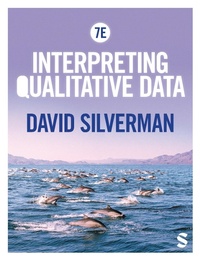
Interpreting Qualitative Data
7th Edition
Published on 25. January 2024
496 pages
978-1-5296-7260-2 (ISBN)
Description

In his signature pragmatic and friendly style, David Silverman acts as your stand-in supervisor in the seventh edition of this book, taking you step-by-step through different methods for making sense of qualitative data.
Whether you are interested in analysing visual images, interviews, focus groups or online data, this book provides a clear framework for using qualitative data to answer your research questions.
The book provides:
* A strong grounding in research design principles so you can embed best practice into your research project.
* Diverse real-world examples so you can see how principles are applied in practice.
* Coverage of new developments in qualitative research including working with online data.
If you are new to qualitative research or conducting your first research project in the social sciences, this book gives you the practical grounding in qualitative methods you need to get started.
Whether you are interested in analysing visual images, interviews, focus groups or online data, this book provides a clear framework for using qualitative data to answer your research questions.
The book provides:
* A strong grounding in research design principles so you can embed best practice into your research project.
* Diverse real-world examples so you can see how principles are applied in practice.
* Coverage of new developments in qualitative research including working with online data.
If you are new to qualitative research or conducting your first research project in the social sciences, this book gives you the practical grounding in qualitative methods you need to get started.
Reviews / Votes
There is no better book for teaching qualitative research. It is also a great start point for researchers considering what might be involved in using different qualitative methods and situating them in a broader context. For Silverman qualitative research is about quality and rigor and his mission is to improve both. It is extremely clearly written and free of qualitative jargon; while not shy of theory it shows how it can support design and analysis. The new edition builds effectively on the platform of the previous editions and sets the standard for writing about qualitative research. -- Jonathan Potter The new 7th edition of Interpreting Qualitative Data by David Silverman offers undergraduate students an invaluable resource for exploring the theory, methods and practice of qualitative research. With a focus on analytical problem-solving and the examination of everyday realities, Silverman's expert guidance empowers learners to navigate the complexities of qualitative research with confidence. This is an essential companion for both taught courses and research projects, ensuring students develop a deep understanding of qualitative analysis techniques. -- Nanna Mik-Meyer David Silverman is globally respected for the rigour of his approach to qualitative research, and for the clarity and passion with which this is expressed in his books. The new edition of this classic helps undergraduates develop skills to carry out their immediate assignments. But it also lays foundations for employability. Whether a future career involves observing people, talking to them, making sense of documents or asking how statistics were created, readers will always be able to return to this text with confidence that it will help them to succeed. -- Robert Dingwall For the best introductory text to qualitative research methods, look no further than David Silverman's Interpreting Qualitative Data, now in its seventh edition. The new edition includes many new features to help the student reader 'do research', not as something learnt by rote but as something experienced through practice and reflection. In an increasingly digital age it pays specific attention to the interpretative analysis of digital data. The great strengths of the book are its many examples and its balanced discussion of the different options available to the qualitative researcher as well as its focus on orienting these to practices -- Stewart CleggMore details
Edition
Seventh Edition
Language
English
Place of publication
London
United Kingdom
Publishing group
Sage Publications Ltd (Digital)
Target group
College/higher education
ISBN-13
978-1-5296-7260-2 (9781529672602)
Copyright in bibliographic data and cover images is held by Nielsen Book Services Limited or by the publishers or by their respective licensors: all rights reserved.
Schweitzer Classification
Other editions
Additional editions
David Silverman
Interpreting Qualitative Data
Book
01/2024
7th Edition
SAGE Publications Ltd
€175.30
Shipment within 3-4 weeks
David Silverman
Interpreting Qualitative Data
Book
01/2024
7th Edition
SAGE Publications Ltd
€48.79
Shipment within 3-4 weeks
Person
David Silverman trained as a sociologist at the London School of Economics and the University of California, Los Angeles. He taught for 32 years at Goldsmiths, University of London, where he is now Emeritus Professor in the Sociology Department as well as Visiting Professor in the Business Schools, King's College, London, Leeds University and University of Technology Sydney and Adjunct Professor, Faculty of Education, Queensland University of Technology. He is interested in conversation and discourse analysis and he has researched medical consultations, shelters for homeless people and HIV-test counselling.
He is the author of Doing Qualitative Research (sixth edition, 2022) and A Very Short, Fairly Interesting, Reasonably Cheap Book about Qualitative Research (second edition, 2013c). He is the editor of Qualitative Research (fifth edition, 2021) and the Sage series Introducing Qualitative Methods. In recent years, he has offered short, hands-on workshops in qualitative research for universities in Europe, Asia, Africa and Australia.
Now retired from full-time work, he aims to watch 100 days of county cricket a year. He also enjoys spending time with his grandchildren and great-grandsons as well as voluntary work in an old people's home where he chats and sings with residents.
He is the author of Doing Qualitative Research (sixth edition, 2022) and A Very Short, Fairly Interesting, Reasonably Cheap Book about Qualitative Research (second edition, 2013c). He is the editor of Qualitative Research (fifth edition, 2021) and the Sage series Introducing Qualitative Methods. In recent years, he has offered short, hands-on workshops in qualitative research for universities in Europe, Asia, Africa and Australia.
Now retired from full-time work, he aims to watch 100 days of county cricket a year. He also enjoys spending time with his grandchildren and great-grandsons as well as voluntary work in an old people's home where he chats and sings with residents.
Content
PART I THEORY AND METHOD IN QUALITATIVE RESEARCH
Chapter 1: What is Qualitative Research?
Chapter 2: Models of Qualitative Research
Chapter 3: Designing a Research Project
Chapter 4: Generalising from Qualitative Data
Chapter 5: Credible Qualitative Research
Chapter 6: Research Ethics
Chapter 7: Data Analysis
PART II METHODS
Chapter 8: Interviews
Chapter 9: Focus Groups
Chapter 10: Ethnography
Chapter 11: Documents and Digital Data
Chapter 12: Talk-in-Interaction
Chapter 13: Visual Data
Chapter 14: Mixed Methods
PART III IMPLICATIONS
Chapter 15: Writing Your Report
Chapter 16: The Relevance of Qualitative Research
Chapter 17: The Potential of Qualitative Research: Eight Reminders
Chapter 1: What is Qualitative Research?
Chapter 2: Models of Qualitative Research
Chapter 3: Designing a Research Project
Chapter 4: Generalising from Qualitative Data
Chapter 5: Credible Qualitative Research
Chapter 6: Research Ethics
Chapter 7: Data Analysis
PART II METHODS
Chapter 8: Interviews
Chapter 9: Focus Groups
Chapter 10: Ethnography
Chapter 11: Documents and Digital Data
Chapter 12: Talk-in-Interaction
Chapter 13: Visual Data
Chapter 14: Mixed Methods
PART III IMPLICATIONS
Chapter 15: Writing Your Report
Chapter 16: The Relevance of Qualitative Research
Chapter 17: The Potential of Qualitative Research: Eight Reminders
