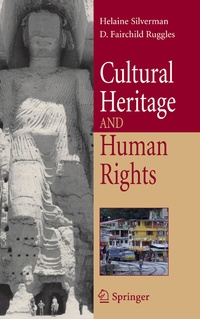
Cultural Heritage and Human Rights
Description

In today's world, there seems to be no corner of the world that has not been affected by globalization - for good and for bad. While the world becomes more hegemonized socially and culturally, local communities are fighting to preserve their way of life as part of their heritage. Travel and cultural institutions use this "uniqueness" to promote travel and tourism; and while this brings in revenue and exposure, cultural heritage sites that were preserved by virtue of their isolation are now being severely damaged and even destroyed. At the same time, there is a growing awareness that while this unique heritage is used to define a community, society or nation, it also can be a basis for conflict.
The volume addresses a deeply political aspect of heritage preservation and management as it relates to human rights. Social and community advocates assert that heritage is necessary for the articulation and preservation of cultural identity. The display of heritage monuments and performance can be a strategy for asserting minority identity in the face of majority pressure - as well as a tool for resistance and the expression of difference.
Conversely, the erasure of cultural expressions-such as buildings, monuments, language, religion, and social practices-is a powerful tool in warfare and political regulation. In the assault on human lives and political autonomy, the cultural history and values of a community are also attacked, destroying not only individuals but the very fabric of society.
Is there a universal right to the free expression and preservation of cultural heritage, and if so, where is that right articulated and can it be protected? How is the notion of "heritage" used variously to unite and divide communities? Who defines cultural heritage and who should control stewardship and the benefits of cultural heritage?
Cultural Heritage and Human Rights, the first volumein the Cultural Heritage in a Globalized World series, use these issues and questions to contemplate cultural heritage and human rights. The cases presented are world-wide with their implications presented on a global level. This interdisciplinary volume brings together contributors from such diverse fields as: history, culture studies, anthropology, urban and regional planning, archaeology, gender studies, landscape architecture, heritage and museum studies, political economy, and legal studies. It will be of interest to scholars and practitioners in fields that are affected by heritage, globalization and social/cultural studies.
More details
Other editions
Additional editions