

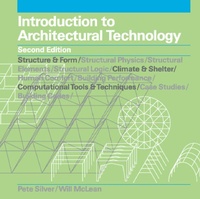
Introduction to Architectural Technology Second Edition
Published on 10. October 2013
208 pages
978-1-78067-677-7 (ISBN)
Description

Understanding the relationship between design and technology is critical to the understanding of architecture. This book clearly explains the core aspects of architectural technology: structural physics, structural elements and forms, heating, lighting, environmental control and computer modelling.
Hundreds of photographs, diagrams and screengrabs demonstrate common architectural forms and construction techniques.
Historical and contemporary examples chart significant moments in architectural engineering and the development of materials science
Includes an examination of computer-aided design (CAD) and the use of building information management (BIM) technology for predicting and analyzing the behaviour of buildings.
Written by two experienced teachers, this essential introduction to architecture will help students to integrate their design thinking with the appropriate structural and environmental solutions.
Hundreds of photographs, diagrams and screengrabs demonstrate common architectural forms and construction techniques.
Historical and contemporary examples chart significant moments in architectural engineering and the development of materials science
Includes an examination of computer-aided design (CAD) and the use of building information management (BIM) technology for predicting and analyzing the behaviour of buildings.
Written by two experienced teachers, this essential introduction to architecture will help students to integrate their design thinking with the appropriate structural and environmental solutions.
More details
Persons
William McLean, Pete Silver, others
Content
- Intro
- Title Page
- Copyright
- Dedication
- Contents
- Foreword
- Introduction
- Structure and Form
- Structural Physics
- Materials Science
- Forces
- Stress
- Strain
- Properties of Materials
- Strength
- Stiffness and Flexibility
- Reactions
- Bending
- Shear
- Structural Integrity
- Loads
- Live and Dead Loads
- Lateral Loads
- Bracing
- Torsion
- Stability
- Anchorage
- Height
- Centre of Gravity
- Cantilever Principle
- Materials Technology
- Stone
- Timber
- Steel
- Reinforced Concrete
- Glass
- Fabrics
- Fibre-Reinforced Plastic
- Sheet Materials
- Structural Elements
- Bearing Elements
- Bearing Walls
- Stacked Masonry
- Composite Construction
- Columns
- Foundations
- Strip
- Pad
- Raft
- Pile
- Retaining Walls
- Unidirectional Spanning Elements
- Beam
- Cross-Sections
- Linear Profiles
- Profiled Plate
- Reinforced-Concrete Slab
- Profiled-Sheet
- Composite
- Wafer/Laminate
- Multidirectional Spanning Elements
- Reinforced-Concrete Slab
- Coffer
- Space Frame
- Wafer/Laminate
- Connections and Joints
- Dry Joint
- Stone
- Nail
- Screw
- Bolt
- Rivet
- Turnbuckle
- Adhesives (Glue)
- Welding
- Brazing
- Structural Logic
- Compressive Structures
- Two-Dimensional Shapes
- Post and Beam
- A-Frame
- Portal Frame
- Arch
- Vault
- Dome
- Three-Dimensional Surfaces
- Diamatic Dome
- Lamella Dome
- Geodesic Dome
- Shell and Monocoque
- Tensile Surfaces
- Membrane
- Cable Net
- Tensegrity
- Climate and Shelter
- Human Comfort
- Thermal Comfort
- Solar Geometry
- Building Performance
- Climatic Envelope
- Thermal Mass
- Thermal Insulation
- Principles
- Types
- Air Movement
- Natural Ventilation
- Passive Control
- Windows and Glazing
- Weathering
- Masonry
- Cladding Systems
- Membranes
- Bonded Surfaces
- Insulation
- Sound and Light
- Acoustics
- Properties of Sound
- Acoustic Control
- Daylight
- Building Services
- Heating
- Mechanical Ventilation
- Air-Conditioning
- Principles
- Systems
- Integrated Systems
- Sanitation
- Computational Tools and Techniques
- Building Information Modelling
- Responsive Systems
- Structural Analysis
- Form Finding
- Finite Element Analysis
- Environmental Analysis
- Thermal
- Daylight
- Air Movement
- Acoustic
- Case Studies
- Mud House
- Tepee
- Igloo
- Obelisk
- The Pantheon
- The Ironbridge
- The Bell Rock Lighthouse
- The Crystal Palace
- Clifton Suspension Bridge
- Tropical House (Pavilion Demontable)
- Kresge Auditorium
- Palazzetto Dello Sport
- The Houston Astrodome
- The German Pavilion
- The USA Pavilion
- Self-Build House
- Sydney Opera House
- HSBC Headquarters
- The Pavilion of the Future
- The Portugal Pavilion
- The Lord's Media Centre
- 30 St Mary Axe
- 'D' Tower
- Davies Alpine House
- International Space Station
- Media ITC Space Station
- Stedelijk Museum Extension
- Building Codes
- Rules Governing Construction Technology
- European Guidelines on Sustainable Construction
- Glossary
- Further Reading and Resources
- Index
- Picture Credits
- Acknowledgements
