

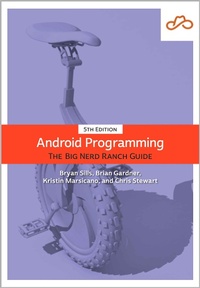
Android Programming
The Big Nerd Ranch Guide
5th Edition
Published on 17. June 2022
688 pages
978-0-13-764563-3 (ISBN)
Description

Android Programming: The Big Nerd Ranch Guide is an introductory Android book for programmers with Kotlin experience.
Based on Big Nerd Ranch's popular Android Bootcamp, this guide will lead you through the wilderness using hands-on example apps combined with clear explanations of key concepts and APIs. This book focuses on practical techniques for developing apps in Kotlin compatible with Android 7.0 (Nougat) through Android 12 and beyond.
Write and run code every step of the way, using Android Studio to create apps that integrate with other apps, download and display pictures from the web, store data in databases, and more. Learn about the latest patterns and techniques, including Kotlin coroutines and Jetpack Compose, a new way to build Android UIs. Each chapter and app has been designed and tested to provide the knowledge and experience you need to get started in Android development.
Based on Big Nerd Ranch's popular Android Bootcamp, this guide will lead you through the wilderness using hands-on example apps combined with clear explanations of key concepts and APIs. This book focuses on practical techniques for developing apps in Kotlin compatible with Android 7.0 (Nougat) through Android 12 and beyond.
Write and run code every step of the way, using Android Studio to create apps that integrate with other apps, download and display pictures from the web, store data in databases, and more. Learn about the latest patterns and techniques, including Kotlin coroutines and Jetpack Compose, a new way to build Android UIs. Each chapter and app has been designed and tested to provide the knowledge and experience you need to get started in Android development.
More details
Edition
5th edition
Language
English
Place of publication
Boston
United States
Publishing group
Pearson Education (US)
Target group
Professional and scholarly
File size
31,04 MB
ISBN-13
978-0-13-764563-3 (9780137645633)
Copyright in bibliographic data and cover images is held by Nielsen Book Services Limited or by the publishers or by their respective licensors: all rights reserved.
Schweitzer Classification
Other editions
Additional editions
Book
09/2022
5th Edition
Addison Wesley
€45.79
Shipment within 15-20 days
Persons
Bryan Sills is an Android developer and instructor at Big Nerd Ranch. He enjoys breaking down complex topics into teachable bites. He is an avid Chicago music fan and is often spotted biking around the city.
Brian Gardner is a senior Android developer at CashApp and a former Big Nerd Ranch instructor. Always looking for something to learn, you can find him digging into the newest Android libraries, learning to draw, baking, and traveling.
Kristin Marsicano is the director of engineering at CallRail and a former senior engineering manager at Big Nerd Ranch. She is passionate about learning, app development, and the intersection of the two - as well as running, playing ukulele, and building Lego creations with her kids.
Chris Stewart is an engineering manager at Google and a former VP of engineering at Big Nerd Ranch. He is dedicated to constant improvement and works to perfect his craft as much as possible. When not in front of a computer, Chris enjoys hiking and traveling.
Brian Gardner is a senior Android developer at CashApp and a former Big Nerd Ranch instructor. Always looking for something to learn, you can find him digging into the newest Android libraries, learning to draw, baking, and traveling.
Kristin Marsicano is the director of engineering at CallRail and a former senior engineering manager at Big Nerd Ranch. She is passionate about learning, app development, and the intersection of the two - as well as running, playing ukulele, and building Lego creations with her kids.
Chris Stewart is an engineering manager at Google and a former VP of engineering at Big Nerd Ranch. He is dedicated to constant improvement and works to perfect his craft as much as possible. When not in front of a computer, Chris enjoys hiking and traveling.
Content
Learning Android
The Necessary Tools
Your First Android Application
Interactive User Interfaces
The Activity Lifecycle
Persisting UI State
Debugging Android Apps
Testing
Your Second Activity
Android SDK Versions and Compatibility
Fragments
Displaying Lists with RecyclerView
Creating User Interfaces with Layouts and Widgets
Databases and the Room Library
Fragment Navigation
Dialogs and UI State
The App Bar
Implicit Intents
Taking Pictures with Intents
Localization
Accessibility
Making Network Requests
Displaying Images
SearchView and DataStore
WorkManager
Browsing the Web and WebView
Introduction to Jetpack Compose
Styling and Theming Composables
Managing State in Compose
Custom Views and Touch Events
Property Animation
Afterword
The Necessary Tools
Your First Android Application
Interactive User Interfaces
The Activity Lifecycle
Persisting UI State
Debugging Android Apps
Testing
Your Second Activity
Android SDK Versions and Compatibility
Fragments
Displaying Lists with RecyclerView
Creating User Interfaces with Layouts and Widgets
Databases and the Room Library
Fragment Navigation
Dialogs and UI State
The App Bar
Implicit Intents
Taking Pictures with Intents
Localization
Accessibility
Making Network Requests
Displaying Images
SearchView and DataStore
WorkManager
Browsing the Web and WebView
Introduction to Jetpack Compose
Styling and Theming Composables
Managing State in Compose
Custom Views and Touch Events
Property Animation
Afterword
