

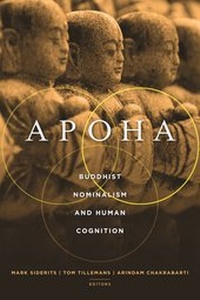
Apoha
Buddhist Nominalism and Human Cognition
1st Edition
Published on 13. September 2011
344 pages
978-0-231-52738-5 (ISBN)
Description

When we understand that something is a pot, is it because of one property that all pots share? This seems unlikely, but without this common essence, it is difficult to see how we could teach someone to use the word "pot" or to see something as a pot. The Buddhist apoha theory tries to resolve this dilemma, first, by rejecting properties such as "potness" and, then, by claiming that the element uniting all pots is their very difference from all non-pots. In other words, when we seek out a pot, we select an object that is not a non-pot, and we repeat this practice with all other items and expressions.
Writing from the vantage points of history, philosophy, and cognitive science, the contributors to this volume clarify the nominalist apoha theory and explore the relationship between apoha and the scientific study of human cognition. They engage throughout in a lively debate over the theory's legitimacy. Classical Indian philosophers challenged the apoha theory's legitimacy, believing instead in the existence of enduring essences. Seeking to settle this controversy, essays explore whether apoha offers new and workable solutions to problems in the scientific study of human cognition. They show that the work of generations of Indian philosophers can add much toward the resolution of persistent conundrums in analytic philosophy and cognitive science.
Writing from the vantage points of history, philosophy, and cognitive science, the contributors to this volume clarify the nominalist apoha theory and explore the relationship between apoha and the scientific study of human cognition. They engage throughout in a lively debate over the theory's legitimacy. Classical Indian philosophers challenged the apoha theory's legitimacy, believing instead in the existence of enduring essences. Seeking to settle this controversy, essays explore whether apoha offers new and workable solutions to problems in the scientific study of human cognition. They show that the work of generations of Indian philosophers can add much toward the resolution of persistent conundrums in analytic philosophy and cognitive science.
All prices
More details
Other editions
Additional editions
Book
09/2011
Columbia University Press
€154.75
Article not available at the moment
Book
09/2011
Columbia University Press
€37.14
Article not available at the moment
Persons
Mark Siderits is professor of philosophy at Seoul National University and the author of Indian Philosophy of Language, Personal Identity and Buddhist Philosophy, and Buddhism as Philosophy. Tom Tillemans is professor of Buddhist studies at the University of Lausanne, Switzerland. His books include Scripture, Logic, Language: Essays on Dharmakirti and His Tibetan Successors.Arindam Chakrabarti is professor of philosophy at the University of Hawai'i. He is the author of Denying Existence: The Logic, Epistemology, and Pragmatics of Negative Existentials and Fictional Discourse.
Content
Preface
Introduction, by Arindam Chakrabarti and Mark Siderits
1. How to Talk About Ineffable Things: Dignaga and Dharmakirti on Apoha, by Tom Tillemans
2. Dignaga's Apoha Theory: Its Presuppositions and Main Theoretical Implications, by Ole Pind
3. Key Features of Dharmakirti's Apoha Theory, by John D. Dunne
4. Dharmakirti's Discussion of Circularity, by Pascale Hugon
5. Apoha Theory as an Approach to Understanding Human Cognition, by Shoryu Katsura
6. The Apoha Theory as Referred to in the Nyayamañjari, by Masaaki Hattori
7. Constructing the Content of Awareness Events, by Parimal G. Patil
8. The Apoha Theory of Meaning: A Critical Account, by Prabal Kumar Sen
9. Apoha as a Naturalized Account of Concept Formation, by Georges Dreyfus
10. Apoha, Feature-Placing, and Sensory Content, by Jonardon Ganeri
11. Funes and Categorization in an Abstraction-Free World, by Amita Chatterjee
12. Apoha Semantics: Some Simpleminded Questions and Doubts, by Bob Hale
13. Classical Semantics and Apoha Semantics, by Brendan S. Gillon
14. Srughna by Dusk, by Mark Siderits
Bibliography
List of Contributors
Index
Introduction, by Arindam Chakrabarti and Mark Siderits
1. How to Talk About Ineffable Things: Dignaga and Dharmakirti on Apoha, by Tom Tillemans
2. Dignaga's Apoha Theory: Its Presuppositions and Main Theoretical Implications, by Ole Pind
3. Key Features of Dharmakirti's Apoha Theory, by John D. Dunne
4. Dharmakirti's Discussion of Circularity, by Pascale Hugon
5. Apoha Theory as an Approach to Understanding Human Cognition, by Shoryu Katsura
6. The Apoha Theory as Referred to in the Nyayamañjari, by Masaaki Hattori
7. Constructing the Content of Awareness Events, by Parimal G. Patil
8. The Apoha Theory of Meaning: A Critical Account, by Prabal Kumar Sen
9. Apoha as a Naturalized Account of Concept Formation, by Georges Dreyfus
10. Apoha, Feature-Placing, and Sensory Content, by Jonardon Ganeri
11. Funes and Categorization in an Abstraction-Free World, by Amita Chatterjee
12. Apoha Semantics: Some Simpleminded Questions and Doubts, by Bob Hale
13. Classical Semantics and Apoha Semantics, by Brendan S. Gillon
14. Srughna by Dusk, by Mark Siderits
Bibliography
List of Contributors
Index
