

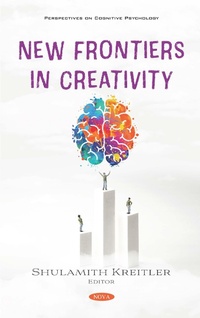
New Frontiers in Creativity
Published on 20. December 2019
454 pages
978-1-5361-6638-5 (ISBN)
Description

Recent years have witnessed an increasing awareness of the importance and relevance of creativity in social and psychological life. This has led to an awakening of research into creativity. The book "New Frontiers in Creativity" deals with themes that have emerged due to the expanding boundaries of research in creativity. These concern primarily new perspectives in regard to creativity, discovering of creativity in new populations and nurturing of creativity in new domains and spheres of action. The book presents four new perspectives concerning creativity. The first is a comprehensive model of creativity (by Kreitler) that does justice to the complexity of creativity in terms of the constitutive components, ranging from cognition through motivation, emotions, personality, psychopathology, behavior and the environment, focusing on the rich variety of variables in each of the components and their interactions. Another perspective focuses on creativity in the study and research of creativity (by Runco) by adopting meta-cognitive powerful tactics in the study and nurturing of creativity. A third new perspective describes the innovative methods and findings in neurophysiology of creativity, particularly in brain studies (by Shemyakina and Nagornova). The set of new perspectives is complemented by a description of the social processes characterizing the spread and maintenance of innovative ideas (by Fokas). The innovation in terms of populations is presented in the discussion of creativity in individuals diagnosed with dyslexia (by Cancer and Antonietti), in the controversial sphere of psychopathology (by Thys) and in the elderly (by Cohen-Shalev). Notably, the creativity of all three populations has been increasingly recognized in recent years. The third part of the book is devoted to creativity in various domains, including painting (by Vardi), psychotherapy (by Buzdugan, Grigore and Dinca), engineering (by Engel), architecture (by Casakin), sports (by Santos, Sampaio and Memmert) and nature (by Edlinger). The book includes 13 chapters, written by internationally known experts from different countries-Austria, Belgium, Hungary, Italy, Israel, Portugal, Romania, Russia, and USA-responsible for discoveries in the specific aspect of creativity with which they deal. The different chapters of the book present innovative approaches, based on empirical evidence and innovative methodologies. Thereby they contribute to the setting of the scene for new developments and new applications of creativity in the rapidly changing world that is in increasing need for creativity.
More details
Other editions
Additional editions
Shulamith Kreitler
New Frontiers in Creativity
Book
12/2019
Nova Science Publishers Inc
€303.55
Shipment within 15-20 days
Content
- Intro
- Contents
- Preface
- Part I. Creativity from Specific Perspectives
- Chapter 1
- The Many Faces of Creativity
- Abstract
- The Many Faces of Creativity
- By Way of Introduction
- Creativity as a Developing Science
- Creativity as a Multi-Dimensional Complex
- The Components of Creativity
- The Cognitive Component of Creativity
- The Motivational Aspects of Creativity
- Personality of the Creative Person
- Emotions and Creativity
- Psychopathology and Creativity
- The Behavioral Aspect of Creativity
- Creativity and the Socio-Cultural Environment
- By Way of Summary
- Some Common Characteristics
- Interactions among Components
- Interventions for Improving Creativity
- References
- Chapter 2
- Meta-Creativity Contributes to the Expanding Frontiers of the Creativity Research
- Abstract
- Additional Examples of Meta-Creativity
- Mindfulness and Avoiding Categories
- Discussion
- Conclusion
- References
- Chapter 3
- Neurophysiology of Creativity or Research Trends in Neurophysiology of Creativity
- Abstract
- 1. Approaches to Creativity Research in Neurophysiology
- 2. The Factors Influencing Creative Activity
- 2.1. Trends in Neurophysiology of Creativity
- 3. Development and Enhancement of Creative Abilities - Neurophysiological Approaches
- 3.1. There Is a Large Body of Studies Devoted to Different Types of Skills
- References
- Chapter 4
- Essay on the Birth and Diffusion of Social Innovations*
- Abstract
- Introduction
- 1. Diffusion of Social Innovations
- 1.1. Growth Funtions, Early Beginnings
- 1.2. Logistic Substitution Processes
- 2. The Birth of Social Innovations
- 2.1. Small-Scale Innovations
- 2.2. Large-Scale Innovations
- 2.2.1. On the Question of the Nature of the West as Innovation
- 2.2.2. The Question of the Origin of the West as Innovation
- Complex Unstable Conditions
- From Blind-Alley Development to Fertile Anarchy
- References
- Part II. Creativity in Specific Populations
- Chapter 5
- Creativity and Dyslexia:
- Theoretical Insights and Empirical Evidence Supporting a Possible Link
- Abstract
- Introduction
- Empirical Studies on Creativity and Dyslexia
- The Link between Creativity and Dyslexia in Developmental Age
- The Link between Creativity and Dyslexia in Adult Populations
- Conclusion
- References
- Chapter 6
- Fragile and Fruitful Minds: Creativity and Psychopathology
- Abstract
- Introduction
- A Brief History of Art and Psychiatry
- Creativity and Psychiatric Illness before the 20th Century
- Antiquity
- Middle Ages
- Renaissance
- Romanticism
- Creativity and Psychiatric Illness in the 20th Century
- The Prinzhorn Collection
- 20th Century Tendencies
- An Empirical Approach
- What Is Creativity?
- Empirical Knowledge about the Link between Creativity and Psychopathology
- The Creative Person
- The Creative Process
- Genetics
- Psychosis, Creativity and Life Stage
- Neurobiology
- Psychosocial Aspects of Creativity
- Creativity and Cultural Evolution
- The Importance of the Lack of Creativity
- Conclusion
- References
- Chapter 7
- The Ties That Bind: Late Life Creativity - A View from the Silver Screen
- Abstract
- Introduction: From the Decrement Hypothesis to Old Age Style in Creativity Research
- Old Age Creativity and the Silver Screen
- The Art of Holding at the Hands of the Old Woman: Wit
- For the Good of the Community: Creativity as Benevolent Risk-Taking in Waking Ned
- A Story-Teller to the End: Since Otar Left
- The Odd Couple of Dementia and Creativity: Old Cats
- Conclusion
- References
- List of Films
- Part III. Creativity in Specific Domains
- Chapter 8
- The Logic of Creativity in the Art of Painting: From the Ontogenetic to the Phylogenetic and from the Diachronic to the Synchronic
- Abstract
- Artistic Creation as Influenced by Heteronomous and Autonomous Processes
- The Artist as a Creator in Accordance with a Worldview
- Art Creation as an Emergence toward a New Style
- The Logic of Creativity as a Synthesis between the Surface Structure and the Deep Structure
- The Artistic Archetypes in the Painting Field
- The Logic of the Artist's Creativity from the Ontogenetic Perspective
- The Logic of Creativity Based on an Epistemological Need
- Conclusion
- References
- Chapter 9
- Creativity in Psychotherapy
- Abstract
- Introduction
- Creativity in the Relationship and the Therapeutic Framework
- Creativity in Different Models and Methods of Psychotherapy
- The Psychodynamic Approach to Creative Arts Therapies
- Gestalt Therapy and Creativity
- Cognitive-Behavioral Therapy (CBT) and Creativity
- Creativity in Supervision
- The Psychodynamic Model
- The Humanist Model - Person-Centered Therapy
- The Psychodrama Model
- Cognitive-Behavioral Model
- The Bernard-Bernard's Discrimination Model
- References
- Chapter 10
- Creativity in Engineering
- Abstract
- 1.1. Introduction
- 1.2. Essence of Engineering
- 1.2.1. Organizations and Projects Concepts
- 1.2.2. System Concepts
- 1.2.3. Life Cycle Concepts
- 1.2.4. Process Concepts
- 1.3. Philosophy of Engineering
- 1.3.1. Contrasts between Science and Engineering
- 1.3.2. Similarities between Science and Engineering
- Basic Questions of Science
- The Logic of Engineering Design
- 1.3.3. Nature of Engineering Design
- What Is Engineering?
- What Is "Design"?
- Engineering Design Process
- Societal Risk
- Esthetics and Utility
- Engineering and Esthetics
- Purpose and Other Values
- Engineering's Social Dimension
- 1.3.4. Modelling Social-Technical Systems
- 1.3.5. Doing the Right Things and Doing Things Right
- Engineering as Synthesis
- The Engineering Design Process
- Systems Engineers
- 1.4. Engineers and Other People
- 1.4.1. Career and Vocational Categories
- 1.4.2. Why Become an Engineer?
- 1.4.3. Engineers versus Other Occupations
- 1.4.4. Scientists versus Engineers
- 1.5. Creativity in Engineering
- 1.5.1. Unique Features of Engineering Creativity
- 1.5.2. Creative Engineers versus Traditional Engineers
- 1.5.3. Creative Engineers in Traditional Organizations
- 1.6. Creative Example - The Voyager Program
- 1.6.1. The Two Voyager Spacecrafts
- 1.6.2. The Voyagers Grand Tour
- 1.6.3. Discoveries in the Voyager Program
- 1.7. Success, Rejuvenation and Spectacular Failures
- 1.7.1. Organizations Life Cycle Model
- 1.7.2. The Case of DEC (Digital Equipment Corporation)
- 1.7.3. The Case of IBM (International Business Machines)
- Appendix A: Permissions to Use Third-Party Copyright Material
- References
- Chapter 11
- Creativity in Architectural Design: An Overview
- Abstract
- Introduction
- 1. Design Problems, Architectural Design and Creativity
- 1.1. What Constitutes Creativity in Architectural Design?
- i) Problem Representation
- ii) Expert Knowledge and Singular Combination of Knowledge
- iii) The Singularity of Design Constraints
- iv) The Outstanding Design Method Used
- 2. Creativity in Architectural Education: The Design Studio
- 3. Assessment of Creativity - Architectural Design
- 3.1. Assessing Creative Thinking in Architecture
- 3.2. Problems of Assessing Creativity in Architectural Design
- 3.3. Self-Perceived Creativity and Architectural Design
- Conclusion
- References
- Chapter 12
- Sports as a Key Route to Ignite Creativity
- Abstract
- Developmental Trends of Creativity
- The Nurturing of Creative Environments in Sports
- Tactical Creativity Approach
- Deliberate Play
- 1-Dimension Games
- Diversification
- Deliberate Memory
- Deliberate Coaching
- Deliberate Motivation
- Deliberate Practice
- Creativity Developmental Framework
- Skills4Genius: A Sports-Based Training Program
- Master Thinking and Sport Skills Are Fertile Ground for Creativity
- Creativity in Physical Education
- Teaching Games for Understanding: A Game-Centered Approach
- Student-Design Games
- Approaches to Track Creativity in Sports
- The Creative Behavior Assessment in Team Sports and Positional Data
- Game Test Situations
- Video Test
- Neural Network
- Conclusion
- References
- Chapter 13
- Creativity: An Indispensable Component of Nature
- Abstract
- Introduction
- About This Change
- The Unity of Nature and Mankind
- Physics Finds History Again
- The Natural-Philosophical Perspective
- Creativity
- The Extinctions by Volcanism or Meteorite Impacts
- The Theory of Organismic Constructions
- Autonomy of Organismic Constructions
- Relations with the Environment
- Epigenetics
- Creativity on Other Levels of Being
- Karl Ernst von Baer
- Karl Popper
- Psychology
- Prebiotic and the Emergence and Evolution of Early Life
- "Ironic" Sciences?
- Earlier Conceptions of Creativity
- Friedrich Wilhelm Josef Schelling (1775 - 1854)
- Alfred North Whithehead (1861 - 1947)
- Conclusion and Outlook
- References
- About the Editor
- List of Contributors
- Index
- Blank Page
