


The Craft of Political Research
11th Edition
Published on 26. February 2025
244 pages
978-1-040-30065-7 (ISBN)
Description

The Craft of Political Research is a nontechnical introduction to research design and analysis in political science, emphasizing the choices we make when we design a research project and analyze its results. The book's approach centers on asking an interesting research question, then designing inquiry to eliminate as many alternative explanations as possible.
How do we develop theory, and what constitutes a good research question? How do we operationalize measures and gather evidence to answer a question? How do we analyze our data? Students are introduced to such topics as multidimensional concepts, levels of measurement, validity, reliability, random and non-random measurement error, sampling, case selection, causality, experimental and quasi-experimental design, statistical inference, and regression and correlation analysis. Throughout, the emphasis is on understanding the "back story" of analysis-why do we measure in a particular way, why do we choose one design as against another, why do we conduct our analysis as we do.
Emphasizing the internal logic of research methods, the greatest strength of the book is its clarity and the broad range of political science examples provided. It works at a conceptual level, seeking an understanding of the principles that underlie techniques and the reasons why we choose them.
New to this edition:
New and revised examples from the US, UK, Canada, Latin America, and Africa among others, and updated international data from organizations such as the World Bank and the United Nations.
Separate chapters on causality and research design, with more discussion of each component of the political science research process
New section on indexes and scales that reviews ways to improve reliability and validity of measures by combining several variables
New sections reviewing collection of publicly available data including downloadable sources of quantitative data
New material on internet surveys and other contemporary techniques used in political science research.
How do we develop theory, and what constitutes a good research question? How do we operationalize measures and gather evidence to answer a question? How do we analyze our data? Students are introduced to such topics as multidimensional concepts, levels of measurement, validity, reliability, random and non-random measurement error, sampling, case selection, causality, experimental and quasi-experimental design, statistical inference, and regression and correlation analysis. Throughout, the emphasis is on understanding the "back story" of analysis-why do we measure in a particular way, why do we choose one design as against another, why do we conduct our analysis as we do.
Emphasizing the internal logic of research methods, the greatest strength of the book is its clarity and the broad range of political science examples provided. It works at a conceptual level, seeking an understanding of the principles that underlie techniques and the reasons why we choose them.
New to this edition:
New and revised examples from the US, UK, Canada, Latin America, and Africa among others, and updated international data from organizations such as the World Bank and the United Nations.
Separate chapters on causality and research design, with more discussion of each component of the political science research process
New section on indexes and scales that reviews ways to improve reliability and validity of measures by combining several variables
New sections reviewing collection of publicly available data including downloadable sources of quantitative data
New material on internet surveys and other contemporary techniques used in political science research.
More details
Edition
11th edition
Language
English
Place of publication
London
United Kingdom
Publishing group
Taylor & Francis Ltd
Target group
College/higher education
Illustrations
18 Tables, black and white; 48 Line drawings, black and white; 48 Illustrations, black and white
File size
17,25 MB
ISBN-13
978-1-040-30065-7 (9781040300657)
Copyright in bibliographic data and cover images is held by Nielsen Book Services Limited or by the publishers or by their respective licensors: all rights reserved.
Schweitzer Classification
Other editions
Additional editions
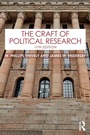
W. Phillips Shively | James W. Endersby
The Craft of Political Research
Book
02/2025
11th Edition
Routledge
€100.80
Shipment within 10-20 days
W. Phillips Shively | James W. Endersby
The Craft of Political Research
Book
02/2025
11th Edition
Routledge
€277.30
Shipment within 10-20 days
Persons
W. Phillips Shively is Emeritus Professor of Political Science at the University of Minnesota, and has also served on the faculties of Yale University, the University of Oregon, and Oslo University, Norway. At the University of Minnesota, he has served as Provost for Arts, Sciences and Engineering, and has also been inducted into the Academy of Distinguished Teachers for his work with students.
James W. Endersby is Professor of Political Science in the Harry S Truman School of Government and Public Affairs at the University of Missouri. He was previously a fellow at the Shorenstein Center on Media, Politics, and Public Policy. He has received several awards for teaching and scholarship.
James W. Endersby is Professor of Political Science in the Harry S Truman School of Government and Public Affairs at the University of Missouri. He was previously a fellow at the Shorenstein Center on Media, Politics, and Public Policy. He has received several awards for teaching and scholarship.
Content
1. Doing Research 2. Political Theories and Research Topics 3. The Importance of Dimensional Thinking 4. Problems of Measurement: Accuracy 5. Problems of Measurement: Precision 6. Causal Thinking 7. The Design of Research 8. Selection of Observations for Study 9. Introduction to Statistics: Measuring Relationship for Interval Data 10. Introduction to Statistics: Further Topics on Measurement of Relationships 11. Introduction to Statistics: Inference, or How to Gamble on Your Research
