

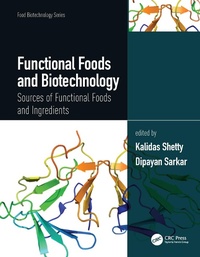
Functional Foods and Biotechnology
Sources of Functional Foods and Ingredients
1st Edition
Published on 23. December 2019
218 pages
978-1-000-75454-4 (ISBN)
Description

The first of two related books that kick off the Food Biotechnology series, Functional Foods and Biotechnology: Sources of Functional Foods and Ingredients, focuses on the recent advances in the understanding of the role of cellular, metabolic, and biochemical concepts and processing that are important and relevant to improve functional foods and food ingredients targeting human health benefits. This volume explores sources of ecologically-based diversity of functional foods and food ingredients that are available to enhance diverse nutritional values and functional benefits of foods for better human health outcomes, especially focusing on emerging diet and lifestyle-linked non-communicable chronic disease (NCDs) challenges. The contributors with expertise in the field of Food Biotechnology and Functional Food Ingredients have integrated the recent advances in some common as well as novel sources of functional foods and ingredients from diverse ecological and cultural origins. Further, these chapters also highlight human health relevant bioactive profiles and associated functionalities of these health-promoting compounds, including preventative functional roles for common NCD-linked health benefits.
FEATURES:
Provides ecological and metabolic rational to integrate novel functional food and functional ingredient sources in wider health-focused food system innovations.
Examines the value-added role of select functional foods and food ingredients to improve NCD-linked health benefits such as type-2 diabetes, cardiovascular disease, and human gut improvement
Includes insights on system-based solutions to advance climate resilient and health focused food diversity based on diverse biotechnological approaches to design and integrate functional food and food ingredient sources
Overall, the rationale of this book series is focused on Metabolic-Driven Rationale to Advance Biotechnological Approaches for Functional Foods, the synopsis of which is presented as the Introduction chapter, which is followed by a chapter on current understanding about regulatory guidelines for health claims of functional foods and food ingredients. Special topics on nonnutritive sweeteners, caroteneprotein from seafood waste, and Xylooligosaccharides as functional food ingredients for health-focused dietary applications are integrated in this book. Additionally, ecologically and metabolically-driven functional roles of common food sources such as corn, and barley and some novel food sources, such as ancient emmer wheat, black soybean, fava bean, herbs from Lamiaceae and functional protein ingredients and minerals from Lemnaceae are also highlighted in this volume.
The overall goal is to provide insights on role of these functional food and ingredient sources for their integration in wider health-focused food systems, which will help food scientists, food industry personnel, nutritionists, crop science researchers, public health professionals, and policy makers to make appropriate decisions and to formulate strategies for improving health and well-being.
A related book focuses on biological and metabolically driven mobilization of functional bioactives and ingredients and their analysis that is relevant in health and wellness.
FEATURES:
Provides ecological and metabolic rational to integrate novel functional food and functional ingredient sources in wider health-focused food system innovations.
Examines the value-added role of select functional foods and food ingredients to improve NCD-linked health benefits such as type-2 diabetes, cardiovascular disease, and human gut improvement
Includes insights on system-based solutions to advance climate resilient and health focused food diversity based on diverse biotechnological approaches to design and integrate functional food and food ingredient sources
Overall, the rationale of this book series is focused on Metabolic-Driven Rationale to Advance Biotechnological Approaches for Functional Foods, the synopsis of which is presented as the Introduction chapter, which is followed by a chapter on current understanding about regulatory guidelines for health claims of functional foods and food ingredients. Special topics on nonnutritive sweeteners, caroteneprotein from seafood waste, and Xylooligosaccharides as functional food ingredients for health-focused dietary applications are integrated in this book. Additionally, ecologically and metabolically-driven functional roles of common food sources such as corn, and barley and some novel food sources, such as ancient emmer wheat, black soybean, fava bean, herbs from Lamiaceae and functional protein ingredients and minerals from Lemnaceae are also highlighted in this volume.
The overall goal is to provide insights on role of these functional food and ingredient sources for their integration in wider health-focused food systems, which will help food scientists, food industry personnel, nutritionists, crop science researchers, public health professionals, and policy makers to make appropriate decisions and to formulate strategies for improving health and well-being.
A related book focuses on biological and metabolically driven mobilization of functional bioactives and ingredients and their analysis that is relevant in health and wellness.
More details
Series
Edition
1. Auflage
Language
English
Place of publication
London
United Kingdom
Publishing group
Taylor & Francis Ltd
Target group
Professional and scholarly
Illustrations
24 Tables, black and white; 48 Illustrations, black and white
ISBN-13
978-1-000-75454-4 (9781000754544)
Copyright in bibliographic data and cover images is held by Nielsen Book Services Limited or by the publishers or by their respective licensors: all rights reserved.
Schweitzer Classification
Other editions
Additional editions
Kalidas Shetty | Dipayan Sarkar
Functional Foods and Biotechnology
Sources of Functional Foods and Ingredients
Book
12/2019
1st Edition
CRC Press
€235.22
Shipment within 15-20 days
Persons
Dr. Kalidas Shetty's research interests focus on the critical role of cellular and metabolic basis of oxygen biology for advancing new innovations in life sciences and especially agricultural and food innovations that advance global food security and health in a sustainable environment. This focus is contributing to very innovative advances in the areas of crops for health, post-harvest biology, nutraceuticals, functional foods and food antimicrobial strategies as critical innovations to advance food security in addition to malnutrition and hunger challenges. In particular, he has developed an innovative "crops for health" research platform to counter diet-linked chronic diseases. The rationale of this platform has relevance for managing malnutrition challenges from maternal to child health needs globally.
Dipayan Sarkar, Ph.D, is a Research Associate at the Department of Plant Sciences, North Dakota State University, Fargo, North Dakota. He supervises research of graduate students and visiting scholars and work closely with local and global research, education, and outreach initiatives of the Global Institute of Food Security and International Agriculture (GIFSIA) at North Dakota State University. He received Bachelor in Agricultural Science (Hons.) and Master in Agronomy from India. Later he received Ph.D in "Plant Stress Physiology" from Department of Plant, Soil, and Insect Sciences at University of Massachusetts. He also worked as a post-doctoral research fellow at Department of Food Sciences of University of Massachusetts under the tutelage of Dr. Kalidas Shetty. His research interest is on metabolic regulation of plant and development of sustainable cropping systems based on sound ecological rationale to address global food security and public health challenges. Dipayan has published 21 peer-reviewed research papers, 6 book chapters, and many other reviews and abstracts. He is a board member of the American Council of Medicinally Active Plants and affiliated advisor for Kagoshima University Center for International Planning, Kagoshima, Japan.
Dipayan Sarkar, Ph.D, is a Research Associate at the Department of Plant Sciences, North Dakota State University, Fargo, North Dakota. He supervises research of graduate students and visiting scholars and work closely with local and global research, education, and outreach initiatives of the Global Institute of Food Security and International Agriculture (GIFSIA) at North Dakota State University. He received Bachelor in Agricultural Science (Hons.) and Master in Agronomy from India. Later he received Ph.D in "Plant Stress Physiology" from Department of Plant, Soil, and Insect Sciences at University of Massachusetts. He also worked as a post-doctoral research fellow at Department of Food Sciences of University of Massachusetts under the tutelage of Dr. Kalidas Shetty. His research interest is on metabolic regulation of plant and development of sustainable cropping systems based on sound ecological rationale to address global food security and public health challenges. Dipayan has published 21 peer-reviewed research papers, 6 book chapters, and many other reviews and abstracts. He is a board member of the American Council of Medicinally Active Plants and affiliated advisor for Kagoshima University Center for International Planning, Kagoshima, Japan.
Content
Chapter 1 Introduction: Metabolic-Driven Ecological Rationale to Advance Biotechnological Approaches for Functional Foods
Chapter 2 Science Behind the Substantiation of Health Claims in Functional Foods: Current Regulations
SECTION 1 SOURCES OF FUNTIONAL FOODS AND INGREDIENTS
Chapter 3 Bioactive Ingredients from Corn and Lactic Acid Biotransformation
Chapter 4 Human Health Relevant Bioactive Functionalities of Ancient Emmer Wheat
Chapter 5 Functional Bioactives from Barley for Human Health Benefits
Chapter 6 Health Beneficial Functions of Black Soybean Polyphenols
Chapter 7 Bioprocessing Strategies to Enhance L-DOPA and Phenolic Bioactives in the Fava Bean (Vicia faba)
Chapter 8 Human Health Relevant Bioactives and Associated Functionalities of Herbs from Lamiaceae Family
Chapter 9 Lemnaceae: Source Food Supplements to Functional Foods
Chapter 10 Xylooligosaccharides and Their Functional Applications
Chapter 11 Biotechnology of Nonnutritive Sweeteners
Chapter 12 Carotenoprotein from Seafood Waste
Chapter 2 Science Behind the Substantiation of Health Claims in Functional Foods: Current Regulations
SECTION 1 SOURCES OF FUNTIONAL FOODS AND INGREDIENTS
Chapter 3 Bioactive Ingredients from Corn and Lactic Acid Biotransformation
Chapter 4 Human Health Relevant Bioactive Functionalities of Ancient Emmer Wheat
Chapter 5 Functional Bioactives from Barley for Human Health Benefits
Chapter 6 Health Beneficial Functions of Black Soybean Polyphenols
Chapter 7 Bioprocessing Strategies to Enhance L-DOPA and Phenolic Bioactives in the Fava Bean (Vicia faba)
Chapter 8 Human Health Relevant Bioactives and Associated Functionalities of Herbs from Lamiaceae Family
Chapter 9 Lemnaceae: Source Food Supplements to Functional Foods
Chapter 10 Xylooligosaccharides and Their Functional Applications
Chapter 11 Biotechnology of Nonnutritive Sweeteners
Chapter 12 Carotenoprotein from Seafood Waste
