

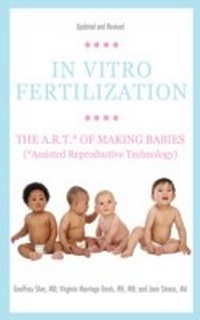
In Vitro Fertilization
The A.R.T. of Making Babies (Assisted Reproductive Technology)
1st Edition
Published on 1. June 2013
396 pages
978-1-62636-377-9 (ISBN)
Description

This extensively updated and revised edition of In Vitro Fertilization: The A.R.T. of Making Babies addresses the key issues and concerns of infertile couples. Written by one of the top in vitro specialists in the country, this book discusses in plain language everything couples need to know about IVF. From how to locate and choose the best IVF programs to what to expect as you go through the process, this book will prepare couples for the complex and emotional IVF journey. Included here are:
. Conditions that negatively affect fertility, such as sexually transmitted diseases, endometriosis, ectopic pregnancy, and immune system conditions
. Surrogate motherhood, egg donation, and other third-party parenting options
. Detailed discussion of ovulation and the influence of age on egg quality
. Ethics in fertility technology, including the recent controversies over cloning
This book provides extensive technical guidance to couples who are considering in vitro fertilization, allowing for a more well-informed life changing decision.
. Conditions that negatively affect fertility, such as sexually transmitted diseases, endometriosis, ectopic pregnancy, and immune system conditions
. Surrogate motherhood, egg donation, and other third-party parenting options
. Detailed discussion of ovulation and the influence of age on egg quality
. Ethics in fertility technology, including the recent controversies over cloning
This book provides extensive technical guidance to couples who are considering in vitro fertilization, allowing for a more well-informed life changing decision.
More details
Other editions
Additional editions
Geoffrey Sher | Virginia Marriage Davis | Jean Stoess
In Vitro Fertilization
The A.R.T. of Making Babies (Assisted Reproductive Technology)
Book
06/2013
4th Edition
Skyhorse Publishing
€19.00
Shipment within 3-4 weeks
Persons
Geoffrey Sher, MD, is the founder and executive medical director of the Sher Institutes for Reproductive Medicine (SIRM), as well as the director of SIRM-Las Vegas. Dr. Sher is an internationally renowned expert in the field of IVF and assisted reproductive technology (ART). He has been influential in the births of more than 15,000 IVF babies. Over the last thirty years, he has helped fashion the entire field of ART, establishing the first private IVF program in the United States in 1982. He currently lives in Las Vegas, Nevada.
Virginia Marriage Davis, RN, MN, was a former medical practice consultant, family nurse practitioner, and lecturer.
Jean Stoess, MA, is a freelance developmental editor, writer, and a member of the State of Nevada Board of Examiners. She lives in Reno, Nevada.
Virginia Marriage Davis, RN, MN, was a former medical practice consultant, family nurse practitioner, and lecturer.
Jean Stoess, MA, is a freelance developmental editor, writer, and a member of the State of Nevada Board of Examiners. She lives in Reno, Nevada.
Content
- Cover Page
- Title Page
- Copyright
- Dediation
- Table of Contents
- Foreword 1 by Brian Cohen, MD
- Foreword 2 by Nancy Hemenway
- Preface
- Units of Measurement
- Chapter 1: The Growing Dilemma of Infertility
- Why the Number of Infertile Couples in the United States Is Increasing Every Year
- Venereal Diseases Are Epidemic in the United States
- Medications and "Recreational Drugs" Are Taking Their Toll
- The Biological Clock Keeps on Ticking
- Chapter 2: The Anatomy and Physiology of Reproduction
- The Female Reproductive Tract
- The Male Reproductive Tract
- The Process of Fertilization
- How Fertilization Occurs
- How the Genetic Blueprint Is Drawn
- Hormones Prepare the Body for Conception
- The First Half of the Cycle (the Follicular/Proliferative Phase)
- Ovulation
- The Second Half of the Cycle (the Secretory/Luteal Phase)
- Miscarriage in Early Pregnancy
- An Abnormal Embryo
- Immunologic Factors
- Hormonal Insufficiency
- Chapter 3: Natural Conception and IVF: Two Pathways to Pregnancy
- Organic and Physiologic Problems That May Prevent Couples from Conceiving Naturally
- Common Causes of Female Infertility
- Common Causes of Male Infertility
- Unexplained Infertility
- How IVF Differs from Natural Conception
- Fertility Drugs Are Used to Produce More Eggs
- The Chance of a Multiple Pregnancy Is Greater with IVF
- Eggs Are Retrieved from the Ovaries by Suction
- IVF Bypasses the Fallopian Tubes
- Sperm Are Partially Capacitated in the Laboratory Instead of in the Woman's Reproductive Tract
- An IVF Embryo Is Not Likely to React to Either Partner's Antibodies
- IVF Is Both a Treatment and a Diagnostic Procedure
- IVF Requires a Heavy Emotional, Physical, and Financial Investment
- Does IVF Increase the Risk of Birth Defects?
- Chapter 4: IVF Step 1: Preparation for IVF Treatment
- Acceptance into an IVF Program
- Organization of a Typical IVF Program
- Tests That May Be Conducted Prior to IVF
- Tests for Certain Viral Infections
- Sperm Quality
- Sperm Chromatin Structure Assay (SCSA)
- Sperm Antibody Tests
- Pelvic Assessment
- Ultrasound Assessment of Endometrial Thickness
- Fluid Ultrasonography/Hysterosonogram (FUS) versus Hysteroscopy
- Measurement of Blood FSH, Estradiol, Antimullerian Hormone (AMH), and Inhibin B Blood Levels
- Immunologic Testing
- Measurement of Prolactin
- Antral Follicle Count (AFC)
- Nutritional Supplements in Preparing for IVF
- The Pretreatment Consultation
- Preparing for the Inevitable Trade-off: The Probability of Pregnancy vs. the Risk of High-Order Multiple Births
- Chapter 5: IVF Step 2: Controlled Ovarian Stimulation (COS)
- Fertility Drug Therapies
- Launching Controlled Ovarian Stimulation (COS) with the Birth Control Pill (BCP)
- Coming off the BCP and on to Managing the Cycle of COS
- Commonly Used Fertility Medications
- Clomiphene Citrate
- Letrozole
- Gonadotropins
- Risks and Side Effects of Gonadotropin Therapy
- Ovarian Hyperstimulation Syndrome (OHS)
- Gonadotropin-Releasing Hormone Agonist (GnRHa)-Lupron, Buserelin
- Gonadotropin-Releasing Hormone Antagonists (Ganirelix, Cetrotide, Orgalutron)
- Evaluation of Follicular Development
- The Role of Vaginal Ultrasound Evaluation
- The Importance of Measuring Blood Estradiol and Performing Ultrasound Follicular Assessments for COS
- The Injection of hCG (Profasi, Novarel, Pregnyl, Ovidrel)-A Safety Valve
- The Need for an "Individualized" Approach to COS?
- Long GnRHa Protocols
- "(Micro) Flare" GnRHa Protocols
- GnRH Antagonist Protocols
- Estrogen "Priming" Protocols
- Agonist/Antagonist Conversion Protocols (A/ACP)
- Moving on to Egg Retrieval
- Chapter 6: IVF Step 3: Egg Retrieval
- The Pre-Egg Retrieval Consultation
- Ultrasound-Guided Egg Retrieval
- Obtaining a Specimen of Semen to Fertilize the Eggs
- The Laboratory's Role in IVF
- Examining the Egg and its First Polar Body
- Nurturing the Eggs and Embryos
- Sperm Washing and Capacitation
- Insemination
- Intracytoplasmic Sperm Injection (ICSI) Is ICSI Recommended in All Cases?
- Microscopic Embryo Assessment Grading and Genetic Embryo Assessment
- Embryo/Blastocyst Cryopreservation and the Introduction of Vitrification
- Chapter 7: IVF Step 4: Embryo Transfer
- The Pre-Transfer Consultation
- The Embryo Transfer
- Day 3 (Cleaved Embryo) versus Day 5-6, Blastocyst Transfer
- Ultrasound-Guided Embryo Transfer-A Must!
- Post Embryo Transfer Management
- Embryo (Freezing) Cryopreservation
- The Frozen Embryo Transfer (FET)
- After the Transfer
- The Exit Interview
- Follow-up after the Embryo Transfer
- The Quantitative Beta hCG Blood Pregnancy Test
- Hormonal Support of a Possible Pregnancy: Progesterone vs. hCG Supplementation
- Confirming a Pregnancy by Ultrasound Examination
- What to Do If Spotting Occurs
- Chapter 8: The Five Ultimatums for Successful IVF Candidates
- Quality of the Woman's Eggs: The First Ultimatum
- The Influence of Age on Egg Quality
- Approach to Ovarian Stimulation
- IVF May Be the Only Way to Identify Inhibiting Factors in Eggs
- Expertise of the Embryology Team
- Quality of the Man's Sperm: The Second Ultimatum
- Sperm Chromatin Structure Assay (SCSA)
- Sperm Antibodies
- Quality of the Embryo: The Third Ultimatum
- Gender Selection
- Preimplantation Genetic Diagnosis (PGD) to Identify "Competent" Embryos
- Uterine Receptivity: The Fourth Ultimatum
- Contour of the Uterine Cavity
- Thickness of the Endometrium
- The Immunologic Factor
- Alloimmune Implantation Dysfunction
- Autoimmune Implantation Dysfunction
- Diagnosing Immunologic Implantation Dysfunction
- Treating Immunologic Implantation Dysfunction
- Embryo Transfer: The Fifth Ultimatum
- Chapter 9: Other Conditions That Compromise Fertility
- Conditions That Negatively Impact a Man's Fertility
- Inadequate Secretion by the Pituitary Gland
- Conditions That Negatively Impact a Woman's Fertility
- Pelvic Inflammatory Disease (PID)
- Pelvic Tuberculosis
- Endometriosis
- Asherman's Syndrome
- Diethylstilbestrol (DES) and Reproductive Failure
- Ectopic Pregnancy
- Thrombophilias
- Polycystic Ovarian Syndrome (PCOS)
- Tubal Surgery vs. IVF: An "Apples to Oranges" Comparison
- Chapter 10: Is IVF the Most Appropriate Option?
- When Does the Man's Fertility Status Demand Consideration for IVF?
- Semen Analysis
- Varicocele
- Obstruction of the Vas Deferens or Epididymis
- Hormonal Problems
- The Zona-Free Hamster-Egg Penetration Test (Sperm Penetration Assay, SPA)
- Testicular Sperm Extraction (TESE) or Testicular Sperm Aspiration (TESA)
- Microsurgical Epididymal Aspiration (MESA)
- An Abnormal SCSA
- When Is the Woman Ready for IVF?
- The Pattern of Ovulation
- Evaluating the Anatomical Integrity of the Female Reproductive Tract
- When Should One Consider Surgery to Correct a Anatomical Defects?
- Condition of the Cervical Mucus
- IVF Should Be Carefully Weighed against All Other Options
- Chapter 11: Shaping Realistic Expectations about IVF
- What Are a Couple's Realistic Chances of Success?
- The Couple Must Be Sure They Are Trying to Conceive for the Right Reasons
- IVF Is an Emotional, Physical, and Financial Roller-Coaster Ride
- Both Partners Must Share in the Emotional Cost
- The IVF Procedure Is Stressful
- A Realistic Attitude toward Miscarriage
- A Realistic Attitude toward Ectopic Pregnancy
- A Realistic Attitude toward IVF Success
- A Realistic Attitude toward IVF Failure
- Coping with IVF's Physical Demands
- IVF Requires a Significant Financial Commitment
- A Realistic Attitude toward Budgeting for IVF
- A Realistic Attitude toward Insurance Coverage
- How Many Times Should a Couple Attempt IVF?
- IVF Patients/Couples Must Consider the Possibility of a Multiple Pregnancy
- Selective Reduction of Pregnancy
- Some Couples Have Moral/Ethical/Religious Objections to IVF
- Matching Realistic Expectations with the Right Program
- Chapter 12: How to Find the Right IVF Program
- How Should the Success of an IVF Program Be Evaluated?
- How Does the Program Define Pregnancy?
- Chemical Pregnancy
- Clinical Pregnancy
- Chemical vs. Clinical Pregnancy
- How Should IVF Success Be Expressed?
- Couples Have the Right to Expect Competent, Caring Treatment
- What Is the Best Way to Access Information?
- Preliminary Information Can Be Obtained by Telephone/Skype
- A Pre-Enrollment Interview Is Worth the Time and Expense
- What about the SART/CDC Report?
- Chapter 13: IUI, GIFT, and Other Alternatives to IVF
- Artificial Insemination
- Intrauterine Insemination (IUI)
- Indications for IUI
- IUI Success Rates
- Contraindications to IUI
- Fertility Drugs and Multiple Births with IUI
- Intravaginal Insemination (IVI) with Partner's Semen
- Artificial Insemination by Donor (AID)
- Gamete Intrafallopian Transfer (GIFT)
- Zygote Intrafallopian Transfer (ZIFT) or Tubal Embryo Transfer (TET)
- Natural-Cycle IVF
- Chapter 14: Recurrent Pregnancy Loss (RPL)
- Diagnosing the Cause of RPL
- Treatment of RPL
- Selective Immunotherapy
- Use of IVF
- Chapter 15: Other Options for Couples with Intractable Infertility
- Egg Donation (ED)
- Screening Donor Eggs
- Screening of Recipient(s)
- Disclosure and Consent
- Types of Egg Donation
- Donor Egg Banking
- Financial Considerations
- Moral, Ethical, Religious, and Legal Considerations
- Embryo Banking
- Embryo Adoption
- IVF (Gestational) Surrogacy
- Candidates for IVF Gestational Surrogacy
- Selecting a Surrogate
- Screening a Surrogate
- Controlled Ovarian Stimulation and Monitoring of the Female Partner (Egg Provider)
- Synchronizing the Cycle of the Surrogate and the Aspiring Mother
- Building the Surrogate's Uterine Lining with Hormonal Injections
- Transferring Embryos to the Surrogate's Uterus
- Management and Follow-up after the Embryo Transfer
- Anticipated Success Rates with Gestational Surrogacy
- The Bioethics of Gestational Surrogacy
- Chapter 16: Miscellaneous Considerations
- Same-Sex Couples Deserve an Equal Opportunity to Have a Family
- Gamete/Embryo Cryopreservation
- Embryo/Blastocyst Freezing
- Egg Freezing
- Is Being Overweight Detrimental to IVF outcome?
- In Vitro Maturation (IVM) of Eggs
- Should New Fertility Technologies Be Regulated?
- Artificially Produced Embryos
- Autism and IVF
- Fragile X Syndrome and IVF
- Human Cloning
- Reproductive Cloning
- Embryo Cloning
- Biotherapeutic Cloning
- Some Ethical Considerations
- Chapter 17: The Nine Most Common Questions and Concerns About IVF
- Will IVF Increase My Risk of Cancer, Make Me Gain Weight, Affect My emotional Stability, or Drive Me into an Early Menopause?
- Will My Baby Be Normal?
- Can I Afford IVF?
- How Likely Am I to Be Successful and How Many Attempts Might It Take?
- How Uncomfortable, Painful, and Risky Are the Injections of Fertility Drugs, the Egg Retrieval (ER), and the Embryo Transfer (ET)?
- Who Should I Believe When It Comes to Controversial Issues Such as the Value of Immunotherapy, PGD, ICSI, Assisted Hatching (AH), and Frozen ET (ET) versus Fresh ET?
- What Is Better, Day 2-3 ET or Day 5-6 (Blastocyst) ET?
- How Do I Decide How Many Embryos I Should
- Have Transferred at a Time?
- Do I Need to Use Donor Eggs?
- Egg Donation
- Embryo Banking
- Chapter 18: Putting the IVF House in Order
- Consumers Have the Right to Expect Minimum Standards in All Programs
- Consumers Have the Right to Affordable IVF
- What Can Be Done to Reduce the Cost of IVF?
- Financial Risk-Sharing (FRS) with Patients
- Insurance Coverage Is the Key to IVF Affordability
- Why Insurance Companies Are Reluctant to Cover IVF-And What It Will Take to Fix It!
- Some Novel Approaches
- IVF Consumers Have an Obligation to Get Involved
- Where Do We Go from Here?
- The Bottom Line
- Glossary
