

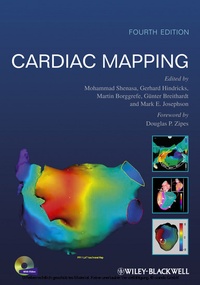
Cardiac Mapping
Description

Cardiac Mapping is the cardiac electrophysiologist's GPS. It will guide you to new places in the heart and help you find the old places more easily...a valuable addition to your bookshelf
Douglas P. Zipes, from the Foreword.
Over the course of three previous editions, this book has become the acknowledged gold standard reference on the electro-anatomical mapping of the heart. This new edition features greatly expanded coverage-the number of chapters have doubled to 80 with 40 new chapters-on leading edge science, new clinical applications and future frontiers, authored by a who's-who of global electrophysiology.
This unique text offers truly comprehensive coverage of all areas of cardiac mapping, from core scientific principals to methodological and technical considerations to the latest data that you can put to work caring for patients. In addition, the all new 4th edition adds essential content on:
- Mapping in experimental models of arrhythmias
- Mapping supraventricular and ventricular tachyarrhythmias
- New catheter-based techniques
- Also featuring a companion website with video clips illustrating essential techniques described in the text
The only state-of-the-art, stand-alone text on this dynamic subject, Cardiac Mapping is an essential resource for basic scientists, clinical electrophysiologists, cardiologists and all physicians who care for patients with cardiac arrhythmias.
Mohammad Shenasa MD Attending Physician Department of Cardiovascular Services O'Connor Hospital; San Jose, California
Gerhard Hindricks MD Professor of Medicine (Cardiology) University Leipzig, Heart Center; Director, Department of Electrophysiology Leipzig, Germany
Martin Borggrefe MD Professor of Medicine (Cardiology) Head, Department of Cardiology, Angiology and Pneumology Klinikum Mannheim GmbH Universitätsklinikum Fakultät fur Klinische Medizin Mannheim der Universitat Heidelberg Mannheim, Germany
Günter Breithardt, MD Professor of Medicine (Cardiology), Head, Department of Cardiology and Angiology, Hospital of the University of Münster, D-48129 Münster, Germany
Mark E. Josephson, MD Herman C. Dana Professor of Medicine Harvard Medical School Chief of Cardiovascular Division Beth Israel Deacomess Medical Center
More details
Other editions
Additional editions
Content
2 - Contents [Seite 7]
3 - List of Contributors [Seite 11]
4 - Preface to the Fourth Edition [Seite 17]
5 - Preface to the First Edition [Seite 18]
6 - Foreword [Seite 19]
7 - European Perspective [Seite 21]
8 - Acknowledgements [Seite 22]
9 - PART I Methodological and Technical Considerations [Seite 23]
9.1 - CHAPTER 1 Evolution of Cardiac Mapping: From Direct Analog to Digital Multi-dimensional Recording [Seite 25]
9.1.1 - Introduction [Seite 25]
9.1.2 - Indirect recordings of the electrical activity from the heart [Seite 26]
9.1.3 - Direct recordings of the electrical activity from the heart [Seite 27]
9.1.4 - Multi-channel mapping systems [Seite 27]
9.1.5 - Multi-terminal electrodes [Seite 28]
9.1.5.1 - Catheter-based multi-electrodes [Seite 28]
9.1.6 - Unipolar versus bipolar recordings [Seite 29]
9.1.7 - The Laplacian recording mode [Seite 29]
9.1.8 - Information extracted from extracellular electrograms [Seite 30]
9.1.8.1 - Signal morphology: mono- and biphasic, double potentials, fractionation [Seite 30]
9.1.8.2 - Activation maps [Seite 31]
9.1.8.3 - Potential mapping [Seite 31]
9.1.8.4 - Activation recovery interval [Seite 31]
9.1.9 - Three-dimensional patterns [Seite 31]
9.1.10 - Integrative approaches [Seite 32]
9.1.11 - Alternative mapping techniques [Seite 32]
9.1.12 - References [Seite 32]
9.2 - CHAPTER 2 Image Acquisition and Processing in New Technologies [Seite 34]
9.2.1 - Introduction [Seite 34]
9.2.2 - History of 3D mapping systems and image integration [Seite 34]
9.2.3 - Potential benefits of 3D mapping [Seite 35]
9.2.4 - Principles of 3D mapping systems [Seite 35]
9.2.4.1 - Impedance mapping systems [Seite 35]
9.2.4.2 - Comparison of magnetic and impedance-based systems [Seite 36]
9.2.4.3 - Non-contact mapping [Seite 36]
9.2.5 - Hybrid systems [Seite 36]
9.2.6 - Intracardiac echocardiography [Seite 37]
9.2.7 - Fluoroscopic integration [Seite 37]
9.2.8 - Magnetic resonance imaging integration [Seite 38]
9.2.9 - Dynamic maps [Seite 39]
9.2.10 - Optical coherence tomography [Seite 39]
9.2.11 - Future directions [Seite 39]
9.2.12 - References [Seite 39]
9.3 - CHAPTER 3 Microelectrode Arrays in Cardiac Mapping [Seite 40]
9.3.1 - Microelectrode arrays [Seite 40]
9.3.1.1 - Passive metal arrays [Seite 40]
9.3.1.2 - Complementary metal oxide semiconductor electrode-based mapping [Seite 42]
9.3.2 - Mapping techniques [Seite 43]
9.3.2.1 - In vivo [Seite 43]
9.3.2.2 - In vitro [Seite 44]
9.3.3 - Embryonic stem cell-derived cardiomyocytes [Seite 46]
9.3.4 - Induced pluripotent stem cell-derived cardiomyocytes [Seite 47]
9.3.5 - Patient specific induced pluripotent stem cell-derived cardiomyocytes [Seite 48]
9.3.6 - Acknowledgements [Seite 48]
9.3.7 - References [Seite 48]
9.4 - CHAPTER 4 Cardiac Morphology Relevant to Mapping [Seite 50]
9.4.1 - Introduction [Seite 50]
9.4.2 - General overview: location and spatial relationships of chambers [Seite 50]
9.4.3 - The chambers of the heart [Seite 51]
9.4.3.1 - The right atrium [Seite 51]
9.4.3.2 - The atrial septum and interatrial connections [Seite 53]
9.4.3.3 - The left atrium [Seite 53]
9.4.3.4 - The right ventricle [Seite 54]
9.4.3.5 - The left ventricle [Seite 55]
9.4.4 - References [Seite 56]
9.5 - CHAPTER 5 Comparison of Mapping Technologies for Cardiac Electrophysiology [Seite 58]
9.5.1 - Introduction [Seite 58]
9.5.2 - The EnSite NavX system [Seite 58]
9.5.3 - The CARTO system [Seite 60]
9.5.4 - Image integration with CARTO and NavX [Seite 60]
9.5.5 - Mapping of complex fractionated electrograms for AF [Seite 62]
9.5.6 - Other mapping systems [Seite 62]
9.5.7 - Non-contact mapping [Seite 64]
9.5.8 - Comparison of CARTO and NavX [Seite 66]
9.5.9 - References [Seite 66]
9.6 - CHAPTER 6 Interpretation of Electrograms and Complex Maps of Different Mapping Technologies [Seite 68]
9.6.1 - Introduction [Seite 68]
9.6.1.1 - Complex local electrogram [Seite 69]
9.6.1.2 - Far-field potential [Seite 70]
9.6.1.3 - Passively activated chamber [Seite 70]
9.6.1.4 - Identification of the scar [Seite 72]
9.6.1.5 - Mechanical premature ventricular contractions [Seite 72]
9.6.1.6 - Small potential at the earliest activation site [Seite 73]
9.6.2 - References [Seite 74]
9.7 - CHAPTER 7 Cardiac Mapping: Approach and Troubleshooting for the Electrophysiologist [Seite 75]
9.7.1 - Introduction [Seite 75]
9.7.2 - General principles [Seite 76]
9.7.2.1 - Determining type of arrhythmia and correct chamber [Seite 76]
9.7.2.2 - Mapping windows [Seite 76]
9.7.2.3 - Correct contact [Seite 76]
9.7.2.4 - Interpreting the colors [Seite 77]
9.7.2.5 - Choice of reference signal [Seite 77]
9.7.3 - Taking points: activation mapping [Seite 78]
9.7.3.1 - Normal tissue [Seite 78]
9.7.4 - Taking points: substrate mapping [Seite 80]
9.7.5 - Mapping systems [Seite 81]
9.7.6 - Troubleshooting [Seite 81]
9.7.6.1 - Missing activation: scar and hidden anatomy [Seite 81]
9.7.6.2 - Mapping density [Seite 83]
9.7.6.3 - Early versus late: distance, loops and alleys [Seite 83]
9.7.6.4 - Reentry or focal? [Seite 86]
9.7.6.5 - Masquerading scar [Seite 88]
9.7.7 - References [Seite 89]
10 - PART II Mapping in Experimental Models of Cardiac Arrhythmias [Seite 91]
10.1 - CHAPTER 8 Optical Mapping: Its Impact on Understanding Arrhythmia Mechanisms [Seite 93]
10.1.1 - Rescuing the diseased heart [Seite 93]
10.1.1.1 - Arrhythmias in a dish [Seite 93]
10.1.1.2 - Cell therapy can prevent post-infarct arrhythmias [Seite 95]
10.1.2 - Mapping the human heart [Seite 96]
10.1.3 - References [Seite 100]
10.2 - CHAPTER 9 Optical Mapping of the Sinoatrial Node and Atrioventricular Node [Seite 101]
10.2.1 - Optical mapping methodology [Seite 101]
10.2.1.1 - Sample preparation [Seite 101]
10.2.1.2 - Optical mapping setup [Seite 102]
10.2.1.3 - Optical mapping of the SA node [Seite 102]
10.2.1.4 - Background [Seite 102]
10.2.1.5 - SAN anatomy [Seite 102]
10.2.1.6 - SAN electrophysiology [Seite 102]
10.2.1.7 - Interpretation of optical action potentials from the SAN [Seite 103]
10.2.1.8 - Optical mapping of the canine SAN [Seite 103]
10.2.1.9 - Optical mapping of the human SAN [Seite 105]
10.2.2 - Optical mapping of the AVN [Seite 106]
10.2.2.1 - Background [Seite 106]
10.2.2.2 - AVN anatomy [Seite 106]
10.2.2.3 - AVN immunohistochemistry [Seite 106]
10.2.2.4 - AVN electrophysiology [Seite 106]
10.2.2.5 - Interpretation of optical action potentials from the AVN [Seite 107]
10.2.2.6 - Optical mapping of the rabbit AVN [Seite 107]
10.2.2.7 - Optical mapping of the human AVN [Seite 108]
10.2.3 - References [Seite 110]
10.3 - CHAPTER 10 Panoramic Optical Imaging of Cardiac Arrhythmias [Seite 112]
10.3.1 - Introduction [Seite 112]
10.3.2 - Panoramic imaging techniques [Seite 112]
10.3.2.1 - Panoramic imaging system [Seite 113]
10.3.2.2 - Geometric heart surface reconstruction [Seite 113]
10.3.2.3 - Texture mapping of fluorescence [Seite 114]
10.3.3 - Panoramic data analysis techniques [Seite 114]
10.3.3.1 - Conduction velocity [Seite 116]
10.3.4 - Physiological insights from panoramic optical mapping [Seite 116]
10.3.4.1 - Mechanisms of ventricular tachycardia/ventricular fibrillation [Seite 116]
10.3.4.2 - Mechanisms of defibrillation [Seite 116]
10.3.5 - Informing and validating computational models [Seite 117]
10.3.6 - Complementary mapping techniques [Seite 117]
10.3.7 - References [Seite 119]
10.4 - CHAPTER 11 Optical Imaging of Arrhythmias in Cardiomyocyte Monolayer Culture [Seite 120]
10.4.1 - Introduction [Seite 120]
10.4.2 - Imaging electrical activity in the monolayer [Seite 121]
10.4.2.1 - Macroscopic optical mapping [Seite 121]
10.4.2.2 - Microscopic optical mapping [Seite 122]
10.4.3 - Cardiac arrhythmias in the monolayer [Seite 123]
10.4.4 - Cardiac myocyte-myofibroblast electronic coupling and arrhythmogenesis [Seite 123]
10.4.5 - The role of heterogeneity and intercellular coupling in wave propagation in the monolayer [Seite 125]
10.4.6 - Studies of ischemia/reperfusion related arrhythmias in the monolayer [Seite 126]
10.4.7 - Concordant/discordant alternans and arrythmogenesis in the monolayer [Seite 127]
10.4.8 - References [Seite 128]
10.5 - CHAPTER 12 Mapping of Rotors in Atrial Fibrillation: From Animal Models to Humans [Seite 130]
10.5.1 - Introduction [Seite 130]
10.5.2 - Reentrant activity during acute AF in the isolated sheep heart [Seite 131]
10.5.3 - Formation of reentrant activity [Seite 132]
10.5.4 - Increased intra-atrial pressure and rotor dynamics [Seite 134]
10.5.5 - Activation frequency and rotor drivers in humans [Seite 135]
10.5.6 - Acknowledgements [Seite 139]
10.5.7 - References [Seite 139]
10.6 - CHAPTER 13 Multiple Mechanisms Causing Ventricular Tachycardia [Seite 141]
10.6.1 - Classification of arrhythmogenic mechanisms [Seite 141]
10.6.2 - Automaticity [Seite 141]
10.6.2.1 - Normal automaticity [Seite 141]
10.6.2.2 - Clinical electrophysiology [Seite 142]
10.6.2.3 - Abnormal automaticity [Seite 143]
10.6.3 - Triggered activity [Seite 144]
10.6.3.1 - DADs and triggered activity [Seite 144]
10.6.3.2 - Arrhythmogenic substrate in structural heart disease [Seite 148]
10.6.4 - Gap junction remodeling [Seite 149]
10.6.4.1 - Reentrant ventricular tachycardia in structural heart disease [Seite 149]
10.6.4.2 - Arrhythmogenic right ventricular cardiomyopathies [Seite 150]
10.6.4.3 - Hypertrophic cardiomyopathy [Seite 150]
10.6.4.4 - Heart failure [Seite 150]
10.6.5 - References [Seite 151]
10.7 - CHAPTER 14 Modeling of Atrial Fibrillation [Seite 153]
10.7.1 - Introduction [Seite 153]
10.7.2 - Modeling of AF [Seite 154]
10.7.2.1 - Integrative approach: from the single cell to the whole atrium [Seite 154]
10.7.2.2 - Initiation, perpetuation and termination of AF [Seite 154]
10.7.2.3 - Modeling different types of AF [Seite 155]
10.7.3 - Computer modeling as a tool to develop new therapeutical strategies for AF [Seite 156]
10.7.3.1 - Antiarrhythmic drugs [Seite 158]
10.7.3.2 - Catheter or surgical ablation [Seite 158]
10.7.3.3 - Pacing of AF [Seite 159]
10.7.4 - Link to clinical data and patient-specific modeling [Seite 159]
10.7.5 - Acknowledgements [Seite 161]
10.7.6 - References [Seite 161]
10.8 - CHAPTER 15 Modeling of Ventricular Arrhythmias [Seite 162]
10.8.1 - Introduction [Seite 162]
10.8.2 - General approach to ventricular arrhythmia modeling [Seite 162]
10.8.3 - Models of ventricular arrhythmias [Seite 164]
10.8.3.1 - Models of ventricular arrhythmia mechanisms in the normal heart [Seite 164]
10.8.3.2 - Models of arrhythmias in the diseased heart [Seite 165]
10.8.3.3 - Simulation of drug-induced ventricular arrhythmias [Seite 166]
10.8.3.4 - Ventricular models of arrhythmia incorporating non-myocytes [Seite 166]
10.8.3.5 - Ventricular models of arrhythmia incorporating the Purkinje system [Seite 169]
10.8.4 - Challenges and future directions of ventricular arrhythmias modeling [Seite 169]
10.8.5 - Acknowledgements [Seite 170]
10.8.6 - References [Seite 170]
10.9 - CHAPTER 16 Personalized Electrophysiological Modeling of the Human Atrium [Seite 172]
10.9.1 - Introduction [Seite 172]
10.9.2 - Basics of anatomy and electrophysiology relevant to atrial modeling [Seite 173]
10.9.2.1 - Anatomical features [Seite 173]
10.9.2.2 - Electrophysiology [Seite 173]
10.9.3 - Data acquisition [Seite 174]
10.9.3.1 - Imaging of the atria [Seite 174]
10.9.3.2 - Catheter measurement of atrial electrical signals [Seite 174]
10.9.3.3 - ECG and BSPM [Seite 174]
10.9.4 - Personalized anatomical atrial models [Seite 174]
10.9.4.1 - Image segmentation [Seite 174]
10.9.4.2 - Existing geometrical models [Seite 175]
10.9.4.3 - Structural information [Seite 175]
10.9.4.4 - Validation of anatomical models [Seite 175]
10.9.5 - Personalized electrophysiological atrial models [Seite 176]
10.9.5.1 - Existing electrophysiological models [Seite 176]
10.9.5.2 - Integration of measurement data [Seite 176]
10.9.5.3 - Validation of atrial electrophysiology [Seite 177]
10.9.6 - Personalization of excitation conduction and ECG in atrial models [Seite 177]
10.9.6.1 - Existing models of atrial excitation [Seite 177]
10.9.6.2 - Patient-specific excitation conduction [Seite 177]
10.9.6.3 - Patient-specific ECG [Seite 178]
10.9.6.4 - Validation of atrial conduction [Seite 178]
10.9.7 - Perspectives [Seite 178]
10.9.8 - References [Seite 179]
10.10 - CHAPTER 17 Mapping of the Atrial Neural Network: Autonomic Mechanisms Underlying Complex Fractionated Atrial Electrograms and the Substrate for Atrial Fibrillation [Seite 181]
10.10.1 - Background [Seite 181]
10.10.2 - Definitions of CFAEs [Seite 182]
10.10.3 - Non-contact mapping systems [Seite 182]
10.10.4 - Other lines of evidence linking autonomic mechanisms underlying CFAEs [Seite 184]
10.10.5 - The cardio-cardiac reflex and CFAEs [Seite 187]
10.10.6 - Clinical implications [Seite 191]
10.10.7 - Acknowledgements [Seite 192]
10.10.8 - References [Seite 192]
10.11 - CHAPTER 18 Mapping of Atrial Repolarization Changes and Tachyarrhythmia Sites of Origin During Activation of Mediastinal Nerve Inputs to the Intrinsic Cardiac Nervous System [Seite 194]
10.11.1 - The clinical issue [Seite 194]
10.11.2 - Limitations of functional electrophysiological mapping based on the extrastimulus technique [Seite 195]
10.11.3 - Functional electrophysiological mapping of repolarization changes [Seite 195]
10.11.4 - Neurally induced atrial tachyarrhythmias: spatially concordant repolarization changes [Seite 195]
10.11.5 - Functional versus anatomical mapping of ganglionated plexus and juxtacardiac nerves [Seite 197]
10.11.6 - Interplay with myocardial tissue and cellular properties [Seite 199]
10.11.7 - Acknowledgements [Seite 199]
10.11.8 - References [Seite 199]
10.12 - CHAPTER 19 How to Map Autonomic Activity [Seite 201]
10.12.1 - Introduction [Seite 201]
10.12.2 - Anatomy of cardiac autonomic nervous system [Seite 202]
10.12.3 - Mapping techniques [Seite 203]
10.12.4 - Data analysis [Seite 203]
10.12.5 - Extrinsic cardiac nervous activity - sympathetic and parasympathetic nerve activities [Seite 203]
10.12.6 - Intrinsic cardiac nervous activity [Seite 204]
10.12.7 - Modulation of cardiac autonomic nervous activity [Seite 206]
10.12.8 - Acknowledgements [Seite 208]
10.12.9 - References [Seite 208]
11 - PART III Mapping of Supraventricular Tachyarrhythmias [Seite 211]
11.1 - CHAPTER 20 Mapping of Human Atrial Flutter and Its Variants [Seite 213]
11.1.1 - Introduction [Seite 213]
11.1.2 - AFL terminology [Seite 213]
11.1.3 - Pathophysiological mechanisms of typical (and reverse typical) AFL [Seite 214]
11.1.4 - Electrocardiogram diagnosis of typical (and reverse typical) AFL [Seite 215]
11.1.5 - Standard catheter mapping of typical (and reverse typical) AFL [Seite 215]
11.1.6 - Radio-frequency catheter ablation of typical AFL [Seite 217]
11.1.7 - Procedure endpoints for RFCA of typical AFL [Seite 220]
11.1.8 - Outcomes and complications of catheter ablation of typical AFL [Seite 223]
11.1.9 - Alternative energy sources for ablation of typical AFL [Seite 224]
11.1.10 - Computerized 3D mapping in diagnosis and ablation of AFL [Seite 224]
11.1.11 - Simplified approach to ablation of typical (and reverse typical) AFL [Seite 227]
11.1.12 - Mapping and diagnosis of atypical right AFL [Seite 228]
11.1.13 - References [Seite 232]
11.2 - CHAPTER 21 New Insights into Reentry Circuits from Mapping and Ablation of Atrioventricular Nodal Reentrant Tachycardia [Seite 235]
11.2.1 - Introduction [Seite 235]
11.2.2 - Conducting tissue of the atrioventricular junction [Seite 235]
11.2.3 - Functional inputs to the AV node [Seite 235]
11.2.4 - The slow pathway [Seite 236]
11.2.5 - The fast pathway [Seite 237]
11.2.6 - The AVNRT reentry circuit [Seite 238]
11.2.7 - Catheter ablation of AVNRT [Seite 238]
11.2.8 - Endpoints for slow pathway ablation [Seite 238]
11.2.9 - Typical AVNRT variants [Seite 240]
11.2.10 - Non-inducible AVNRT [Seite 241]
11.2.11 - Risk of AV block [Seite 241]
11.2.12 - Ablation of AVNRT in the presence of preexisting AV nodal conduction abnormalities [Seite 241]
11.2.13 - Catheter ablation of atypical AVNRT [Seite 241]
11.2.14 - References [Seite 244]
11.3 - CHAPTER 22 Atrioventricular Nodal Reentrant Tachycardia: Current Understanding and Controversies [Seite 246]
11.3.1 - Introduction [Seite 246]
11.3.2 - AV node with its neighboring atrium [Seite 246]
11.3.3 - EP characteristics of the AVNRT circuit [Seite 247]
11.3.4 - Different forms of AVNRT [Seite 247]
11.3.4.1 - Typical AVNRT [Seite 247]
11.3.4.2 - Atypical AVNRT [Seite 250]
11.3.5 - Differential diagnosis [Seite 250]
11.3.6 - Blocks and "pseudo-blocks" during AVNRT [Seite 255]
11.3.6.1 - AV discordance with A V [Seite 255]
11.3.6.2 - AV discordance with V A [Seite 256]
11.3.7 - Extent of the AVNRT circuit [Seite 260]
11.3.7.1 - Upper turnaround point [Seite 260]
11.3.7.2 - Lower turnaround point [Seite 263]
11.3.8 - Transcatheter ablation [Seite 265]
11.3.8.1 - Approaches to slow pathway ablation [Seite 265]
11.3.8.2 - Practical tips for achieving successful results with RFA [Seite 266]
11.3.8.3 - Cryomapping and cryoablation [Seite 268]
11.3.8.4 - Potential complications [Seite 268]
11.3.8.5 - Cryomapping of the fast pathway [Seite 268]
11.3.8.6 - Clinical and EP outcomes after ablation [Seite 269]
11.3.9 - Acknowledgements [Seite 269]
11.3.10 - References [Seite 269]
11.4 - CHAPTER 23 Mapping of Typical Preexcitation Syndromes [Seite 271]
11.4.1 - Introduction [Seite 271]
11.4.2 - Epidemiology and prognosis [Seite 271]
11.4.3 - AP characteristics [Seite 271]
11.4.4 - ECG localization of AP [Seite 272]
11.4.5 - Electrophysiology study [Seite 272]
11.4.5.1 - Baseline measurements [Seite 272]
11.4.5.2 - Para-Hisian and pure Hisian pacing [Seite 273]
11.4.5.3 - Differential (base vs. apex) pacing [Seite 273]
11.4.6 - Diagnostic maneuvers during tachycardia [Seite 274]
11.4.6.1 - ORT tachycardia characteristics [Seite 274]
11.4.6.2 - Preexcitation index [Seite 274]
11.4.6.3 - His-synchronous ventricular extrastimuli (HSVE) [Seite 275]
11.4.6.4 - Ventricular overdrive pacing and entrainment [Seite 275]
11.4.6.5 - Pacing at the tachycardia cycle length [Seite 276]
11.4.7 - Mapping strategies [Seite 276]
11.4.7.1 - Mapping the earliest ventricular signal [Seite 277]
11.4.7.2 - Mapping the earliest atrial signal [Seite 277]
11.4.7.3 - Short local VA/AV time [Seite 278]
11.4.7.4 - AP potentials [Seite 278]
11.4.8 - Slanted pathways [Seite 278]
11.4.9 - Approach [Seite 279]
11.4.9.1 - Retrograde aortic approach [Seite 279]
11.4.9.2 - Transeptal approach [Seite 280]
11.4.9.3 - Coronary sinus ablation [Seite 280]
11.4.10 - Special anatomic considerations [Seite 281]
11.4.10.1 - Posteroseptal accessory pathways [Seite 281]
11.4.10.2 - Free wall accessory pathways [Seite 282]
11.4.11 - References [Seite 282]
11.5 - CHAPTER 24 Cardiac Mapping in Variants of the Ventricular Preexcitation Syndrome [Seite 284]
11.5.1 - Introduction: the Mahaim fiber in the new millennium (Figure 24.1) [Seite 284]
11.5.1.1 - Atriofascicular pathways and decrementally conducting long AV pathways [Seite 286]
11.5.2 - Short decrementally conducting accessory AV pathways (short AV Mahaim fibers) [Seite 296]
11.5.2.1 - Definitions [Seite 296]
11.5.2.2 - Pre-ablation ECG findings [Seite 298]
11.5.2.3 - Electrophysiological findings [Seite 299]
11.5.2.4 - Common features in patients with short AV Mahaim fibers [Seite 301]
11.5.2.5 - Discordant features in patients with short AV Mahaim fibers [Seite 302]
11.5.2.6 - AV node-like features [Seite 302]
11.5.2.7 - Short AV Mahaim fibers without AV node-like behavior [Seite 303]
11.5.2.8 - Previous studies [Seite 303]
11.5.2.9 - Do all short AV Mahaim fibers need to undergo catheter ablation therapy? [Seite 303]
11.5.2.10 - Mapping and ablating short AV Mahaim fibers [Seite 304]
11.5.3 - Fasciculoventricular fibers [Seite 304]
11.5.3.1 - Introduction [Seite 304]
11.5.3.2 - Electrocardiographic recognition of a fasciculoventricular pathway and its differentiation from midseptal and anteroseptal accessory pathways [Seite 305]
11.5.3.3 - Electrocardiographic similarities with anteroseptal accessory pathways [Seite 305]
11.5.3.4 - Electrocardiographic similarities with midseptal accessory pathways [Seite 306]
11.5.3.5 - Electrocardiographic dissimilarities between fasciculoventricular pathways, midseptal and anteroseptal accessory pathways (Table 24.4) [Seite 306]
11.5.3.6 - Electrophysiological findings of fasciculoventricular pathways [Seite 307]
11.5.3.7 - Relationship between fasciculoventricular pathway and PRKAG2 mutation [Seite 307]
11.5.4 - Nodoventricular and nodofascicular pathways [Seite 314]
11.5.4.1 - Electrophysiology [Seite 314]
11.5.4.2 - Proof of the participation of the nodofascicular/ nodoventricular fiber in the tachycardia circuit [Seite 315]
11.5.4.3 - Definition of the Mahaim fiber insertion sites [Seite 315]
11.5.4.4 - Retrograde VH conduction [Seite 316]
11.5.4.5 - Differential diagnosis [Seite 316]
11.5.4.6 - Radio-frequency catheter ablation [Seite 317]
11.5.5 - References [Seite 318]
11.6 - CHAPTER 25 Three-Dimensional Post-Pacing Interval Mapping of Left Atrial Tachycardia [Seite 321]
11.6.1 - Introduction [Seite 321]
11.6.2 - Role of imaging [Seite 321]
11.6.3 - Mapping modalities [Seite 322]
11.6.3.1 - Role of 3D mapping systems [Seite 322]
11.6.3.2 - Activation mapping [Seite 322]
11.6.3.3 - Voltage mapping [Seite 322]
11.6.3.4 - PPI mapping [Seite 322]
11.6.3.5 - Catheter ablation strategies [Seite 324]
11.6.3.6 - Success rates [Seite 325]
11.6.4 - Procedural complications [Seite 325]
11.6.5 - Limitations [Seite 326]
11.6.6 - References [Seite 327]
11.7 - CHAPTER 26 Recent Observations in Mapping of Complex Fractionated Atrial Electrograms in Atrial Fibrillation [Seite 328]
11.7.1 - Introduction [Seite 328]
11.7.2 - Definition of CFAEs [Seite 329]
11.7.3 - Electrophysiological mechanisms underlying CFAEs [Seite 329]
11.7.4 - Regional distribution of CFAEs [Seite 329]
11.7.5 - CFAE mapping [Seite 331]
11.7.5.1 - Procedural details [Seite 332]
11.7.6 - Evidence that CFAE areas represent AF substrates [Seite 335]
11.7.7 - Other studies and controversy [Seite 335]
11.7.7.1 - Studies in paroxysmal AF patients: is CFAE targeting ablation alone appropriate for treating these patients? [Seite 335]
11.7.7.2 - Studies in persistent AF: role of targeting CFAEs alone or as an adjuvant to PVI or linear ablation [Seite 336]
11.7.8 - References [Seite 337]
11.8 - CHAPTER 27 Monophasic Action Potential Recordings in Atrial Fibrillation and Role of Repolarization Alternans [Seite 339]
11.8.1 - Epidemiology of atrial fibrillation [Seite 339]
11.8.2 - Mechanisms of AF [Seite 339]
11.8.3 - MAP recording [Seite 339]
11.8.4 - Action potential duration and restitution [Seite 341]
11.8.5 - Substrate for arrhythmia [Seite 341]
11.8.6 - Atrial electrophysiological properties and atrial fibrillation [Seite 342]
11.8.7 - References [Seite 347]
11.9 - CHAPTER 28 Mapping of the Atrial Electrogram in Sinus Rhythm and Different Atrial Fibrillation Substrates [Seite 350]
11.9.1 - Introduction [Seite 350]
11.9.2 - Mapping procedure and technical consideration [Seite 350]
11.9.2.1 - Electroanatomic mapping [Seite 351]
11.9.2.2 - Bipolar intracardiac electrogram analysis [Seite 351]
11.9.2.3 - Non-contact mapping for sinus rhythm [Seite 351]
11.9.3 - Clinical implication of electrogram voltage [Seite 353]
11.9.3.1 - Indicator of degree of atrial substrate remodeling [Seite 353]
11.9.3.2 - Indicator of sinus node dysfunction [Seite 354]
11.9.3.3 - Implication for intracardiac mapping: identification of the disease substrate or scar [Seite 354]
11.9.3.4 - Implication for intracardiac mapping: identification of the conduction block and conduction isthmuses [Seite 355]
11.9.4 - Spectral analysis during sinus rhythm: AF nest identification [Seite 357]
11.9.4.1 - Clinical implications [Seite 357]
11.9.4.2 - Mechanism of the AF nest [Seite 358]
11.9.5 - References [Seite 360]
11.10 - CHAPTER 29 Management of Atrial Tachycardias Arising in the Context of Atrial Fibrillation Ablation [Seite 363]
11.10.1 - Introduction [Seite 363]
11.10.2 - Burden of AT after AF ablation [Seite 363]
11.10.3 - Classification [Seite 364]
11.10.4 - Mechanisms of AT [Seite 364]
11.10.5 - Drug therapy [Seite 364]
11.10.5.1 - ATs occurring during AF ablation [Seite 364]
11.10.6 - Locations of AT circuits [Seite 364]
11.10.7 - Diagnosis [Seite 365]
11.10.7.1 - Clinical diagnosis [Seite 365]
11.10.7.2 - Electrophysiological diagnosis [Seite 366]
11.10.7.3 - Three-dimensional mapping tools [Seite 368]
11.10.8 - Catheter ablation [Seite 369]
11.10.9 - Procedural outcome and prognosis [Seite 370]
11.10.10 - Prevention of AT [Seite 371]
11.10.11 - References [Seite 371]
11.11 - CHAPTER 30 Stepwise Approach to Management of Atrial Arrhythmias after Catheter Ablation of Atrial Fibrillation [Seite 373]
11.11.1 - Incidence and importance of the problem [Seite 373]
11.11.2 - Mechanisms of the recurrent ATs after AF ablation [Seite 373]
11.11.3 - Classification of the ATs after AF ablation [Seite 374]
11.11.4 - ECG recognition of ATs secondary to prior AF ablation [Seite 374]
11.11.5 - Preferential localization of ATs after left atrial substrate modification [Seite 374]
11.11.5.1 - Stepwise approach in left AT diagnosis and ablation [Seite 375]
11.11.6 - Pulmonary vein re-isolation [Seite 375]
11.11.7 - Entrainment maneuvers and 3D-entrainment mapping [Seite 375]
11.11.8 - Activation mapping [Seite 376]
11.11.9 - Procedural endpoint [Seite 376]
11.11.10 - Outcome of the re-ablation procedures [Seite 377]
11.11.11 - References [Seite 378]
11.12 - CHAPTER 31 Mapping of Persistent Atrial Fibrillation: How Many Sites, How Many Lines? [Seite 380]
11.12.1 - Introduction [Seite 380]
11.12.2 - Ablation strategies [Seite 380]
11.12.2.1 - Pulmonary vein antrum isolation (PVAI) (Figure 31.1) [Seite 380]
11.12.2.2 - Complex fragmented atrial electrograms (Figure 31.2) [Seite 381]
11.12.2.3 - Linear ablation [Seite 382]
11.12.2.4 - Non-PV foci [Seite 383]
11.12.2.5 - Other/new strategies [Seite 383]
11.12.3 - Endpoints for ablation in persistent AF [Seite 383]
11.12.4 - Outcomes [Seite 384]
11.12.5 - References [Seite 385]
11.13 - CHAPTER 32 Mapping of Focal Right Atrial and Coronary Sinus Tachycardias [Seite 389]
11.13.1 - Introduction [Seite 389]
11.13.2 - Pathophysiology [Seite 389]
11.13.3 - Electrocardiographic characteristics [Seite 390]
11.13.4 - Electrophysiological characteristics [Seite 392]
11.13.5 - Electroanatomical mapping [Seite 394]
11.13.6 - AT arising from CS musculature [Seite 396]
11.13.7 - Ablation [Seite 397]
11.13.8 - References [Seite 399]
11.14 - CHAPTER 33 Is There a Role For Mapping of Dominant Frequency in Human Atrial Fibrillation? [Seite 402]
11.14.1 - Introduction [Seite 402]
11.14.2 - Clinical studies on CFAE mapping [Seite 402]
11.14.3 - Mechanisms of CFAEs [Seite 406]
11.14.4 - Frequency mapping [Seite 407]
11.14.5 - Future directions [Seite 410]
11.14.6 - References [Seite 410]
11.15 - CHAPTER 34 Do Mapping Strategies Influence the Outcome in AF Ablation? [Seite 413]
11.15.1 - Introduction [Seite 413]
11.15.2 - Techniques and outcomes [Seite 413]
11.15.2.1 - Role of PVs: from early experiences to PV antral approach [Seite 413]
11.15.2.2 - Role of atrial substrate modification [Seite 415]
11.15.2.3 - Outcome in complex and multistep approaches [Seite 418]
11.15.2.4 - Results from worldwide surveys [Seite 419]
11.15.3 - References [Seite 419]
11.16 - CHAPTER 35 Mapping of Atrial Fibrillation: Comparing Complex Fractionated Atrial Electrograms, Voltage Maps, Dominant Frequency Maps and Ganglionic Plexi [Seite 422]
11.16.1 - Introduction [Seite 422]
11.16.2 - Complex fractionated atrial electrograms [Seite 422]
11.16.3 - Voltage maps [Seite 424]
11.16.4 - Dominant frequency maps [Seite 426]
11.16.5 - Ganglionic plexi [Seite 427]
11.16.6 - References [Seite 430]
11.17 - CHAPTER 36 Mapping Strategies in Failed and Redo Ablation of Atrial Arrhythmias [Seite 432]
11.17.1 - Introduction [Seite 432]
11.17.2 - Pre-procedure planning [Seite 432]
11.17.3 - Technical considerations [Seite 433]
11.17.4 - Mapping strategy after previous PVI [Seite 433]
11.17.5 - Mapping strategy after previous stepwise ablation for persistent AF [Seite 434]
11.17.6 - References [Seite 438]
11.18 - CHAPTER 37 The Use of Multi-electrode Catheters for Electroanatomical Mapping of Atrial Fibrillation [Seite 440]
11.18.1 - Introduction [Seite 440]
11.18.2 - Types of multi-electrode catheters [Seite 440]
11.18.2.1 - The circular mapping catheter [Seite 440]
11.18.2.2 - The multi-spine catheter [Seite 441]
11.18.2.3 - The spiral mapping catheter [Seite 441]
11.18.3 - Anatomy acquisition [Seite 441]
11.18.4 - Electrical data acquisition [Seite 442]
11.18.4.1 - Activation mapping of focal and reentrant tachycardias [Seite 442]
11.18.4.2 - Rapid detection of gaps along ablation lines [Seite 442]
11.18.4.3 - Mapping of complex fractionated electrograms [Seite 442]
11.18.4.4 - Activation mapping of AF [Seite 443]
11.18.5 - Limitations of micro-electrode catheters [Seite 443]
11.18.6 - References [Seite 443]
12 - PART IV Mapping of Ventricular Tachyarrhythmias [Seite 445]
12.1 - CHAPTER 38 Mapping of VT in Structurally Normal Hearts [Seite 447]
12.1.1 - Idiopathic ventricular tachycardia [Seite 447]
12.1.2 - Ventricular outflow tachycardias [Seite 447]
12.1.3 - Anatomy and relationship between LVOT and RVOT [Seite 448]
12.1.4 - RVOT tachycardia: ECG characteristics [Seite 448]
12.1.5 - LVOT tachycardia: anatomic origins and ECG characteristics [Seite 450]
12.1.6 - Mapping and ablation of outflow tract VT [Seite 452]
12.1.7 - Verapamil sensitive VT [Seite 453]
12.1.8 - Electrocardiography [Seite 453]
12.1.9 - Anatomical basis, substrate and mechanism [Seite 455]
12.1.10 - Characteristics and electrophysiological study [Seite 455]
12.1.11 - Medication [Seite 455]
12.1.12 - Ablation [Seite 456]
12.1.13 - Triggered epicardial left VT [Seite 457]
12.1.14 - Papillary muscle ventricular tachycardia [Seite 457]
12.1.15 - Mitral annular VT [Seite 457]
12.1.16 - References [Seite 459]
12.2 - CHAPTER 39 Advances in Mapping and Catheter Ablation of Ventricular Arrhythmias in Ischemic and Scar-related Substrates [Seite 461]
12.2.1 - Introduction [Seite 461]
12.2.2 - Activation mapping [Seite 462]
12.2.3 - Entrainment techniques [Seite 462]
12.2.4 - Pacemapping [Seite 462]
12.2.5 - Substrate mapping [Seite 463]
12.2.5.1 - Scar distribution [Seite 463]
12.2.5.2 - Use of voltage mapping [Seite 464]
12.2.5.3 - Other information [Seite 464]
12.2.5.4 - Inexcitable areas [Seite 464]
12.2.6 - Pre-procedure studies including imaging [Seite 466]
12.2.7 - Recognition of non-traditional sites for VT mapping and ablation [Seite 467]
12.2.8 - Hemodynamic support [Seite 468]
12.2.9 - Current approaches [Seite 469]
12.2.10 - Endpoints and outcomes [Seite 469]
12.2.11 - Remaining problems [Seite 470]
12.2.12 - References [Seite 471]
12.3 - CHAPTER 40 Mapping of Ventricular Tachycardias in Rare Cardiomyopathies [Seite 472]
12.3.1 - Introduction [Seite 472]
12.3.2 - Sarcoidosis: general pathology and diagnosis [Seite 473]
12.3.3 - Amyloidosis - general pathology and diagnosis [Seite 473]
12.3.4 - Ventricular tachyarrhythmias in cardiac sarcoidosis [Seite 475]
12.3.5 - Steroid therapy in cardiac sarcoidosis [Seite 475]
12.3.6 - Ventricular tachyarrhythmias in cardiac amyloidosis [Seite 476]
12.3.7 - Data on mapping and catheter ablation [Seite 476]
12.3.8 - References [Seite 478]
12.4 - CHAPTER 41 Advances in Mapping of Ventricular Fibrillation and Defibrillation: Role of the Purkinje System [Seite 481]
12.4.1 - Anatomy of the Purkinje network [Seite 481]
12.4.2 - Recording Purkinje activation in humans [Seite 482]
12.4.3 - Mechanisms of Purkinje fiber activation during VT [Seite 482]
12.4.4 - Purkinje fiber involvement in VF [Seite 482]
12.4.5 - Purkinje involvement in post-shock arrhythmias [Seite 485]
12.4.6 - Acknowledgements [Seite 487]
12.4.7 - References [Seite 487]
12.5 - CHAPTER 42 Phase Mapping of Cardiac Fibrillation: Applications in Studying Human Ventricular Fibrillation [Seite 489]
12.5.1 - Background [Seite 489]
12.5.2 - Electrical and optical mapping of human VF [Seite 489]
12.5.3 - Phase mapping [Seite 490]
12.5.3.1 - Temporal organization [Seite 490]
12.5.3.2 - Hilbert transform [Seite 490]
12.5.3.3 - Spatial organization [Seite 491]
12.5.4 - Applications in studying human VF [Seite 493]
12.5.4.1 - Types of reentrant circuits [Seite 493]
12.5.4.2 - Border zone affinity [Seite 493]
12.5.4.3 - Expanding phase mapping in a 3D model [Seite 493]
12.5.4.4 - Scroll waves [Seite 494]
12.5.4.5 - Effect of ischemia-reperfusion on spatial organization of VF [Seite 496]
12.5.4.6 - Phase mapping in clinical studies [Seite 496]
12.5.4.7 - Limitations [Seite 497]
12.5.5 - References [Seite 498]
12.6 - CHAPTER 43 Myocardial Substrate Mapping in Non-ischemic Cardiomyopathy Ventricular Tachycardia [Seite 499]
12.6.1 - Introduction [Seite 499]
12.6.2 - Initial assessment of VT in the electrophysiology laboratory [Seite 500]
12.6.3 - Substrate mapping [Seite 500]
12.6.3.1 - Endocardial voltage mapping [Seite 500]
12.6.3.2 - Pace mapping [Seite 500]
12.6.3.3 - Sinus or paced rhythm electrograms [Seite 501]
12.6.3.4 - Epicardial or intramural substrate [Seite 502]
12.6.3.5 - Endocardial voltage mapping to detect epicardial scars [Seite 502]
12.6.3.6 - Epicardial substrate mapping [Seite 502]
12.6.3.7 - Avoiding injury to coronary arteries and the phrenic nerve [Seite 503]
12.6.4 - Application of substrate-guided ablation for VT in NICM [Seite 503]
12.6.5 - References [Seite 504]
12.7 - CHAPTER 44 Epicardial Mapping: Technique, Indication and Results [Seite 506]
12.7.1 - Introduction [Seite 506]
12.7.2 - When to consider an epicardial approach [Seite 506]
12.7.3 - Method for pericardial access [Seite 508]
12.7.4 - Techniques for epicardial mapping and ablation [Seite 510]
12.7.5 - Complications and risks associated with epicardial ablation [Seite 511]
12.7.6 - Outcome of epicardial mapping and ablation in specific arrhythmogenic substrates [Seite 513]
12.7.6.1 - Idiopathic VT [Seite 513]
12.7.6.2 - Non-ischemic cardiomyopathy [Seite 514]
12.7.6.3 - Ischemic heart disease [Seite 517]
12.7.7 - References [Seite 518]
12.8 - CHAPTER 45 Combined Endocardial and Epicardial Mapping of Ventricular Tachycardia [Seite 522]
12.8.1 - Introduction [Seite 522]
12.8.2 - General procedural considerations [Seite 522]
12.8.3 - Substrate characterization [Seite 523]
12.8.3.1 - Normal electrogram characteristics [Seite 523]
12.8.3.2 - Ischemic cardiomyopathy (ICM) [Seite 524]
12.8.3.3 - LV cardiomyopathy [Seite 524]
12.8.3.4 - RV cardiomyopathy (ARVC/D) [Seite 525]
12.8.3.5 - Chagas disease [Seite 526]
12.8.4 - VT morphology [Seite 527]
12.8.5 - Mapping strategies [Seite 529]
12.8.5.1 - Entrainment mapping [Seite 529]
12.8.5.2 - Pace mapping [Seite 530]
12.8.5.3 - Substrate modification [Seite 530]
12.8.6 - Combined LV and RV cardiomyopathy [Seite 532]
12.8.7 - References [Seite 533]
12.9 - CHAPTER 46 Localization of the Arrhythmogenic Substrate in Non-ischemic Cardiomyopathy: Combined Endocardial and Epicardial Mapping and Ablation [Seite 536]
12.9.1 - Introduction [Seite 536]
12.9.2 - Pathologic features of the arrhythmogenic substrate [Seite 536]
12.9.3 - Location of arrhythmogenic substrate in NICM [Seite 537]
12.9.4 - Can an epicardial substrate be predicted? [Seite 540]
12.9.4.1 - 12-lead ECG [Seite 540]
12.9.4.2 - Imaging [Seite 542]
12.9.4.3 - Electroanatomical mapping [Seite 544]
12.9.4.4 - Endocardial/epicardial or both? [Seite 544]
12.9.5 - References [Seite 544]
12.10 - CHAPTER 47 Is Resetting and Entrainment Mapping Still Useful with New Technologies? [Seite 546]
12.10.1 - Introduction [Seite 546]
12.10.2 - Understanding the physiology of resetting and entrainment [Seite 546]
12.10.3 - Efficacy of entrainment mapping vs. activation mapping or substrate ablation [Seite 548]
12.10.4 - Importance of determining the tachycardia mechanism [Seite 548]
12.10.5 - Using entrainment to verify activation mapping information [Seite 555]
12.10.6 - Use of entrainment mapping to validate novel substrate mapping approaches [Seite 555]
12.10.7 - References [Seite 558]
12.11 - CHAPTER 48 Should We Map and Ablate the Triggers, Substrates, Ventricular Tachycardia Circuit or All? [Seite 559]
12.11.1 - Introduction [Seite 559]
12.11.2 - Ablating the triggers [Seite 559]
12.11.3 - Purkinje-related extrasystole [Seite 560]
12.11.4 - Ablating the substrate [Seite 560]
12.11.5 - Ablating the circuit [Seite 562]
12.11.6 - References [Seite 565]
12.12 - CHAPTER 49 Mapping of Ventricular Arrhythmias Originating from Aortic and Pulmonic Valves [Seite 566]
12.12.1 - Introduction [Seite 566]
12.12.2 - Anatomic correlate [Seite 566]
12.12.3 - Mechanism of arrhythmia [Seite 567]
12.12.4 - Clinical presentation and treatment options [Seite 567]
12.12.5 - 12-Lead surface ECG [Seite 567]
12.12.5.1 - RVOT VT [Seite 568]
12.12.5.2 - Differentiating aortic root from RVOT VT [Seite 568]
12.12.5.3 - LCC VT [Seite 568]
12.12.5.4 - RCC VT [Seite 568]
12.12.5.5 - Supravalvular versus epicardial OT VT [Seite 568]
12.12.6 - Pre-procedural considerations [Seite 569]
12.12.7 - Mapping strategies [Seite 569]
12.12.7.1 - Activation mapping [Seite 569]
12.12.7.2 - Pacemapping [Seite 569]
12.12.8 - Catheter ablation [Seite 569]
12.12.8.1 - Ablation of VT originating from the RVOT and pulmonary artery [Seite 570]
12.12.8.2 - Ablation of VT arising from the aortic sinuses of Valsalva [Seite 570]
12.12.9 - Complications [Seite 571]
12.12.10 - Procedural endpoint and success rates [Seite 571]
12.12.11 - References [Seite 571]
12.13 - CHAPTER 50 Do Mapping Strategies Influence Outcomes in Ventricular Tachycardia Ablation? [Seite 573]
12.13.1 - Introduction [Seite 573]
12.13.2 - Entrainment mapping [Seite 573]
12.13.3 - Pacemapping [Seite 574]
12.13.4 - Non-contact mapping [Seite 575]
12.13.4.1 - Dynamic substrate mapping [Seite 575]
12.13.4.2 - Mapping during ongoing arrhythmia [Seite 575]
12.13.5 - Substrate mapping [Seite 576]
12.13.5.1 - LP mapping [Seite 577]
12.13.6 - References [Seite 580]
13 - PART V Future Directions and Technologies in Cardiac Mapping and Imaging of Cardiac Arrhythmias [Seite 583]
13.1 - CHAPTER 51 Future in Intracardiac Three-dimensional Mapping-Fluroscopy Integrated Sensor-Based Catheter Navigation: The MediGuide Technology [Seite 585]
13.1.1 - Introduction [Seite 585]
13.1.2 - Description of the technology [Seite 585]
13.1.3 - Clinical experience [Seite 587]
13.1.4 - References [Seite 587]
13.2 - CHAPTER 52 Role of Remote Navigation in Mapping and Ablation of Complex Arrhythmias [Seite 588]
13.2.1 - Introduction [Seite 588]
13.2.2 - Electromechanical remote navigation [Seite 588]
13.2.2.1 - Sensei: baseline concept [Seite 589]
13.2.2.2 - Amigo: baseline concept [Seite 589]
13.2.2.3 - Clinical experience using electromechanical systems [Seite 589]
13.2.3 - Magnetic navigation [Seite 590]
13.2.3.1 - NIOBE: baseline concept of permanent magnetic navigation [Seite 590]
13.2.3.2 - Catheter Guidance Control and Imaging system: baseline concept [Seite 590]
13.2.3.3 - Clinical experience: tachycardia substrates [Seite 591]
13.2.3.4 - Remote-controlled ablation of AF [Seite 592]
13.2.4 - Further advantages of remote navigation [Seite 592]
13.2.5 - Comparison between electromechanical and magnetic remote navigation [Seite 594]
13.2.6 - References [Seite 594]
13.3 - CHAPTER 53 Diffusion Tensor Magnetic Resonance Imaging-Derived Myocardial Fiber Disarray in Hypertensive Left Ventricular Hypertrophy: Visualization, Quantification and the Effect on Mechanical Function [Seite 596]
13.3.1 - Abstract [Seite 596]
13.3.2 - Introduction [Seite 596]
13.3.2.1 - Myocardium microarchitecture [Seite 596]
13.3.2.2 - Diffusion tensor magnetic resonance imaging [Seite 596]
13.3.2.3 - Tracking of the microstructural components of myocardium [Seite 597]
13.3.2.4 - Hypertension-induced left ventricular hypertrophy as an ominous sign of heart failure [Seite 598]
13.3.2.5 - The role of mechanical modeling in cardiology [Seite 599]
13.3.2.6 - Contribution of this chapter [Seite 599]
13.3.3 - Materials and methods [Seite 600]
13.3.3.1 - Research animal model [Seite 600]
13.3.3.2 - Heart preparation [Seite 600]
13.3.3.3 - Diffusion imaging [Seite 600]
13.3.3.4 - Tensor data set reconstruction [Seite 600]
13.3.4 - Visualization of the myocardial fiber disarray using DT-MRI fiber tractography [Seite 600]
13.3.5 - DT-MRI quantitative study of the myocardial fiber disarray [Seite 601]
13.3.5.1 - Regions of interest [Seite 601]
13.3.5.2 - Quantitative analysis of myocardial fiber disarray [Seite 602]
13.3.6 - Mechanical effects of myocardial fiber disarray: a model-based study [Seite 604]
13.3.7 - Discussion and future directions [Seite 605]
13.3.8 - Acknowledgements [Seite 607]
13.3.9 - References [Seite 607]
13.4 - CHAPTER 54 Imaging Fiber Orientation with Optical Coherence Tomography and Diffusion-Tensor Magnetic Resonance Imaging and its Role in Arrhythmogenesis [Seite 611]
13.4.1 - Fiber orientation in the mammalian ventricle [Seite 611]
13.4.1.1 - Normal ventricular fiber orientation [Seite 611]
13.4.1.2 - The impact of fiber orientation on normal electrophysiological function [Seite 611]
13.4.1.3 - Measuring ventricular fiber orientation [Seite 612]
13.4.2 - Imaging of fiber orientation with OCT [Seite 612]
13.4.2.1 - Principles of OCT [Seite 612]
13.4.2.2 - Imaging of fiber orientation in cardiac tissues with OCT [Seite 613]
13.4.2.3 - Future developments in cardiac OCT [Seite 614]
13.4.3 - Imaging of fiber orientation with DT-MRI [Seite 615]
13.4.3.1 - Principles of DT-MRI [Seite 615]
13.4.3.2 - Imaging of fiber orientation in cardiac tissues with DT-MRI [Seite 615]
13.4.3.3 - Informing computational models of electrophysiology [Seite 615]
13.4.3.4 - Future developments in cardiac DT-MRI [Seite 615]
13.4.4 - The role of fiber orientation in arrhythmogenesis [Seite 616]
13.4.4.1 - Anisotropic conduction failure and reentry [Seite 616]
13.4.4.2 - Modeling how changes in fiber orientation effect wavefront propagation [Seite 617]
13.4.4.3 - Transmural fiber rotation and arrhythmogenesis in hypertrophic cardiomyopathy [Seite 617]
13.4.4.4 - Using geometry to tailor antiarrhythmic therapies [Seite 618]
13.4.5 - References [Seite 618]
13.5 - CHAPTER 55 Novel Imaging Strategies for Cardiac Arrhythmias [Seite 620]
13.5.1 - Introduction [Seite 620]
13.5.2 - Imaging in AF [Seite 620]
13.5.2.1 - Left atrial volume and function [Seite 620]
13.5.2.2 - Left atrial function [Seite 621]
13.5.2.3 - Imaging of left atrial scar [Seite 622]
13.5.3 - Intraprocedural echo-guided cardiac imaging [Seite 622]
13.5.4 - Image integration [Seite 624]
13.5.4.1 - Fluoroscopy and CT/MRI [Seite 624]
13.5.4.2 - Image integration: mapping system [Seite 625]
13.5.5 - Results of imaging integration in terms of clinical outcomes [Seite 625]
13.5.6 - Remote navigation systems [Seite 625]
13.5.7 - Rotational angiography [Seite 627]
13.5.8 - Advances in imaging for VT [Seite 628]
13.5.9 - Molecular imaging [Seite 628]
13.5.10 - Scar imaging [Seite 630]
13.5.11 - Non-invasive imaging of cardiac electrophysiology [Seite 631]
13.5.12 - References [Seite 631]
13.6 - CHAPTER 56 Role of Magnetic Resonance Imaging in Mapping the Architecture of the Arrhythmia Substrate in Patients with Ischemic and Non-ischemic Cardiomyopathy [Seite 634]
13.6.1 - Introduction [Seite 634]
13.6.2 - Delayed enhancement (DE) [Seite 634]
13.6.3 - MRI technology [Seite 634]
13.6.4 - Quantification of DE [Seite 635]
13.6.5 - Limitations of DE-MRI [Seite 635]
13.6.6 - Electroanatomical mapping [Seite 636]
13.6.7 - MRI and electroanatomical mapping [Seite 636]
13.6.8 - MRI and arrhythmogenic right ventricular dysplasia [Seite 636]
13.6.9 - MRI and hypertrophic cardiomyopathy [Seite 636]
13.6.10 - MRI and other forms of non-ischemic cardiomyopathy [Seite 637]
13.6.11 - MRI and prior myocardial infarction [Seite 639]
13.6.12 - References [Seite 640]
13.7 - CHAPTER 57 New Image Integration Technologies for Optimization of Cardiac Resynchronization Therapy [Seite 642]
13.7.1 - Introduction [Seite 642]
13.7.2 - Imaging methodologies for assessment of LV dyssynchrony [Seite 643]
13.7.2.1 - Echocardiography [Seite 643]
13.7.2.2 - Magnetic resonance imaging and cardiac computed tomography [Seite 643]
13.7.2.3 - Nuclear imaging techniques [Seite 643]
13.7.2.4 - Novel imaging techniques [Seite 643]
13.7.3 - Imaging methodologies for assessment of scar [Seite 643]
13.7.4 - Imaging methodologies for assessment of coronary sinus anatomy [Seite 644]
13.7.5 - Image integration approaches [Seite 644]
13.7.6 - Future directions [Seite 644]
13.7.7 - Disclosures [Seite 647]
13.7.8 - References [Seite 647]
13.8 - CHAPTER 58 Role of Mapping and Imaging in Brugada Syndrome [Seite 649]
13.8.1 - Introduction [Seite 649]
13.8.2 - Mapping and imaging of the electrophysiological substrate [Seite 649]
13.8.2.1 - Heterogeneity of ventricular repolarization [Seite 650]
13.8.2.2 - RV conduction abnormality [Seite 651]
13.8.3 - Catheter mapping and ablation of the arrhythmogenic substrate [Seite 657]
13.8.3.1 - Mapping and ablation of focal RVOT triggers [Seite 657]
13.8.3.2 - Mapping and ablation of the RVOT substrate [Seite 660]
13.8.4 - Acknowledgement [Seite 662]
13.8.5 - References [Seite 662]
13.9 - CHAPTER 59 Role of Mapping and Ablation in Genetic Diseases: Long QT Syndrome and Catecholaminergic Polymorphic Ventricular Tachycardia [Seite 666]
13.9.1 - Introduction [Seite 666]
13.9.2 - Mapping and ablation of channelopathies: challenges and opportunities [Seite 666]
13.9.3 - Long QT syndrome (LQTS) [Seite 667]
13.9.4 - Catecholaminergic polymorphic ventricular tachycardia (CPVT) [Seite 669]
13.9.5 - References [Seite 674]
13.10 - CHAPTER 60 Role of Late Gadolinium-Enhanced Magnetic Resonance Imaging in Detection and Quantification of Atrial Fibrosis [Seite 678]
13.10.1 - Introduction [Seite 678]
13.10.2 - Classification of AF [Seite 678]
13.10.2.1 - Consensus scheme and individualized model [Seite 678]
13.10.2.2 - Classification scheme based upon atrial tissue remodeling: the Utah model [Seite 679]
13.10.3 - Image acquisition and processing [Seite 681]
13.10.4 - Correlation between late gadolinium enhancement and contact voltage mapping [Seite 681]
13.10.5 - Left atrial structural remodeling to guide ablation of AF [Seite 681]
13.10.6 - Patient counseling and selection for ablation of AF [Seite 681]
13.10.7 - Use of LGE-MRI to visualize ablation [Seite 682]
13.10.8 - Pulmonary vein isolation and assessment of recurrent AF [Seite 683]
13.10.9 - References [Seite 684]
13.11 - CHAPTER 61 Hypertrophic Cardiomyopathy: Risk Stratification and Management of Arrhythmia [Seite 686]
13.11.1 - Introduction [Seite 686]
13.11.2 - Causes of HCM [Seite 686]
13.11.3 - Pathophysiology [Seite 688]
13.11.3.1 - Mechanisms of ventricular arrhythmia in HCM [Seite 688]
13.11.3.2 - Mechanisms of syncope in HCM [Seite 689]
13.11.4 - Risk stratification for sudden death in HCM [Seite 690]
13.11.4.1 - History [Seite 691]
13.11.4.2 - Electrocardiogram [Seite 692]
13.11.4.3 - Echocardiogram [Seite 692]
13.11.4.4 - 24-hour ECG monitoring [Seite 692]
13.11.4.5 - Blood pressure response on exercise testing [Seite 693]
13.11.4.6 - Newer strategies for risk stratification [Seite 693]
13.11.4.7 - Role of cardiac mapping and imaging in risk stratification and management of arrhythmias [Seite 694]
13.11.5 - Prevention of sudden death [Seite 695]
13.11.6 - Future risk stratification strategies [Seite 696]
13.11.7 - Electrophysiological aspects of management of hypertrophic cardiomyopathy patients [Seite 696]
13.11.7.1 - Arrhythmias: SVT and AF [Seite 696]
13.11.7.2 - ICD implantation and defibrillation threshold testing [Seite 697]
13.11.8 - Sources of funding [Seite 697]
13.11.9 - References [Seite 697]
13.12 - CHAPTER 62 Role of Magnetic Resonance Imaging in Arrhythmogenic Right Ventricular Dysplasia/Cardiomyopathy [Seite 700]
13.12.1 - Introduction [Seite 700]
13.12.2 - MRI in ARVD/C [Seite 700]
13.12.3 - MRI protocol [Seite 701]
13.12.4 - MRI findings in ARVD/C [Seite 701]
13.12.4.1 - Morphologic abnormalities [Seite 701]
13.12.4.2 - MRI fibrosis in ARVD/C [Seite 703]
13.12.4.3 - LV involvement in ARVD/C [Seite 704]
13.12.5 - MR assessment of cardiac function in ARVD/C [Seite 704]
13.12.6 - Functional abnormalities in ARVD/C [Seite 704]
13.12.6.1 - Global RV dilation/dysfunction [Seite 704]
13.12.7 - Regional dysfunction [Seite 704]
13.12.8 - Genotype-phenotype correlation [Seite 705]
13.12.9 - References [Seite 706]
13.13 - CHAPTER 63 Role of Cardiac Computed Tomography Imaging to Guide Catheter Ablation of Arrhythmias in Complex Cardiac Morphologies [Seite 708]
13.13.1 - Introduction [Seite 708]
13.13.2 - CT demonstration of intra-atrial anatomical landmarks relevant to catheter-based ablation [Seite 709]
13.13.2.1 - Atrial anatomy [Seite 709]
13.13.2.2 - Assessment of the conduction system [Seite 709]
13.13.2.3 - Crista terminalis [Seite 709]
13.13.2.4 - Cavotricuspid isthmus [Seite 710]
13.13.2.5 - Characterization of the interatrial septum [Seite 711]
13.13.2.6 - CT analysis of the PVs [Seite 711]
13.13.2.7 - Left atrial isthmus and AF [Seite 714]
13.13.2.8 - CT demonstration of the anterior interatrial muscle bundle [Seite 714]
13.13.2.9 - Posterior interatrial muscle connections through the CS [Seite 714]
13.13.3 - Anatomic barriers in transvenous interventions [Seite 714]
13.13.3.1 - Extracardiac sources [Seite 714]
13.13.3.2 - Trans-septal interventions [Seite 714]
13.13.3.3 - Intra-atrial obstacles [Seite 716]
13.13.4 - CT demonstration of extracardiac anatomical landmarks relevant to catheter-based ablation [Seite 717]
13.13.4.1 - Esophagus [Seite 717]
13.13.4.2 - Descending aorta [Seite 719]
13.13.4.3 - Phrenic nerve injury [Seite 719]
13.13.4.4 - Sympathetic plexus [Seite 719]
13.13.5 - Assessment of coronary arteries with CT [Seite 720]
13.13.6 - CT demonstration of anatomical variants and incidentally found congenital anomalies [Seite 720]
13.13.6.1 - Accessory LAA [Seite 720]
13.13.6.2 - Cor triatriatum sinister [Seite 720]
13.13.6.3 - S-shaped SAN artery [Seite 720]
13.13.6.4 - Large Thebesian (atrial) veins [Seite 720]
13.13.6.5 - Anomalous venous returns [Seite 720]
13.13.7 - CT demonstration of pathologies [Seite 720]
13.13.7.1 - Assessment of LAA thrombus [Seite 720]
13.13.7.2 - Myocardial scar tissue localization, potential use of CT in ventricular tachycardia [Seite 721]
13.13.7.3 - Gross myocardial fat and ARVD [Seite 723]
13.13.7.4 - Epicardial lipomatosis and conduction system [Seite 723]
13.13.8 - References [Seite 723]
13.14 - CHAPTER 64 Multi-modality and Multi-dimensional Mapping: How Far Do We Need To Go? [Seite 727]
13.14.1 - Introduction [Seite 727]
13.14.2 - Challenges and limitations of electroanatomical mapping systems [Seite 727]
13.14.3 - Movement of the patient or the reference electrode [Seite 728]
13.14.4 - Multi-modality: image integration [Seite 729]
13.14.4.1 - Intracardiac echocardiography [Seite 729]
13.14.4.2 - Cardiac tomography [Seite 729]
13.14.4.3 - Magnetic resonance imaging [Seite 729]
13.14.5 - Epicardial ablation [Seite 731]
13.14.6 - Non-fluoroscopic sensor-guided navigation [Seite 731]
13.14.7 - Positron emission tomography [Seite 731]
13.14.8 - References [Seite 732]
13.15 - CHAPTER 65 Advances in Non-invasive Electrocardiographic Imaging: Examples of Atrial Arrhythmias [Seite 734]
13.15.1 - Introduction [Seite 734]
13.15.2 - ECGI methodology [Seite 734]
13.15.3 - Normal atrial activation and repolarization [Seite 735]
13.15.4 - Typical atrial flutter [Seite 736]
13.15.5 - Atypical atrial flutter associated with a scar [Seite 736]
13.15.6 - Focal atrial tachycardia [Seite 738]
13.15.7 - Atrial fibrillation (AF) [Seite 740]
13.15.8 - Example of real-time interactive ECGI application during PV isolation procedure [Seite 741]
13.15.9 - Sources of funding [Seite 742]
13.15.10 - Disclosure [Seite 742]
13.15.11 - References [Seite 743]
13.16 - CHAPTER 66 ST Segment Mapping in Ventricular Tachycardia [Seite 744]
13.16.1 - Introduction [Seite 744]
13.16.2 - ST segment alternans mapping [Seite 744]
13.16.3 - Electrocardiographic imaging [Seite 745]
13.16.4 - 3D cardiac electrical imaging [Seite 746]
13.16.5 - References [Seite 746]
13.17 - CHAPTER 67 Microvolt T-wave Alternans [Seite 748]
13.17.1 - Introduction [Seite 748]
13.17.2 - Mechanisms underlying T-wave alternans [Seite 748]
13.17.3 - Methods and technical aspects of TWA assessment [Seite 749]
13.17.4 - Interpretation of MTWA recordings [Seite 749]
13.17.5 - Clinical implications of TWA [Seite 750]
13.17.5.1 - MTWA and invasive electrophysiological testing [Seite 750]
13.17.5.2 - MTWA and risk stratification [Seite 750]
13.17.5.3 - MTWA and guidance of ICD implantation [Seite 750]
13.17.5.4 - Risk stratification in patients with preserved ejection fraction [Seite 751]
13.17.5.5 - Guiding medical therapy [Seite 751]
13.17.6 - References [Seite 751]
13.18 - CHAPTER 68 Electrophysiological Implications of Myocardial Cell and Gene Therapy Strategies [Seite 754]
13.18.1 - Introduction [Seite 754]
13.18.2 - Cell therapy for infarct repair: electrophysiological implications [Seite 754]
13.18.3 - Electrophysiological integration [Seite 755]
13.18.3.1 - In vitro integration [Seite 755]
13.18.3.2 - In vivo integration [Seite 756]
13.18.4 - Arrhythmogenic risk [Seite 757]
13.18.5 - Antiarrhythmic potential [Seite 758]
13.18.6 - Cell and gene therapies for cardiac arrhythmias [Seite 758]
13.18.7 - Cell and gene therapies for bradyarrhythmias - biological pacemakers [Seite 758]
13.18.7.1 - Gene therapy approaches to generate biological pacemakers [Seite 759]
13.18.7.2 - Cell therapy approaches [Seite 759]
13.18.8 - Cell and gene therapies for cardiac tachyarrhythmias [Seite 759]
13.18.8.1 - Cell and gene therapy strategies for AF [Seite 760]
13.18.8.2 - Cell and gene therapies for VT [Seite 761]
13.18.9 - References [Seite 762]
13.19 - CHAPTER 69 Towards Non-invasive Mapping and Imaging of Cardiac Arrhythmias [Seite 764]
13.19.1 - Introduction [Seite 764]
13.19.2 - Atrial fibrillation [Seite 765]
13.19.3 - Non-invasive cardiac imaging to assess structural substrate of AF [Seite 765]
13.19.4 - Non-invasive cardiac imaging to assess electrical remodeling of the LA [Seite 768]
13.19.5 - Sudden cardiac death: ventricular tachyarrhythmias and ventricular fibrillation [Seite 769]
13.19.5.1 - Myocardial scar [Seite 771]
13.19.5.2 - Myocardial ischemia and viability [Seite 772]
13.19.5.3 - Sympathetic innervation [Seite 773]
13.19.6 - References [Seite 775]
13.20 - CHAPTER 70 Mapping and Ablation of Ventricular Arrhythmias in Patients with Congenital Heart Disease [Seite 778]
13.20.1 - Introduction [Seite 778]
13.20.2 - VT risk in CHD [Seite 779]
13.20.3 - VT mapping in CHD [Seite 780]
13.20.3.1 - Tetralogy of Fallot (TOF) [Seite 780]
13.20.3.2 - Ebstein's anomaly [Seite 787]
13.20.3.3 - Other CHD [Seite 790]
13.20.4 - Disclosure [Seite 790]
13.20.5 - References [Seite 790]
13.21 - CHAPTER 71 Mapping and Imaging of Supraventricular Arrhythmias in Adult Complex Congenital Heart Disease [Seite 793]
13.21.1 - Introduction [Seite 793]
13.21.2 - Anatomy of the conduction system in CHD [Seite 793]
13.21.2.1 - Sinus node [Seite 793]
13.21.2.2 - Atrioventricular (AV) node and His-Purkinje system [Seite 794]
13.21.3 - Supraventricular arrhythmias in CHD [Seite 795]
13.21.3.1 - Intra-atrial reentrant tachycardia (IART) [Seite 795]
13.21.3.2 - Focal atrial tachycardias [Seite 796]
13.21.3.3 - Atrial fibrillation (AF) [Seite 796]
13.21.4 - Approach to imaging, mapping and ablation [Seite 796]
13.21.5 - Arrhythmias in common forms of CHD [Seite 798]
13.21.5.1 - Atrial septal defect (ASD) [Seite 798]
13.21.5.2 - Atrioventricular canal defect [Seite 799]
13.21.5.3 - Ebstein's anomaly [Seite 800]
13.21.5.4 - L-transposition of the great arteries (L-TGA) [Seite 800]
13.21.5.5 - Heterotaxy syndromes [Seite 800]
13.21.5.6 - Fontan palliation [Seite 801]
13.21.5.7 - Tetralogy of Fallot (TOF) [Seite 802]
13.21.5.8 - D-transposition of the great arteries (D-TGA) [Seite 805]
13.21.6 - References [Seite 807]
13.22 - CHAPTER 72 Remodeling and Reverse Remodeling: Mapping/Imaging Findings [Seite 810]
13.22.1 - Remodeling due to myocardial ischemia [Seite 810]
13.22.1.1 - Atrial remodeling due to myocardial ischemia [Seite 810]
13.22.1.2 - Ventricular remodeling due to myocardial ischemia [Seite 810]
13.22.2 - Remodeling and reverse remodeling in HF [Seite 811]
13.22.2.1 - Atrial remodeling due to HF [Seite 812]
13.22.2.2 - Ventricular remodeling due to HF [Seite 814]
13.22.3 - Remodeling by arrhythmic electrical activity [Seite 815]
13.22.3.1 - Ventricular remodeling due to arrhythmic electrical activity [Seite 816]
13.22.4 - References [Seite 817]
13.23 - CHAPTER 73 Epicardial Mapping of Longstanding Persistent Atrial Fibrillation [Seite 819]
13.23.1 - Introduction [Seite 819]
13.23.2 - Unipolar or bipolar electrograms? [Seite 820]
13.23.3 - Wave-mapping [Seite 820]
13.23.4 - Double potentials and fractionated electrograms [Seite 822]
13.23.5 - Paroxysmal AF [Seite 823]
13.23.6 - Persistent AF [Seite 824]
13.23.7 - Longitudinal dissociation and effective conduction velocity [Seite 824]
13.23.8 - Endo-epicardial breakthrough [Seite 825]
13.23.9 - Quantification of the electropathological substrate of AF [Seite 828]
13.23.10 - References [Seite 829]
13.24 - CHAPTER 74 Use of Intracardiac Echocardiography to Guide Ablation of Atrial and Ventricular Arrhythmias [Seite 831]
13.24.1 - Introduction [Seite 831]
13.24.2 - ICE basics [Seite 831]
13.24.2.1 - Radial [Seite 831]
13.24.2.2 - Advantages [Seite 832]
13.24.3 - Trans-septal catheterization [Seite 832]
13.24.4 - Supraventricular tachyarrhythmias [Seite 834]
13.24.4.1 - Atrial fibrillation (AF) [Seite 834]
13.24.4.2 - Atrial flutter [Seite 835]
13.24.4.3 - Inappropriate sinus tachycardia [Seite 836]
13.24.5 - Ventricular tachyarrhythmias [Seite 836]
13.24.5.1 - Idiopathic [Seite 836]
13.24.5.2 - Papillary muscles [Seite 837]
13.24.5.3 - Scar [Seite 837]
13.24.6 - Epicardial ablation [Seite 837]
13.24.7 - Complex congenital heart disease [Seite 838]
13.24.8 - References [Seite 838]
13.25 - CHAPTER 75 Role of Magnetic Resonance Imaging in Electrophysiology [Seite 841]
13.25.1 - Introduction [Seite 841]
13.25.2 - Main limitations of voltage mapping alone [Seite 841]
13.25.3 - Cardiac MRI for scar assessment [Seite 842]
13.25.4 - Real-time integration of MRI and voltage data [Seite 843]
13.25.5 - Electrogram characteristics of hyperenhancing regions [Seite 843]
13.25.6 - Identification of substrate in non-ischemic cardiomyopathies [Seite 845]
13.25.7 - Acute and chronic assessment of ablative lesion formation [Seite 846]
13.25.8 - Atrial scar assessment [Seite 848]
13.25.9 - MRI thermography during ablation [Seite 848]
13.25.10 - References [Seite 848]
13.26 - CHAPTER 76 Magnetic Resonance Phase Mapping for Myocardial Structural Abnormalities Relevant to Arrhythmias [Seite 850]
13.26.1 - Introduction [Seite 850]
13.26.2 - Why MR phase mapping? [Seite 850]
13.26.3 - Phase mapping technique [Seite 851]
13.26.4 - Early applications of phase mapping [Seite 852]
13.26.5 - Phase mapping and myocardial synchrony [Seite 852]
13.26.6 - Phase mapping and coronary artery disease [Seite 854]
13.26.7 - Phase mapping and LV hypertrophy [Seite 854]
13.26.8 - Phase mapping and RV disease [Seite 855]
13.26.9 - Phase mapping and arrhythmogenic heart disease [Seite 855]
13.26.10 - References [Seite 855]
13.27 - CHAPTER 77 Three-Dimensional Mapping to Guide Optimal Catheter Position in Cardiac Resynchronization Therapy [Seite 858]
13.27.1 - Introduction [Seite 858]
13.27.2 - Mapping the CS [Seite 859]
13.27.3 - Data on optimal LV pacing site location [Seite 861]
13.27.4 - Mapping LV scar: implications for CRT [Seite 862]
13.27.5 - Mapping the electrical substrate [Seite 862]
13.27.6 - Inverse electrocardiographic imaging: technical aspects [Seite 863]
13.27.7 - Mapping the mechanical substrate [Seite 864]
13.27.8 - References [Seite 867]
13.28 - CHAPTER 78 Array Tomography for Cardiovascular Imaging: Description of Technique and Potential Applications [Seite 869]
13.28.1 - Introduction [Seite 869]
13.28.2 - Array tomography procedures [Seite 869]
13.28.3 - Application of array tomography to the study of blood vessel microstructure [Seite 871]
13.28.4 - Imaging cardiac innervation with array tomography [Seite 874]
13.28.5 - Acknowledgements [Seite 877]
13.28.6 - References [Seite 877]
13.29 - CHAPTER 79 Optimizing Patient Safety and Image Quality with Cardiac Mapping and Imaging Tools During Catheter Ablation [Seite 879]
13.29.1 - Introduction [Seite 879]
13.29.2 - Definitions [Seite 879]
13.29.3 - Radiation effects [Seite 880]
13.29.4 - Long-term effects of radiation exposure [Seite 880]
13.29.5 - Factors contributing to patient risk [Seite 880]
13.29.6 - Reducing radiation exposure [Seite 882]
13.29.6.1 - Table height and collimation [Seite 882]
13.29.6.2 - Imaging angle [Seite 882]
13.29.6.3 - Pulsed fluoroscopy [Seite 883]
13.29.7 - Fluoroscopy and alternative imaging technologies in mapping and ablation procedures [Seite 884]
13.29.8 - Guidelines to manage radiation dose [Seite 885]
13.29.9 - Education and policies for medical professionals [Seite 886]
13.29.10 - References [Seite 887]
13.30 - CHAPTER 80 The Future of Cardiac Mapping: Dawn of a New Decade [Seite 889]
13.30.1 - Cardiac mapping [Seite 889]
13.30.1.1 - Technological advances and challenges [Seite 893]
13.30.2 - Special subjects [Seite 902]
13.30.2.1 - Heart failure [Seite 902]
13.30.2.2 - Cardiac resynchronization therapy (CRT) [Seite 903]
13.30.2.3 - Myocardial ischemia and ischemic cardiomyopathy [Seite 903]
13.30.2.4 - Myocardial infarction [Seite 903]
13.30.2.5 - Myocardial scar [Seite 904]
13.30.2.6 - Atrial fibrillation (AF) [Seite 904]
13.30.2.7 - Ventricular tachyarrhythmia [Seite 905]
13.30.2.8 - Hypertrophic cardiomyopathy (HCM) [Seite 907]
13.30.2.9 - Right ventricular cardiomyopathies (ARVD/C) [Seite 911]
13.30.2.10 - Cardiac amyloidosis [Seite 911]
13.30.2.11 - Cardiac sarcoidosis [Seite 912]
13.30.2.12 - Myocarditis [Seite 912]
13.30.2.13 - Role of cardiac mapping and imaging in evaluation of stem cell implants [Seite 912]
13.30.2.14 - Cardiac involvement in carcinoid disease [Seite 912]
13.30.3 - Molecular imaging [Seite 912]
13.30.3.1 - Molecular MRI [Seite 913]
13.30.4 - Imaging in screening and risk stratification [Seite 914]
13.30.4.1 - Screening in highly trained athletes [Seite 914]
13.30.4.2 - Brugada syndrome [Seite 914]
13.30.5 - Cardiac imaging and outcomes [Seite 914]
13.30.5.1 - Non-invasive cardiac imaging in patient management and outcome [Seite 914]
13.30.5.2 - American College of Cardiology Foundation/American Heart Association (ACCF/AHA) practice guidelines [Seite 915]
13.30.6 - Future directions and advanced visualization [Seite 915]
13.30.6.1 - MR technologies [Seite 916]
13.30.6.2 - Optical imaging [Seite 918]
13.30.6.3 - Electromechanical wave imaging EWI and elastography [Seite 920]
13.30.6.4 - Electromechanical wave imaging EWI and elastography [Seite 920]
13.30.6.5 - Patient-specific approaches to analysis and treatment of heart rhythm disturbances and contractile dysfunction [Seite 921]
13.30.7 - Future of the cardiac EP laboratory [Seite 921]
13.30.8 - Molecular ablation [Seite 923]
13.30.8.1 - Direct visualization [Seite 925]
13.30.8.2 - Non-invasive stereotactic RF surgery for creation of ablation lesion in the LA [Seite 925]
13.30.9 - Future directions in mapping and imaging [Seite 925]
13.30.9.1 - Key areas for future imaging research [Seite 927]
13.30.10 - Authors' note [Seite 929]
13.30.11 - Acknowledgements [Seite 930]
13.30.12 - References [Seite 930]
14 - Epilogue [Seite 941]
15 - Index [Seite 943]
