

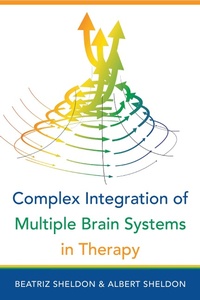
Complex Integration of Multiple Brain Systems in Therapy
Description

Enabling patients' minds to change the structure of their brains.
Beatriz and Albert Sheldon have spent the last 20 years developing the novel therapeutic paradigm called Complex Integration of Multiple Brain Systems (CIMBS). They have pioneered new methodology for "reading" and assessing emotional states using their patients' carefully observed psychophysiological phenomena as empirical evidence. CIMBS also incorporates the latest groundbreaking research on neuroplasticity, brain development, and therapeutic change. This book details their novel neurobiological and psychotherapeutic paradigm—and reveals how therapists can use it for more successful treatment. Clients come to therapy troubled by deeply ingrained neural circuits and emotional habits. The authors demonstrate how they use psychophysiological perspectives to recognize limitations in brain systems that are interfering with their patients' functioning. And through "physiopsychotherapy,” they activate self-affirming, nonconscious emotional resources to change rigid, maladaptive neural circuits. CIMBS offers a way of "integrating” these [brain system] resources to foster more complex and flexible mental functioning and to produce more successful psychotherapeutic outcomes. The therapeutic attachment relationship between therapist and patient, and "present moment” experiences within the session rather than recollections of past trauma, are key elements in this unique emotional resource-based mode of therapy. This book is wide-ranging in documenting CIMBS' success at operationalizing neuroscience research. Translating their academic, scientific, and clinical research and successful training courses into a reference work that you can hold in your hands and savor at leisure, the Sheldons have produced an approachable, intriguing, yet comprehensive milestone in the psychotherapeutic literature.
More details
Other editions
Additional editions
Persons
Content
- Intro
- Title
- Contents
- Foreword by Daniel J. Siegel
- How to Read This Book
- Preface
- Introduction to Part I. The Origins of Complex Integration of Multiple Brain Systems
- Chapter 1. Discovering Emotional Brain Systems
- Chapter 2. Resilient Brain Systems and Fail-Safe Complex Networks
- Chapter 3. Research and Principles
- Chapter 4. A Different Frame of Mind: Go the Other Way, Changing Patient Factors
- Chapter 5. The Therapeutic Attachment Relationship and Therapist Factors
- Chapter 6. Initial Directed Activation of Multiple Brain Systems
- Introduction to Part II. Deeper Dive Into Multiple Brain Systems
- Chapter 7. Conscious Brain Systems: The A-Team
- Chapter 8. Facilitating and Differentiating Tertiary-Level Brain Systems
- Chapter 9. Integrating Resilient Conscious Brain Systems
- Chapter 10. Primary-Level Brain Systems: The Powerhouses
- Chapter 11. Horizontal and Vertical Differentiating of the Primary-Level Brain Systems
- Chapter 12. Integrating Primary-Level Brain Systems
- Chapter 13. Secondary-Level Brain Systems
- Chapter 14. Psychophysiological Perspective and Physiopsychotherapy
- Chapter 15. Neuroplasticity
- Chapter 16. Summary
- Addendum: CIMBS Online Therapy
- Glossary
- Bibliography
- Index
- Praise for Complex Integration of Multiple Brain Systems in Therapy
- About the Authors
- Copyright
