

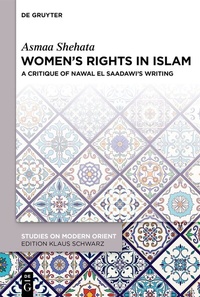
Women's Rights in Islam
Description

The issue of Muslim women's rights never seems outdated and has become trendy in the post-9/11 environment. That is, the mainstream media and Western politicians often view Muslim women as victims of male-patriarchy and frequently justify Western involvement in the Middle East and in other Muslim majority counties at least in part to "rescue" women. Within this realm, Nawal El Saadawi is a famous Egyptian writer whose writings focus on the struggle of Muslim women and are widely read in the Middle East and many Western societies as well. Because of her bold feminist views on politics, religions, and gender, she is described as the "Simone de Beauvoir of the Arab world."
After the death of El Saadawi in 2021, a flurry of arguments and criticism in the Egyptian press and women's press around the world is created in which different social media platforms were filled with numerous comments and discussions of her writings and arguments. Whereas some mourned El Saadawi and her dedication to women's issues, others celebrated her death, wishing her the worst punishment in the afterlife for what they described as her "destructive thoughts."
This monograph genuinely analyzes her views on five controversial issues - marriage, polygamy, divorce, inheritance rights, and veiling - in light of Qur'anic exegeses offered by two classical scholars (i.e., Muhammad ibn Jarir Al Tabari and Ismail ibn Umar Ibn Kathir) and two contemporary Muslim feminists (i.e., Amina Wadud and Azizah Al Hibri). By taking a critical look at her views, the book contributes not only to this ongoing debate but adds value to assessing El Saadawi's work and helps readers gain a greater understanding of her writings as well. It also enables readers to comprehend the current tension between feminism and Islam by understanding the perspectives of both sides. Since El Saadawi's writings are available in the Western countries, the book would appeal to academics, researchers on Islam and gender and Middle Eastern women, as well as to lay audiences interested in women and gender in Muslim societies.
More details
Other editions
Additional editions
Person
Content
- Intro
- Acknowledgments
- Preface
- Contents
- List of Tables
- A Note on Translation
- 1 Introduction
- Part I: Eyes on Nawal El Saadawi's Writings
- 2 Egyptian Feminism
- 3 Biographical Sketch and Reception in Egypt and the Arab World
- 4 Feminist Writings and Creative Output
- Part II: Imagining Relationship Norms
- 5 Marriage
- 6 Polygamy Dilemma
- 7 Divorce Issue
- Part III: Traditions and Customs
- 8 The Veil Controversy
- 9 Inheritance Rights
- 10 Final Comments
- Tables
- A List of El Saadawi's Newspaper Interviews
- A List of El Saadawi's TV Shows
- A List of Qur'anic Verses (Listed by Themes)
- References
- Index
