

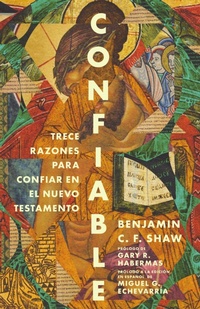
Confiable
Description

¿Cómo sabemos que el Nuevo Testamento es confiable?
Es una cuestión importante, pero los debates sobre si el Nuevo Testamento es históricamente exacto pueden ser tediosos y abrumadores. Queremos tener la certeza de que losrelatos del Nuevo Testamento son verdaderos y dignos de confianza, pero las discusiones académicas sobre la autenticidad de los eventos narrados en las Escrituras pueden resultar difíciles de abordar.
Benjamin Shaw ofrece la introducción claraque necesitábamos para comprender la fiabilidad histórica del Nuevo Testamento. En su libro Confiable, realiza un repaso sistemático de los temas clave relacionados con la confiabilidad del Nuevo Testamento y proporciona orientación para quienes se inician en la exploración de las evidencias. Con capítulos breves y directos al punto, equipa al lector para responder a las preguntas difíciles que surgen al hablar sobre la credibilidad del Nuevo Testamento.
Abordando una amplia variedad de evidencias -incluyendo la arqueología, la autoría, la crítica textual y las fuentes no cristianas- Shaw guía al lector a través de los temas académicos esenciales relacionados con la confiabilidad del Nuevo Testamento. Esta es la verdad: podemos confiar en el Nuevo Testamento no solo por su exactitud histórica, sino también como guía para la vida.
-
How can we be sure the New Testament is trustworthy?
It's an important question, yet debatesabout its historical accuracy often feel overwhelming and difficult to engage with. We want to be confident that the New Testament's accounts are true and reliable, but scholarly discussions around the authenticity of the events recounted in Scripture can be challenging to navigate.
In Trustworthy Ben Shaw provides the clear introduction we've needed for understanding the New Testament's historical reliability. In this book Shaw systematically surveys key issues related to New Testament reliability and provides guidance for those setting out to explore the evidence.
Concise, to-the-point chapters equip readers to answer the challenging questions we encounter when discussing the credibility of the New Testament. Addressing a wide variety of evidence, Shaw leads readers through the key scholarly topics related to New Testament reliability. The book also includes thoughtful recommendations for further reading for readers who want to explore various topics in depth,as well as helpful charts and figures.
Shaw compellingly demonstrates that we can trust the New Testament not only for its historical accuracy but also as a guide to life. With thoughtful analysis and clear evidence, Trustworthy invites you to embrace the reliability of the New Testament with confidence.
More details
Other editions
Additional editions
Persons
Miguel Echevarría (PhD, The Southern Baptist Theological Seminary) is associate professor of New Testament and Greek at Southeastern Baptist Theological Seminary. He is the author of The Future Inheritance of Land in the Pauline Epistles, 40 Questions about the Apostle Paul, Engaging the New Testament: A Short Introduction for Students and Ministers, and Reading the Bible Latinamente: Latino/a Interpretation for the Life of the Church. He has also publishedshort commentaries on the Gospel of John and the Johannine Epistles in IVP Academic's New Testament in Color.
Benjamin C. F. Shaw (PhD, Liberty) is president of Core Apologetics. He also serves as adjunct professor of theology at Liberty University and affiliate faculty member of Colorado Christian University. He has been working with Dr. Gary R. Habermasfor over a decade to collaborate in philosophical, historical, and theological research and publishing.
Gary R. Habermas (PhD, Michigan State University) is distinguished research professor and chair of the department of philosophy and theology at Liberty University in Lynchburg, Virginia.
Content
Prólogo de Gary R. Habermas
Prólogo a la edición en español de Miguel G. Echevarría
Agradecimientos
Introducción
1. Evidencia textual del Nuevo Testamento
2. Géneros del Nuevo Testamento y expectativas de la audiencia
3. Datación del Nuevo Testamento
4. La autoría del Nuevo Testamento
5. Tradiciones credales del Nuevo Testamento
6. Criterios históricos
7. Coincidencias no diseñadas
8. Arqueología
9. Fuentes no cristianas
10. Fuentes cristianas no canónicas
11. El canon del Nuevo Testamento y su credibilidad
12. Transformación espiritual y de vida
13. El enfoque de los hechos mínimos
Conclusión y reflexiones finales
índice bíblico
