

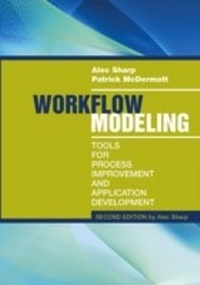
Workflow Modeling
Tools for Process Improvement and Application Development, Second Edition
1st Edition
Published on 1. January 2008
390 pages
978-1-59693-193-0 (ISBN)
Description

At last - here's the long-awaited, extensively revised and expanded edition of the acclaimed and bestselling book, Workflow Modeling. This thoroughly updated resource provides you with clear, current, and concise guidance on creating highly effective workflow systems for your organization. The new edition offers you an even clearer methodology, refined techniques, more integrated examples, and up-to-the-minute coverage of recent developments and today's hottest topics. Providing proven techniques for identifying, modeling, and redesigning business processes, and explaining how to implement workflow improvement, this book helps you define requirements for systems development or systems acquisition. By showing you how to build visual models for illustrating workflow, the authors help you to assess your current business processes and see where process improvement and systems development can take place.
More details
Other editions
Additional editions
Patrick McDermott | Alec Sharp
Workflow Modeling: Tools for Process Improvement and Applications, Second Edition
Tools for Process Improvement and Applications
Book
06/2008
Artech House Publishers
€89.50
Shipment within 10-20 days
Content
- Workflow Modeling: Tools for Process Improvement and Applications Development Second Edition
- Contents
- Preface
- Part I Background, Principles, Overview
- Chapter 1 Business Processes-More ImportantThan Ever
- Fosdick's Thesis
- And Now?
- The Need for Practical Guidance
- Building Methods to Meet the Need
- What to Expect
- Who Are "You"?
- References
- Chapter 2 A Brief History-How the EnterpriseCame to Be Process Oriented
- Learning from the Past
- The Multiskilled Craftsworker
- The Advent of the Specialist
- The Rise of Functional Specialties
- Function and Organization-What's the Difference?
- Losing the Process in the Functions
- Enter Reengineering: 1990-1993
- Exit Reengineering: 1994-1995
- The Wonder Years: 1996-2000
- Business Process Rides Again!: 2000-Present
- A Predictable Complaint
- From Fad to Business as Usual
- Process-Oriented Products
- Process Frameworks
- Less Polarization
- Process Orientation-The Best of All Worlds?
- References
- Chapter 3 Business Processes-What Are They, Anyway?
- The Trouble with "Process"-Why We Need a Clear Definition
- No Definitions, but Lots of Opinions
- Is "Business Process" an Arbitrary Concept?
- Does It Matter?
- Frustration for Participants
- Trouble Controlling Scope and Producing Useful Deliverables
- Improvements That Make Things Worse
- Problems Caused by Improperly Defined Processes
- Your Scope Will Often Be Smaller Than a Business Process
- Hasn't This Problem Been Solved Already?
- What Do Books in the "Business Process" Field Say?
- What Does the Dictionary Say?
- What Do Information Systems Dictionaries Say?
- So What, Finally, Is a Business Process?
- The Approach We'll Take
- Defining "Process" in General
- Defining Business Process in Particular
- A Test for Business Processes Boundaries
- Applying the Guideline
- So What?
- Is Everything a Process?
- Can All Processes Be Modeled?
- Summary
- Criteria for Business Processes
- Other Business Process Characteristics
- Measurable
- Automation
- Levels of Detail
- Customers: Internal and External
- Closing Advice
- Processes Are Hidden
- They're Bigger Than You Think
- Hidden Issues
- What's Next?
- References
- Chapter 4 The Approach in a Nutshell
- This Chapter and Beyond.
- Why It Works
- Whom It's For
- Processes-Results, Not Work
- Frameworks in General
- A Framework for Process Enablers
- A Framework for Putting Processes and Systems in Context
- One Person's Mission Is Another Person's Objective
- Expanding the Framework
- A Closer Look at the Three-Tier Architecture
- Presentation Services
- Business Services
- Data Management
- Models in General
- The Modeling Techniques We Employ
- Business Process: Process Workflow Models
- Presentation Services: Use Cases and Use Case Scenarios
- Business Services: Service Specification and Supporting Techniques
- Data Management: Data Models
- Five-Tier Thinking
- A Workflow-Driven Methodology-The Process of Studying Processes
- Establish Process Context, Scope, and Goals
- Understand the As-Is Process
- Design the To-Be Process
- After the Three-Phase Method
- Applications of the Approach
- Part II Phase 1: Establish Process Context,Scope, and Goals
- Chapter 5 Discover Business Processes
- Process Discovery-What, Why, and How
- The Goal: An Overall Process Map
- The Approach
- Questions You'll Probably Have
- Step 1: Get Started
- Gathering Background Information
- Meeting with the Sponsor
- Step 2: Conduct Pre-Session Interviews
- Purpose
- Conducting the Interview
- Step 3: Prepare for First Session
- Purpose
- Terms, Activities, and Issues
- Participants and Agenda
- Facilities and Supplies
- Step 4: Initiate First Session
- Purpose
- Getting Started
- Explaining "Business Process"
- Venting
- Brainstorming in General
- Step 5: Analyze Terms and Find the Nouns
- Purpose
- The Steps
- Step 6: Identify Activities
- Purpose
- The Steps
- Step 7: Link the Activities and Determine Business Processes
- Purpose
- The Steps
- Patterns to Watch For
- Using a Top-Down Approach
- Naming the Business Processes
- Choose the First Process Project
- Divine Intervention
- Analytic Approach
- References
- Chapter 6 Establish Process Scope and Contents
- Goals
- Overview
- How Specifically Do Scope and Contents Help?
- Step 1: Identify Triggering Event(s)
- Step 2: Identify Result for Each Stakeholder
- Step 3: Identify Subprocesses
- Step 4: Identify Cases
- Step 5: Identify Participating Organizations
- Step 6: Identify Individual Actors and Main Responsibilities
- Step 7: Identify Supporting Mechanisms
- Step 8: Identify Process Measures (Optional)
- Chapter 7 Conduct Initial As-Is Process Assessment
- Establishing Rationale and Direction
- The Process Case for Action and Process Vision
- Why Bother? Doesn't Everyone Know This Already?
- The Case for Action
- Step 1: Stakeholder Assessment
- Step 2: Context
- Step 3: Consequences of Inaction
- A Note on the Simplified Framework
- The Vision
- An Example
- A Closer Look at Assessment by Stakeholder
- Everyone's a Critic.
- Don't Guess-Ask!
- The Customer
- The Performers
- Owners and Managers
- Suppliers
- Other Groups
- Process Differentiator
- What Is a Differentiator, Improvement Dimension, or Strategic Discipline?
- A Common Misconception
- Differentiators in Action
- The Relevance of the Concept
- Faster, Cheaper, Better, or What?
- Common Questions
- Look at the Process in Terms of Enablers
- Workflow Design
- Information Systems
- Motivation and Measurement
- Human Resources
- Policies and Rules
- Facilities
- All Enablers Matter
- The Environment in Which the Process Operates
- An Example
- Topics in "the Environment"
- Beliefs, Culture, and Management Style
- Everything Stems from Beliefs
- Other Cultural Traits
- Core Competencies
- What Are We Really Good At?
- Measures
- How Many?
- Got the Time?
- Who's Involved?
- Efficiency
- Cost
- Summary of Measures
- Potential Improvements
- One Poster Is Worth a Thousand Words
- Summarizing Findings
- It Matters!
- References
- Part III Phase 2: Understand the As-Is Process
- Chapter 8 Process Workflow Models: The Essentials
- Overview
- The Real Purpose of This Section
- The Practical Side
- Swimlane Diagrams-What and Why
- What's the Attraction?
- What Are They?
- Example 1: The Essence of Workflow Modeling
- Example 2: Getting to the Essence Without Diving into Detail
- Question 1: "Who Gets the Work Next?"
- Question 2: "How Does It Get There?"
- Question 3: "Who Really Gets the Work Next?"
- What Did We Learn from This Example?
- Example 3: "How Do I Depict.?"
- Customer Service.
- Repair Service.
- Service Analysis.
- Telemarketing.
- Market Database Research.
- RB Tel-Questions Raised
- Essential Elements of a Swimlane Diagram
- The Details
- Actors and Roles
- Steps and Decisions
- Flow
- What's Next?
- Chapter 9 Process Workflow Models-Managing Progressive Detail
- The Curse of Detail
- What's the Problem?
- Achieving a Controlled Descent
- Three Levels of Workflow Diagrams
- Level 1: The Handoff Diagram
- Issues and Observations with the Handoff Diagram
- Recap
- Level 2: The Service Diagram
- Level 3: The Task Diagram
- Closing Thoughts
- Chapter 10 Process Workflow Models-The FinerPoints
- Introduction
- Actors and Other Characters
- Every Actor? Really?
- Jobs, Roles, and Committees
- Systems as Actors
- Passive Actors
- Processes as Actors
- Steps and Types of Steps
- What Makes It Go? Flow!
- Dealing with Complexity
- Flowing On
- Chapter 11 Develop As-Is Process Workflow Model
- Introduction
- Dealing with Resistance to As-Is Modeling
- Assembling the Team
- Management and Front-Line Participants?
- Front-Line Workers or Representatives?
- IT and Other Supporting Players?
- External Participants
- Preparing for the Modeling Session
- Scheduling
- The Kickoff
- Approach
- Question 1: What Are We Doing?
- Question 2: Which Process Are We Modeling?
- Building the Handoff-Level Diagram
- The Mechanics and the Methods
- Option 1-Trace the Flow (The Three Questions Approach)
- Option 2-Bottom Up (Gather Activities, Then Assemble)
- Refining the Initial Model-The Five Key Questions
- "Can We Stop Now?"
- Producing the Service Diagram
- Issues During As-Is Modeling
- Misapplying Workflow Modeling
- Modeling Different Versions of the Same Process
- Inability to Model a Particular Situation
- Facilitation Issues
- Dealing with Disagreement
- Conclusion
- Part IV Phase 3: Design the To-Be Process
- Chapter 12 Conduct Final As-Is Process Assessment
- Introduction
- Getting Ready
- Confirm Initial Assessment and Goals
- Capture First Impressions
- Identify Leverage Points
- Assessment by Enablers
- Workflow Design
- Information Systems
- Motivation and Measurement
- Human Resources
- Policies and Rules
- Facilities
- Other Factors
- Assess Individual Steps
- Consolidate Improvement Ideas
- Decide on Approach
- References
- Chapter 13 Determine To-Be Process Characteristicsand Workflow
- Look Before You Leap!
- Goals
- Philosophy/Approach
- Post and Review Key Materials from Previous Phases
- Collect Ideas-Getting Started
- Build on Ideas Generated During Assessment
- Generate Ideas That Specifically Address the "Leverage Points"
- Steal Ideas by Reviewing "Best Practices"
- "Best Practices" in General
- Workflow Design
- Information Systems
- Motivation and Measurement ("Reward and Punishment" Schemes)
- Human Resources
- Policies and Rules
- Facilities Design (or Other Factors)
- Brainstorming Additional Suggestions
- Apply the Challenge Process
- Assess Ideas in Context and Select
- Develop Ideal To-Be Workflow
- Develop To-Be Workflow
- Road Trip
- References
- Part V Related Requirements Definition Techniques
- Chapter 14 Business-Oriented Data Modeling
- Data Modeling-What It Is, What It Isn't
- Basic Terms and Concepts
- A Simple Example
- The Narrative Component-the Entity Definitions
- The Graphic Component-the Entity-Relationship Diagram
- Levels of Detail
- Contextual Data Model
- Conceptual Data Model
- Logical Data Model
- The Components-Further Guidelines and Pitfalls
- Entities
- Attributes
- Relationships
- Starting Your Data Model
- Starting Covertly
- Starting Overtly
- Starting by Reverse Engineering
- From Conceptual to Logical
- References
- Chapter 15 Requirements Modeling with Use Cases and Services
- From Workflow to Information System Requirements
- A Time of Transition
- Transition into Use Cases
- Separation into Business Services and Use Cases
- A Quick Example
- Business Services-Why?
- Disclaimer and Direction
- The Approach and How It's Different
- Business Services in General
- Services and Events-A Point of Confusion
- Business Services and Business Events
- What Is an Event?
- Types of Events
- Services-Granularity
- A Few More Guidelines
- Want More?
- Use Case Concepts
- Seven Steps to Success
- Using Facilitated Sessions
- Use Cases in General
- Extensions and Scenarios
- The Methodology
- Step 1: Identify Services (Scope) and Complete Initial Service Specifications (Concept)
- Choose Your Primary Approach
- Brainstorm for Events or Services
- Refine the List of Events or Services
- Finalize the Scope-Level List of Services
- Describe Business Services
- Confirm Business Services
- Step 2: Identify Use Cases (Scope) and Complete Initial Use Case Descriptions (Concept)
- Discover Use Cases
- Describe the Use Cases
- Step 3: Complete Final Service Specifications (Detail)
- Step 4: Begin Final Use Case Descriptions (First Pass at Detail)
- Create Use Case Dialogues
- Step 5: Refine Final Use Case Descriptions (Final Pass at Detail)
- Step 6: Identify and Describe Use Case Scenarios (Conditions and Outcomes)
- Establish Use Case Scenarios
- Step 7: Complete Use Case Scenario Descriptions (Dialogues)
- Refine Use Cases As Necessary
- Closing Thoughts
- More Uses of Use Cases
- But Why Do They Work So Well?
- Reference
- Appendix
- About the Authors
- Index
