

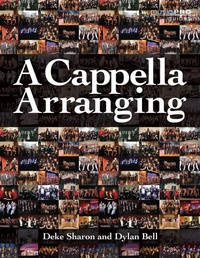
A Cappella Arranging
1st Edition
Published on 30. April 2023
360 pages
978-1-5381-8530-8 (ISBN)
Description

The world loves to sing. From barbershop groups to madrigal choirs to vocal rock bands, there are tens of thousands of vocal groups in America. The success of mainstream television programs such as Glee and The Sing-Off not only demonstrates the rising popularity of vocal music; it reflects how current trends inspire others to join in. In addition, through various online and on-the-ground vocal music societies, the "a cappella market" is well defined and well connected. Like singing itself, a cappella is a global phenomenon.
At the heart of every vocal group is the music it performs. This often means writing its own arrangements of popular or traditional songs. This book is the long-awaited definitive work on the subject, wide ranging both in its scope and in its target audience - which spans beginners, music students, and community groups to professional and semi-professional performers, vocal/instrumental songwriters, composers, and producers - providing genre-specific insight on a cappella writing.
The tone of the book is instructive and informative, yet conversational: it is intended to stand alongside any academic publication while remaining interesting and fun. A Cappella Arranging is a good textbook - and a "good read" - for every vocal arranger, whether amateur or professional; every vocal music classroom, and any professional recording studio.
At the heart of every vocal group is the music it performs. This often means writing its own arrangements of popular or traditional songs. This book is the long-awaited definitive work on the subject, wide ranging both in its scope and in its target audience - which spans beginners, music students, and community groups to professional and semi-professional performers, vocal/instrumental songwriters, composers, and producers - providing genre-specific insight on a cappella writing.
The tone of the book is instructive and informative, yet conversational: it is intended to stand alongside any academic publication while remaining interesting and fun. A Cappella Arranging is a good textbook - and a "good read" - for every vocal arranger, whether amateur or professional; every vocal music classroom, and any professional recording studio.
More details
Series
Edition
1. Auflage
Language
English
Place of publication
New York
United States
ISBN-13
978-1-5381-8530-8 (9781538185308)
Copyright in bibliographic data and cover images is held by Nielsen Book Services Limited or by the publishers or by their respective licensors: all rights reserved.
Schweitzer Classification
Other editions
Additional editions
Deke Sharon | Dylan Bell
A Cappella Arranging
Book
11/2012
Hal Leonard Corporation
€57.30
Shipment within 15-20 days
Persons
Deke Sharon (San Francisco, CA) is known as "the father of contemporary a cappella." Arguably one of the best-known and most prolific cappella arrangers in the world, Sharon has been a vocal exponent of contemporary a cappella music through his founding of the Contemporary A Cappella Society of America. Sharon is also the arranger and producer of NBC's The Sing-Off, both in America and Europe, and has arranged music for the Oscar-winning film The Social Network. Dylan Bell (Toronto, Canada) is a world-renowned vocal arranger, performer, producer, and instructor. His award-winning arrangements have been sung around the world. Bell has written for some of the finest a cappella groups in the world, including the Nylons (Canada) and the Swingle Singers (UK). Bell also regularly contributes articles to the Contemporary A Cappella Society of America.
Content
- Front Cover
- Contents
- Foreword
- Introduction
- Who Is This Book For?
- Our Perspective
- Conventions in This Book
- The Exercises and Recordings
- Acknowledgments
- Section I Quick Start
- Chapter 1 Basic Arranging in Ten Steps
- 1. Choose a Song
- 2. Listen to the Original-Repeatedly
- 3. Look At-and Listen To-Other Arrangements
- 4. Decide on a Form
- 5. Prepare Your Materials
- 6. Write Out the Melody
- 7. Write Out the Bass Line
- 8. Write the Background Vocals
- 9. The Final Touches
- 10. Record/Rehearse
- Exercises
- Section II Principles of Arranging
- Chapter 2 What Is Arranging?
- Exercises
- Chapter 3 The Arranging Spectrum
- Transcription
- Adaptation
- Translation
- Transformation
- Mixing the Elements
- Arranging Formats
- Chapter 4 The Dreamer, the Editor, and the Critic: Discovering Your Toolkit and Developing Your "Inner Ear"
- The Dreamer
- The Editor
- The Critic
- Making Them Work Together
- The "Inner Ear"
- Exercises
- Chapter 5 Transcription
- Preparation
- Choose Your Song
- Listening
- Lift the Outsides: Melody, Then Bass
- Lift the BGs, in Sections
- Vertical Transcribing: Being a Harmonic Detective
- Chapter 6 Five Myths about Music Making
- Myth No. 1: There's Good, There's Bad, and There's a Hierarchy
- Myth No. 2: Music Has Rules, So Learn Them and Stick to Them
- Myth No. 3: Music Should Be Left to the Experts
- Myth No. 4: There Is One Great Path to Studying Music
- Myth No. 5: Creativity Can Be Measured
- Final Thoughts Before We Start
- Exercises
- Chapter 7 Vocal Conventions: Ranges, Breaks, and "Sweet Spots"
- Think Outside the (Voice) Box
- Vocal Range Conventions
- Exercise
- Section III The Ten Steps Expanded
- Chapter 8 Step 1: Song Selection
- Does It Fit?
- Why That Song?
- Love It or Leave It
- Consider Anything-and Be Different
- Have a Soloist in Mind
- Variety Is the Spice . . .
- I Can't Think of Anything!
- The Ten Steps in Action
- Chapter 9 Step 2: Listening to the Original
- How to Listen
- Learning the Song
- Chapter 10 Step 3: Listening to Other Versions
- Other Recordings
- Sheet Music
- MIDI Files
- Chapter 11 Step 4: Form and Conceptualization
- Conceptualization
- Translation or Transformation
- Your Ensemble
- From That to This
- Decide on the Form
- Exercises
- Chapter 12 Step 5: Preparing Your Materials
- By Ear
- Arranging through Recording
- Handwritten Notation
- Computer Notation
- The Great Commandments of Music Notation
- Chapter 13 Step 6: Melody and Lyrics
- Altering the Melody: Where and When
- How to Treat Melody
- The Role of Lyrics
- Lyrics as an Inspiration for the Arrangement
- What If I Want to Change the Melody or Lyrics?
- Exercises
- Chapter 14 Step 7: The Bass Line
- Basses Are People Too
- Know Thy Bass
- The Bass Section: It's Not Just for Bass Lines Any More
- The Single Bass Singer
- The Female Bass
- Sounds, Syllables, and Phrasing
- Learn by Doing
- Connect the Dots
- Make It Interesting
- Exercises
- Chapter 15 Step 8: Background Voices
- Voicing and Voice Leading
- Different Textures: Building a Vocabulary
- Chapter 16 Step 9: Final Touches
- The Rule of Three
- Read Through the Chart: Know It Vertically
- Sing Through the Chart: Know It Horizontally
- Chapter 17 Step 10: Record/Rehearse
- Two at a Time
- One at a Time
- Rehearsal
- Learn to Let Go
- Intermision In-Depth Arrangement Analyses
- Four-Part Jazz Writing: "Christmastime Is Here"
- Instrumental to Vocal: "Skating"
- Creativity Through Limitation: "From Ash You Rise"
- Section IV Advanced Topics in Arranging
- Chapter 18 Change-Ups and Clever Bits: Adding Spice to Your Arrangement
- Start Simple
- Clever Bits and Song Quotes
- Chapter 19 Arranging for Other Vocal Formats
- Men's Ensemble: TTBB and More
- Women's Voices: SSAA
- Writing for More Parts
- Writing for Fewer Parts
- Chapter 20 Vocal Percussion
- The Single Drummer
- The Drum Section
- Interwoven Percussive Elements
- VP for Your Group
- VP for Other Groups
- Basic VP Vocabulary
- Notating Vocal Percussion
- Basic Groove
- Syllables
- Notating Changes
- What Do I Keep from the Original?
- Chapter 21 Specific A Cappella Styles: A "How-To" History of A Cappella
- Classical Music
- And Then Came Polyphony
- Chorale-Style Writing
- Barbershop Style
- Doo-Wop
- Vocal Jazz
- Big-Band Style
- Gospel
- Chapter 22 Writing for Your Own Group
- Know Each Person's Voice
- Change Voicings
- A Library of Sounds
- Putting It All Together
- The Essence of Your Group
- Chapter 23 Writing Medleys
- Conception
- Distillation
- Assembly
- Transitions
- Ending Your Medley
- Mash-Ups
- Chapter 24 Breaking the Block: Overcoming Creative Barriers
- Block No. 1: The Blank Page
- Block No. 2: Everything Stinks!
- Block No. 3: Painting Yourself into a Corner
- Chapter 25 Final Thoughts
- Give Yourself Permission to Stink
- It's Not About You
- It Can Take Ten Lousy Ideas to Make a Single Good One
- Practice Makes Perfect
- Just Notes
- Simple Beauty
- Appendix A: "We Three Kings" and "Go Tell It to the Mountain"
- Appendix B: Notable Arrangers: An Incomplete List
- Appendix C: Recommended Texts
- Appendix D: Online Resources
- Glossary of Terms
- Afterword
