

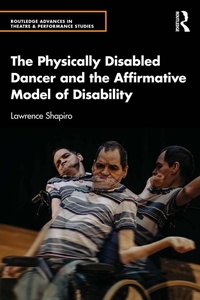
The Physically Disabled Dancer and the Affirmative Model of Disability
Published on 6. May 2025
326 pages
978-1-040-35281-6 (ISBN)
Description

This volume investigates the contributions and achievements of the physically disabled dancer while challenging and recognizing the inherent inequities in the field of integrated dance in the UK which currently places greater emphasis on the learning-disabled performer.
This is the first book ever written by a physically disabled dancer on the subject of physically disabled dancers. Inherent in this examination is the model of examining disability that is most closely associated with the disability arts movement which is the 'affirmative model of disability'. This model is defined as an approach to disability in which the disabled person is neither an object of medical care nor a victim of social indifference but a self-respecting, autonomous individual in which their disability is a positive and affirming aspect of their self-identity. This book, based on interviews with physically disabled dancers, choreographers, academics and arts producers all in a UK context, combines a wide range of perspective of disability dance together with the intellectual rigour of disability studies to produce a new definition of the physically disabled dancer as an affirming, positive, indispensable practitioner of contemporary performance art. The volume pioneers perspectives of the physically disabled dancer prioritizing first-person accounts from the performers themselves to produce an unprecedented contribution to the study of disability arts from a uniquely British perspective.
This book will offer educators as well as arts and cultural professionals a critical resource for facilitating work by and in alliance with practitioners of integrated dance.
This is the first book ever written by a physically disabled dancer on the subject of physically disabled dancers. Inherent in this examination is the model of examining disability that is most closely associated with the disability arts movement which is the 'affirmative model of disability'. This model is defined as an approach to disability in which the disabled person is neither an object of medical care nor a victim of social indifference but a self-respecting, autonomous individual in which their disability is a positive and affirming aspect of their self-identity. This book, based on interviews with physically disabled dancers, choreographers, academics and arts producers all in a UK context, combines a wide range of perspective of disability dance together with the intellectual rigour of disability studies to produce a new definition of the physically disabled dancer as an affirming, positive, indispensable practitioner of contemporary performance art. The volume pioneers perspectives of the physically disabled dancer prioritizing first-person accounts from the performers themselves to produce an unprecedented contribution to the study of disability arts from a uniquely British perspective.
This book will offer educators as well as arts and cultural professionals a critical resource for facilitating work by and in alliance with practitioners of integrated dance.
More details
Series
Language
English
Place of publication
London
United Kingdom
Publishing group
Taylor & Francis Ltd
Target group
Professional and scholarly
College/higher education
Illustrations
11 Halftones, black and white; 11 Illustrations, black and white
File size
3,76 MB
ISBN-13
978-1-040-35281-6 (9781040352816)
Copyright in bibliographic data and cover images is held by Nielsen Book Services Limited or by the publishers or by their respective licensors: all rights reserved.
Schweitzer Classification
Other editions
Additional editions
Book
05/2025
1st Edition
Routledge
€65.50
Shipment within 10-20 days
Book
05/2025
1st Edition
Routledge
€208.30
Shipment within 10-20 days
Person
Lawrence Shapiro has been a pioneering disabled dancer in his native Canada for over 20 years, is a validated Deaf and Disability Artist with the Canada Council for the Arts and a UK-published dance researcher whose writing on integrated performance has appeared in a variety of publications including Choreographic Practices, Canadian Scholars Press and the Dance Current.
Content
Foreword Professor Sarah Whatley
Preface
Acknowledgements
List of Figures
1. Introduction
2. The Affirmative Model of Disability
Part I
Interviews with Physically Disabled Dancers
3. Marketa Stranska: The Journey of the Amputee Dancer
Candoco Dance
4. Suzie Birchwood: Dancing in and out of the Wheelchair
Independent Dance Artist
5. Isolte Avila: Dancing with Limited Mobility
Signdance Collective
6. Welly O'Brien: The Achievement of the Amputee Dancer
Independent Dance Artist
7. David Grindley: Dancing with Cerebral Palsy
Amici Dance Theatre
Part II
Academics
8. Professor Sarah Whatley: Leading the Way
Centre for Dance Research, Coventry University
9. Dr. Kate Marsh: The Performing Scholar
Centre for Dance Research, Coventry University
Part III
Choreographers and Arts Producers
10. Wolfgang Stange: The Way They Move
Amici Dance Theatre
11. Ingrid Molinos: The Dance of Youth
Young Amici
12. Colm Gallagher: Keeping Them Dancing
Amici Dance Theatre
13. Alison King: Bringing It to the Public
Turtle Key Arts
Part IV
Essays by Lawrence Shapiro
14. Re-imagining the Affirmative Model and the Physically Disabled Dancer
15. Into the Future
Appendix
16. A Conversation with Lawrence Shapiro
Index
Preface
Acknowledgements
List of Figures
1. Introduction
2. The Affirmative Model of Disability
Part I
Interviews with Physically Disabled Dancers
3. Marketa Stranska: The Journey of the Amputee Dancer
Candoco Dance
4. Suzie Birchwood: Dancing in and out of the Wheelchair
Independent Dance Artist
5. Isolte Avila: Dancing with Limited Mobility
Signdance Collective
6. Welly O'Brien: The Achievement of the Amputee Dancer
Independent Dance Artist
7. David Grindley: Dancing with Cerebral Palsy
Amici Dance Theatre
Part II
Academics
8. Professor Sarah Whatley: Leading the Way
Centre for Dance Research, Coventry University
9. Dr. Kate Marsh: The Performing Scholar
Centre for Dance Research, Coventry University
Part III
Choreographers and Arts Producers
10. Wolfgang Stange: The Way They Move
Amici Dance Theatre
11. Ingrid Molinos: The Dance of Youth
Young Amici
12. Colm Gallagher: Keeping Them Dancing
Amici Dance Theatre
13. Alison King: Bringing It to the Public
Turtle Key Arts
Part IV
Essays by Lawrence Shapiro
14. Re-imagining the Affirmative Model and the Physically Disabled Dancer
15. Into the Future
Appendix
16. A Conversation with Lawrence Shapiro
Index
