

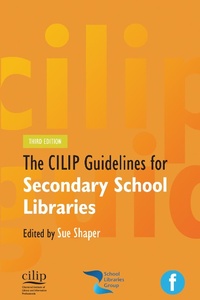
CILIP Guidelines for Secondary School Libraries
Description

This fully updated version of the CILIP-endorsed guidelines for secondary school libraries addresses the changing schools' landscape and impact of technological changes of recent years.
Focusing on the librarian at the heart of the school, each chapter interweaves best practice, technological development and context-specific options to provide clear guidance and support for all involved in the provision of school library services.
Amongst other key topics the Guidelines cover:
- Providing quality resources
- Information literacy
- Reader development
- Pro-active marketing
- Evaluation
- Partnerships and the wider community.
Developed with an international audience in mind, these guidelines provide a comprehensive and flexible model for a modern school library service.
Readership: This will be essential reading for all those who work in school library services, whatever their level of qualification. The guidelines will also be of interest to teachers, especially those in management positions, school governors, business people who service school libraries, and students of librarianship.
More details
Other editions
Additional editions
Person
Sue Shaper is Chair of the Schools Library Group National Committee, and Library Resources Director at The Broxbourne School, Hertfordshire.
