

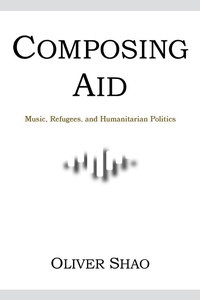
Composing Aid
Description

Music and arts initiatives are often praised for their capacity to aid in the rehabilitation of refugees. However, it is crucial to recognize that this celebratory view can also mask the unequal power dynamics involved in regulating forced migration.
In Composing Aid, Oliver Shao turns a critical ear towards the United Nations-run Kakuma Refugee Camp in Kenya, one of the largest and oldest encampments in the world. This politically engaged ethnography delves into various cultural practices, including hip hop shows, traditional dances, religious ceremonies, and NGO events, in an urbanized borderland area beset with precarity and inequality. How do songs intersect with the politics of belonging in a space controlled by state and humanitarian forces? Why do camp authorities support certain musical activities over others? What can performing artists teach us about the inequities of the international refugee regime?
Offering a provocative contribution to ethnomusicological methods through its focus on activist research, Composing Aid elucidates the powerful role of music and the arts in reproducing, contesting, and reimagining the existing migratory order.
More details
Other editions
Additional editions
Person
Oliver Shao is Assistant Professor of Liberal Arts at the School of the Art Institute of Chicago.
Content
Acknowledgments
List of Abbreviations
Introduction
1. Belonging
After Relief
2. Pleasure
3. Labor
For Protection
4. Immobility
5. Security
6. Peace
Conclusion: Re-Composing Aid
Bibliography
Index
