

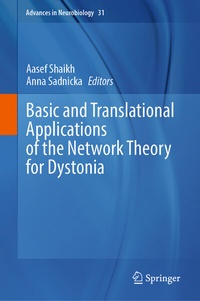
Basic and Translational Applications of the Network Theory for Dystonia
Description

A recently proposed novel scheme of dystonia suggests that it is a disorder of neural network. Impairment in any of the "nodes" of the network may result in deficient network activity, causing dystonia. This book aims to present various experimental evidence supporting the network theory of dystonia. Dystonia is the abnormal twisting and turning of the organ and associated involuntary oscillations. Although dystonia is less common than Parkinson's disease, traumatic brain injury, or stroke, each of these common disorders present with dystonia. Information regarding the brain regions that may be involved in dystonia is surprisingly limited and often conflicting. With chapters written by subject matter experts, this is a unique title that focuses on dystonia as a network disorder. This book would be of interest to basic and clinical researchers with an interest in motor systems and movement disorders.
More details
Other editions
Additional editions
Persons
Dr Anna Sadnicka BSc MBChB MRCP PhD
Anna is a Clinical Lecturer fascinated by the neural control of movement and how this is disturbed in movement disorders. Her award-winning research combines behavioural experiments, electrophysiology, and computational models to shed light on dystonia mechanism. She has a particular emphasis on translating her research into novel movement retraining and neuromodulation strategies.
