

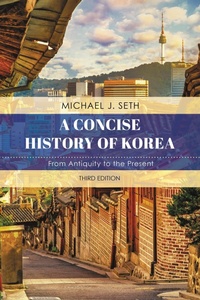
A Concise History of Korea
From Antiquity to the Present
3rd Edition
Published on 19. November 2019
616 pages
979-8-8818-5137-8 (ISBN)
Description

Now in a fully revised and updated edition including new primary sources and illustrations, this comprehensive book surveys Korean history from Neolithic times to the present. Michael J. Seth explores the origins and development of Korean society, politics, and still little-known cultural heritage from their inception to the two Korean states of today. Telling the remarkable story of the origins and evolution of a society that borrowed and adopted from abroad, Seth describes how various tribal peoples in the peninsula came together to form one of the world's most distinctive communities. He shows how this ancient, culturally and ethnically homogeneous society was wrenched into the world of late-nineteenth-century imperialism, fell victim to Japanese expansionism, and then became arbitrarily divided into two opposed halves, North and South, after World War II.
Tracing the post-war years since 1945, the book explains how the two Koreas, with their deeply different political and social systems and geopolitical orientations, evolved into sharply contrasting societies. South Korea, after an unpromising start, became one of the few postcolonial developing states to enter the ranks of the first world, with a globally competitive economy, a democratic political system, and a cosmopolitan and dynamic culture. North Korea, by contrast, became one of the world's most totalitarian and isolated societies, a nuclear power with an impoverished and famine-stricken population. Seth describes and analyzes the radically different and historically unprecedented trajectories of the two Koreas, formerly one tight-knit society. Throughout, he adds a rare dimension by placing Korean history into broader global perspective. All readers looking for a balanced, knowledgeable history will be richly rewarded with this clear and concise book.
Tracing the post-war years since 1945, the book explains how the two Koreas, with their deeply different political and social systems and geopolitical orientations, evolved into sharply contrasting societies. South Korea, after an unpromising start, became one of the few postcolonial developing states to enter the ranks of the first world, with a globally competitive economy, a democratic political system, and a cosmopolitan and dynamic culture. North Korea, by contrast, became one of the world's most totalitarian and isolated societies, a nuclear power with an impoverished and famine-stricken population. Seth describes and analyzes the radically different and historically unprecedented trajectories of the two Koreas, formerly one tight-knit society. Throughout, he adds a rare dimension by placing Korean history into broader global perspective. All readers looking for a balanced, knowledgeable history will be richly rewarded with this clear and concise book.
More details
Edition
3rd edition
Language
English
Place of publication
New York
United States
Publishing group
Bloomsbury Publishing Plc
ISBN-13
979-8-8818-5137-8 (9798881851378)
Copyright in bibliographic data and cover images is held by Nielsen Book Services Limited or by the publishers or by their respective licensors: all rights reserved.
Schweitzer Classification
Other editions
Additional editions
Book
11/2019
3rd Edition
Rowman & Littlefield
€91.92
Article exhausted; check different version
Person
Michael J. Seth is professor of history at James Madison University.
Content
List of Primary Source Readings
Preface to the Third Edition
Acknowledgments
Maps
Introduction
1 The Origins
The Koreans
Early Inhabitants
The Age of Rice Farming Begins
Sources for Early Korea
Choson
The Chinese Commanderies
Chinese Commanderies and Their Neighbors: The Northern Peoples
Chinese Commanderies and Their Neighbors: The Southern Peoples
Politics of the Third Century
Korea in Global Perspective: 5,000 Years of History
Notes
2 The Period of the Three Kingdoms, Fourth Century to 676
The Emergence of the Three Kingdoms
The Wa and Mimana
Korea and Northeast Asia in the Fourth and Fifth Centuries
Culture and Society of the Three Kingdoms
The Bone-Ranks, the Hwabaek, and the Hwarang
The Changing Environment of the Late Sixth and Seventh Centuries
The Unification of Korea under Silla
Korea in Global Perspective: State Formation
Notes
3 Late Silla, 676 to 935
The Peninsular Kingdom
Consolidation of Central Monarchical Rule under Silla, 676-780
Silla and the Chinese Model
Supporting the Silla State
Silla Society
Religion and Aristocratic Culture
Silla and Its Neighbors
Parhae
The Decline of Silla
The Later Three Kingdoms
Korea in Global Perspective: Silla's Rise and Fall
Notes
4 Koryo, 935 to 1170
The New Koryo State
Koryo in East Asia
Internal Politics, 935-1170
Koryo Culture
The Samguk Sagi
Koryo Society
Korea in Global Perspective: Koryo's Examination System
Notes
5 Military Rulers and Mongol Invaders, 1170 to 1392
Military Rule
Son Buddhism
Korea, Japan, and Feudal Europe
The Mongol Invasions
The Legacy of the Mongol Period
Late Koryo Society
The End of the Koryo
Late Koryo Culture
The Rise of Neo-Confucianism
Korea in Global Perspective: The Mongols and Korea
Notes
6 The Neo-Confucian Revolution and the Choson State, 1392 to the Eighteenth Century
Establishing the Yi Dynasty
The Neo-Confucianist Project
The Choson State
The Censorate and the Classics Mat
Historians
The Examination System
Education
Agricultural Improvements and the State
Military and Foreign Affairs
The Japanese and Manchu Invasions
Competition for Power among the Elite
Choson Politics in Perspective
Korea in Global Perspective: Choson as an Ideologically Driven State
Notes
7 Choson Society
The Family
Women during the Yi Dynasty
Social Structure
Slaves and Outcastes
Crime and Punishment
Religious Beliefs and Practices
Philosophy
Arts, Literature, and Science
Technology and Inventions
Korea in Global Perspective: Women in Korea
Korea in Global Perspective: Choson's Social Hierarchy
Notes
8 Late Choson, Early Eighteenth Century to 1876
The Politics of Late Choson
Late Choson and the Confucian World Order
Korean Travelers to China and Japan
Taxation and Reform
Agriculture
Commerce and Trade
Cultural Flowering of Late Choson
Sirhak
Everyday Life
Korea in the Nineteenth Century: The "Hermit Kingdom"
Internal Problems in the Nineteenth Century
Korea in Global Perspective: The Hermit Kingdom?
Notes
9 Korea in the Age of Imperialism, 1876 to 1910
Early Contacts with the West
The Opening of Korea
Early Reforms, 1876-1884
The Chinese Decade, 1885-1894
The Tonghak Rebellion
Kabo Reforms
The Russian Ascendency and the Independence Club
The Russo-Japanese War and the Protectorate
The Protectorate, 1905-1910
Korea in Transition
Korea in Global Perspective: Korea in the Age of Imperialism
Notes
10 Colonial Korea, 1910 to 1945
The March First Movement
The Post-March First Period
Cultural Ferment of the 1920s
Moderate and Radical Nationalism
Economic Development
Modernity and Social Change
Rural Society
Wartime Colonialism, 1931-1945
Forced Assimilation
A Society in Turmoil: The Legacy of Colonial Rule
Korea in Global Perspective: The Korean Nationalist Movement
Korea in Global Perspective: Korea's Colonial Experience
Notes
11 Division and War, 1945 to 1953
The End of Colonial Rule in Korea
North Korea under Soviet Occupation
South Korea under U.S. Occupation
Trusteeship
Establishing a Separate Regime in the North
The Beginnings of a New Regime in the South
Toward Division
The Republic of Korea
The Democratic People's Republic of Korea
On the Eve of the Korean War
The Korean War
The Impact of the Korean War
Korea in Global Perspective: Divided Countries
Korea in Global Perspective: The Korean War
Notes 3
12 North Korea: Recovery, Transformation, and Decline, 1953 to 1993
The Divergent Paths of the Two Koreas
North Korea's Recovery
North Korea's Great Leap Forward
The Political Consolidation of Kim Il Sung and His Manchurian Guerrilla Comrades
Creating a Monolithic State
The Cult of the Kim Family
Kim Il Sung's Juche Society
Everyday Life
Foreign Policy
Economic Problems
Korea in Global Perspective: North Korea as a Communist Country
Notes
13 South Korea: From Poverty to Prosperity, 1953 to 1997
The Syngman Rhee Years, 1953-1960
The Democratic Experiment, 1960-1961
The Military Coup
Economic Transformation
Economic Growth under Park Chung Hee
Chaebols
Transformation of the Countryside
Economic Development in the 1980s
Explaining South Korea's Economic Miracle
Education
Korea in Global Perspective: Educational Development
Korea in Global Perspective: Economic Development
Notes
14 South Korea: Creating a Democratic Society, 1953 to 1997
Military Authoritarianism
The Yushin Era, 1971-1979
Seoul Spring, 1979-1980
The Fifth Republic
1987: A Political Turning Point
Transition to Democracy
Understanding the Democratic Turn
Student Activism
Organized Labor
Social and Cultural Transition
Korea in Global Perspective: Democratization
Notes
15 Contemporary North Korea, 1993 to 2019
In Decline: A Period of Crisis
Under Kim Jong Il
Ideology
Famine
Crisis and Summitry
Tentative Reforms
Confrontations and the Policy of Survival
North Korea under Kim Jong Un
Reviving the Past, Moving toward an Uncertain Future
North Korea and the Prospects for Unification
Korea in Global Perspective: North Korea's Famine
Korea in Global Perspective: North Korea as a Failed State
Notes
16 Contemporary South Korea, 1997 to 2019
Return to Civilian Government
Economic Crisis and Recovery
Domestic Politics
Foreign Policy
Rethinking Reunification
A Society Undergoing Rapid Change
Changing Gender Relations, Changing Families
Ethnic Homogeneity and Multiculturalism
Facing History and Preserving Heritage
New Crises and New Problems
Korea in Global Perspective: South Korea's Place in the World
Notes
Conclusion
Appendix: Romanization
Glossary of Korean Words
Annotated Selected Bibliography
Index
About the Author
Preface to the Third Edition
Acknowledgments
Maps
Introduction
1 The Origins
The Koreans
Early Inhabitants
The Age of Rice Farming Begins
Sources for Early Korea
Choson
The Chinese Commanderies
Chinese Commanderies and Their Neighbors: The Northern Peoples
Chinese Commanderies and Their Neighbors: The Southern Peoples
Politics of the Third Century
Korea in Global Perspective: 5,000 Years of History
Notes
2 The Period of the Three Kingdoms, Fourth Century to 676
The Emergence of the Three Kingdoms
The Wa and Mimana
Korea and Northeast Asia in the Fourth and Fifth Centuries
Culture and Society of the Three Kingdoms
The Bone-Ranks, the Hwabaek, and the Hwarang
The Changing Environment of the Late Sixth and Seventh Centuries
The Unification of Korea under Silla
Korea in Global Perspective: State Formation
Notes
3 Late Silla, 676 to 935
The Peninsular Kingdom
Consolidation of Central Monarchical Rule under Silla, 676-780
Silla and the Chinese Model
Supporting the Silla State
Silla Society
Religion and Aristocratic Culture
Silla and Its Neighbors
Parhae
The Decline of Silla
The Later Three Kingdoms
Korea in Global Perspective: Silla's Rise and Fall
Notes
4 Koryo, 935 to 1170
The New Koryo State
Koryo in East Asia
Internal Politics, 935-1170
Koryo Culture
The Samguk Sagi
Koryo Society
Korea in Global Perspective: Koryo's Examination System
Notes
5 Military Rulers and Mongol Invaders, 1170 to 1392
Military Rule
Son Buddhism
Korea, Japan, and Feudal Europe
The Mongol Invasions
The Legacy of the Mongol Period
Late Koryo Society
The End of the Koryo
Late Koryo Culture
The Rise of Neo-Confucianism
Korea in Global Perspective: The Mongols and Korea
Notes
6 The Neo-Confucian Revolution and the Choson State, 1392 to the Eighteenth Century
Establishing the Yi Dynasty
The Neo-Confucianist Project
The Choson State
The Censorate and the Classics Mat
Historians
The Examination System
Education
Agricultural Improvements and the State
Military and Foreign Affairs
The Japanese and Manchu Invasions
Competition for Power among the Elite
Choson Politics in Perspective
Korea in Global Perspective: Choson as an Ideologically Driven State
Notes
7 Choson Society
The Family
Women during the Yi Dynasty
Social Structure
Slaves and Outcastes
Crime and Punishment
Religious Beliefs and Practices
Philosophy
Arts, Literature, and Science
Technology and Inventions
Korea in Global Perspective: Women in Korea
Korea in Global Perspective: Choson's Social Hierarchy
Notes
8 Late Choson, Early Eighteenth Century to 1876
The Politics of Late Choson
Late Choson and the Confucian World Order
Korean Travelers to China and Japan
Taxation and Reform
Agriculture
Commerce and Trade
Cultural Flowering of Late Choson
Sirhak
Everyday Life
Korea in the Nineteenth Century: The "Hermit Kingdom"
Internal Problems in the Nineteenth Century
Korea in Global Perspective: The Hermit Kingdom?
Notes
9 Korea in the Age of Imperialism, 1876 to 1910
Early Contacts with the West
The Opening of Korea
Early Reforms, 1876-1884
The Chinese Decade, 1885-1894
The Tonghak Rebellion
Kabo Reforms
The Russian Ascendency and the Independence Club
The Russo-Japanese War and the Protectorate
The Protectorate, 1905-1910
Korea in Transition
Korea in Global Perspective: Korea in the Age of Imperialism
Notes
10 Colonial Korea, 1910 to 1945
The March First Movement
The Post-March First Period
Cultural Ferment of the 1920s
Moderate and Radical Nationalism
Economic Development
Modernity and Social Change
Rural Society
Wartime Colonialism, 1931-1945
Forced Assimilation
A Society in Turmoil: The Legacy of Colonial Rule
Korea in Global Perspective: The Korean Nationalist Movement
Korea in Global Perspective: Korea's Colonial Experience
Notes
11 Division and War, 1945 to 1953
The End of Colonial Rule in Korea
North Korea under Soviet Occupation
South Korea under U.S. Occupation
Trusteeship
Establishing a Separate Regime in the North
The Beginnings of a New Regime in the South
Toward Division
The Republic of Korea
The Democratic People's Republic of Korea
On the Eve of the Korean War
The Korean War
The Impact of the Korean War
Korea in Global Perspective: Divided Countries
Korea in Global Perspective: The Korean War
Notes 3
12 North Korea: Recovery, Transformation, and Decline, 1953 to 1993
The Divergent Paths of the Two Koreas
North Korea's Recovery
North Korea's Great Leap Forward
The Political Consolidation of Kim Il Sung and His Manchurian Guerrilla Comrades
Creating a Monolithic State
The Cult of the Kim Family
Kim Il Sung's Juche Society
Everyday Life
Foreign Policy
Economic Problems
Korea in Global Perspective: North Korea as a Communist Country
Notes
13 South Korea: From Poverty to Prosperity, 1953 to 1997
The Syngman Rhee Years, 1953-1960
The Democratic Experiment, 1960-1961
The Military Coup
Economic Transformation
Economic Growth under Park Chung Hee
Chaebols
Transformation of the Countryside
Economic Development in the 1980s
Explaining South Korea's Economic Miracle
Education
Korea in Global Perspective: Educational Development
Korea in Global Perspective: Economic Development
Notes
14 South Korea: Creating a Democratic Society, 1953 to 1997
Military Authoritarianism
The Yushin Era, 1971-1979
Seoul Spring, 1979-1980
The Fifth Republic
1987: A Political Turning Point
Transition to Democracy
Understanding the Democratic Turn
Student Activism
Organized Labor
Social and Cultural Transition
Korea in Global Perspective: Democratization
Notes
15 Contemporary North Korea, 1993 to 2019
In Decline: A Period of Crisis
Under Kim Jong Il
Ideology
Famine
Crisis and Summitry
Tentative Reforms
Confrontations and the Policy of Survival
North Korea under Kim Jong Un
Reviving the Past, Moving toward an Uncertain Future
North Korea and the Prospects for Unification
Korea in Global Perspective: North Korea's Famine
Korea in Global Perspective: North Korea as a Failed State
Notes
16 Contemporary South Korea, 1997 to 2019
Return to Civilian Government
Economic Crisis and Recovery
Domestic Politics
Foreign Policy
Rethinking Reunification
A Society Undergoing Rapid Change
Changing Gender Relations, Changing Families
Ethnic Homogeneity and Multiculturalism
Facing History and Preserving Heritage
New Crises and New Problems
Korea in Global Perspective: South Korea's Place in the World
Notes
Conclusion
Appendix: Romanization
Glossary of Korean Words
Annotated Selected Bibliography
Index
About the Author
