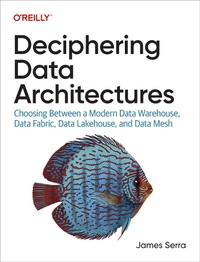
Deciphering Data Architectures
Description

Data fabric, data lakehouse, and data mesh have recently appeared as viable alternatives to the modern data warehouse. These new architectures have solid benefits, but they''re also surrounded by a lot of hyperbole and confusion. This practical book provides a guided tour of these architectures to help data professionals understand the pros and cons of each. James Serra, big data and data warehousing solution architect at Microsoft, examines common data architecture concepts, including how data warehouses have had to evolve to work with data lake features. You''ll learn what data lakehouses can help you achieve, as well as how to distinguish data mesh hype from reality. Best of all, you''ll be able to determine the most appropriate data architecture for your needs. With this book, you''ll:
- Gain a working understanding of several data architectures
- Learn the strengths and weaknesses of each approach
- Distinguish data architecture theory from reality
- Pick the best architecture for your use case
- Understand the differences between data warehouses and data lakes
- Learn common data architecture concepts to help you build better solutions
- Explore the historical evolution and characteristics of data architectures
- Learn essentials of running an architecture design session, team organization, and project success factors
Free from product discussions, this book will serve as a timeless resource for years to come.
More details
Other editions
Additional editions