

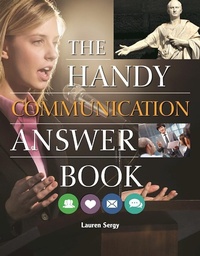
The Handy Communication Answer Book
Description

Award-winning, engaging, and comprehensive guide to effective communication! Powerful oratory. Persuasive arguments. Succinct business pitches. Speeches and emails. From cave walls to the printing press, and from Cicero to TED talks, The Handy Communication Answer Book traces the history, explains the concepts, and examines the skills needed to master effective and efficient communication for every occasion. Providing insights and advice, this useful primer looks at how to improve verbal, nonverbal, and written communications. This informative book provides well-researched answers to nearly 800 common communication questions, such as ...
- What are some common barriers to communication?
- How did early radio affect American politics?
- How has the Internet affected traditional media industries like radio, newspapers, and television?
- What affects clarity in written communication?
- When should I call someone on the telephone instead of sending an email?
- How should I deal with a social media troll?
- Why do so many people fear public speaking?
- What are the characteristics of a good speaker?
- How can I stop saying things like ?um? and ?ah??
- How can I better communicate up the corporate ladder?
- How does plain language and simple style fit into academic communication?
More details
Other editions
Additional editions
Person
Lauren Sergy is a professional speaker, writer, coach, and trainer on public speaking, communications, rhetoric, and critical thinking. A member of the Canadian Association of Professional Speakers, she has worked with a variety of clients, organizations, and audiences, including the government of Alberta, Northern Trust Corporation, the University of Alberta, Meeting Professionals International, and Alberta's Blue Cross Blue Shield.
She holds a master's degree in Library and Information Studies and a bachelor of arts degree in English and Classics. Her articles have been published in Library Journal and her blog posts are featured on sites such as Duct Tape Marketing, The Wealthy Gorilla, and Young Upstarts; she regularly posts original content on public speaking and communications on her website at laurensergy.com. Sergy lives in Edmonton, Alberta.
Content
- Cover
- Half Title
- Title
- Copyright
- About the Author
- Contents
- Photo Sources
- Dedication
- Acknowledgments
- Introduction
- What Is Communication?
- General Communication
- Verbal Communication
- Nonverbal Communication
- Written Communication
- A Brief History of Communication
- Orality, Oral Traditions, and Oratory
- Communicating over Distances
- Mass Media: Newspapers, Radio, and TV
- The Influence of the Internet
- Rhetoric
- Key Ideas and Terms
- Rhetoric from Classical to Modern Times
- Rhetoric Today
- Rhetorical Terms, Concepts, Devices
- Effective Written Communication
- Common Types of Written Communication
- Affecting Meaning and Interpretation
- Persuasiveness
- Clarity
- Clichés, Run-ons, and Other Gaffes
- Specialty Writing
- The Email Minefield
- Email in Brief
- Advantages and Pitfalls of Email
- Effective Use of Email
- Email Etiquette
- Social Media
- Social Media in Brief
- Advantages and Pitfalls of Social Media
- Effective use of Social Media
- Social Media Etiquette
- The Psychology of Public Speaking
- How Public Speaking and Oratory Affect Communication
- Anxiety and Fear of Public Speaking
- Characteristics of a Good Public Speaker
- Contemporary Public Speaking
- Revolutions in Radio, TV, and the Internet
- Important Speakers and Speeches of the 20th and 21st Centuries
- Major Public Speaking Organizations and Events
- Speeches and Presentations
- Styles and Types of Speeches and Presentations
- Key Elements of Speeches and Presentations
- Structure and Organization
- Delivery
- The Human Voice
- Anatomy of Speaking
- Developing Your Voice
- Using Your Voice Effectively
- Body Talk
- The Effects of Body Language
- Developing Your Body Language
- Using Body Language Effectively
- Audience Matters
- Audience Needs and Wants
- Engaging Your Audience
- Hecklers, Smartphones, and Other Annoyances
- Technology and Equipment
- Amplifiers
- Recording Devices
- Internet Applications
- Memory Aids
- Slideshows and Visual Presentations
- Business Communication
- Interpersonal Relationships and Etiquette
- Workplace Conflict Management
- Persuasive Communication
- Negotiation
- Business Writing
- Networking
- Pitching
- Websites and Social Media
- In-Person Presentations
- Phone and Voice-Only Presentations
- Acceptance Speeches and Addresses
- Social Communication
- Wedding Toasts and Other Common Scenarios
- Communicating across Cultures
- Communicating across Generations
- Negotiating with and Persuading Family and Friends
- Academic Communication
- Style and Conventions
- Instructional Presentation Skills
- Conferences, Journals, Blots, Etc.
- Appendix 1: Rhetoric in Political Speeches
- Appendix 2: Sample Speeches for Real Life
- Further Reading
- Index
