

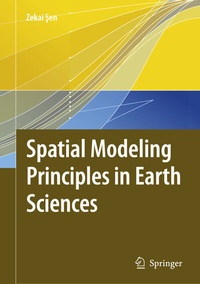
Spatial Modeling Principles in Earth Sciences
Description

Spatial Modeling Principles in Earth Sciences presents fundamentals of spatial data analysis used in hydrology, geology, meteorology, atmospheric science and related fields. It examines methods for the quantitative determination of the spatial distribution patterns. This book brings together the material from the current literature in earth sciences and practical examples.
It provides a sound background of philosophical, logical, rational and physical principles of spatial data and analysis, and explains how it can be modeled and applied in earth sciences projects and designs. It collects information not previously available in one source, and provides methodology for the treatment of spatial data to find the most rational and practical solution.
The book is a valuable resource for students, researchers and practitioners of a broad range of disciplines including geology, geography, hydrology, meteorology, environment, image processing, spatial modeling and related topics.
More details
Other editions
Additional editions
Person
Prof. Dr. Zekai Sen is a researcher at the Istanbul Technical University, Turkey. His main interests are renewable energy (especially solar energy), hydrology, water resources, hydrogeology, hydrometeorology, hydraulics, philosophy of science, and science history. He has been appointed by the United Nations as a member of the Intergovernmental Panel on Climate Change (IPCC) for research on the effects of climate change. He published more than 200 papers in about 50 scientific journals, and 3 books: Applied Hydrogeology for Scientists and Engineers (1995, CRC Lewis Publishers), Wadi Hydrology (2008, CRC Lewis Publishers), and Solar Energy Fundamentals and Modeling Techniques: Atmosphere, Environment, Climate Change and Renewable Energy (2008, Springer).
