

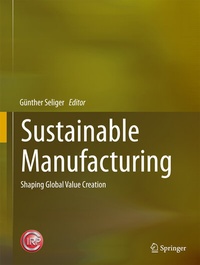
Sustainable Manufacturing
Shaping Global Value Creation
1st Edition
Published on 30. June 2012
XIII, 400 pages
978-3-642-27290-5 (ISBN)
Description

The annual series Global Conferences on Sustainable Manufacturing (GCSM) sponsored by the International Academy for Production Engineering (CIRP) is committed to excellence in the creation of sustainable products and processes that conserve energy and natural resources, have minimal negative impacts upon the natural environment and society, and
adhere to the core principle of sustainability by considering the needs of the present without compromising the ability of future generations to meet their own needs. To promote this noble goal, there is a great need for increased awareness in education and training, including the dissemination of new findings on principles and practices of sustainability applied to manufacturing. The series Global Conferences on Sustainable Manufacturing offers international colleagues the opportunity to network, expand their knowledge, and improve practice globally.
adhere to the core principle of sustainability by considering the needs of the present without compromising the ability of future generations to meet their own needs. To promote this noble goal, there is a great need for increased awareness in education and training, including the dissemination of new findings on principles and practices of sustainability applied to manufacturing. The series Global Conferences on Sustainable Manufacturing offers international colleagues the opportunity to network, expand their knowledge, and improve practice globally.
More details
Series
Language
English
Place of publication
Berlin
Germany
Publishing group
Springer Berlin
Target group
Professional and scholarly
Illustrations
XIII, 400 p. 231 illus., 148 illus. in color.
File size
27,64 MB
ISBN-13
978-3-642-27290-5 (9783642272905)
DOI
10.1007/978-3-642-27290-5
Schweitzer Classification
Other editions
Additional editions
Book
07/2012
Springer
€160.49
Shipment within 7-9 days
Content
- Intro
- Sustainable Manufacturing
- Preface
- Contents
- 1: Value Creation by Sustainable Manufacturing
- 1.1 Sustainable Manufacturing for Global Value Creation
- 3.1 Approach to Cope with the Challenge
- 4 Conclusion
- 5 Acknowledgments
- 6 References
- Modelling and Tactics for Sustainable Manufacturing:An Improvement Methodology
- Abstract
- 1 Introduction
- 2 Research Methods
- 3 Manufacturing System Modelling
- 4 Sustainable Manufacturing Tactics
- 5 Improvement Methodology
- 6 Application Example
- 7 Concluding Remarks
- 8 Acknowledgments
- 9 References
- 1.3 Lean Production Systems as a Framework for Sustainable Manufacturing
- 1 Introduction
- 2 Lean Production Systems
- 2.1 Basics of Lean Production Systems
- 2.2 Continuous Improvement Process
- 2.3 Seven Types of Waste
- 2.4 Framework
- 3 Sustainable Manufacturing
- 3.1 Dimensions of Sustainability
- 3.2 Integration in Existing Frameworks
- 4 Integration of Sustainability in Lean ProductionSystems
- 4.1 Ecological Dimension
- 4.2 Social Dimension
- 4.3 Interferences
- 5 Conclusion
- 6 References
- 1.4 Cleaner Production as a Corporate Sustainable Tool: A Study of Companies from Rio Grande do Norte state, Brazil
- 1 Introduction
- 2 Cleaner Production: A Tool for Corporate Sustainability
- 2.1 Brief History of CP
- 2.2 Concepts, Levels of Opportunity and Roadblocks to CP
- 2.3 Cleaner Production as a Corporate Sustainability
- 3 Methodology
- 3.1 Brief Description of Natal
- 3.2 Research Study
- 3.2.1 Planning
- 3.2.2 Operational and Environmental Diagnosis
- 3.2.3 Evaluation of Opportunities, Implementation and Monitoring
- 4 Results and Discusion
- 4.1 Companies Description and Planning Program
- 4.2 Implantation of CP Program
- 4.2.1 Company 1
- 4.2.2 Company 2
- 4.2.3 Company 3
- 5 Concluding Remarks
- 6 References
- 1.5 Sustainable Manufacturing: A Framework for Ontology Development
- 1 Introduction
- 2 Sustainable Manufacturing
- 3 Ontology and Sustainable Manufacturing Domain
- 3.1 The Structure of the Framework
- 4 The Components of the Conceptual Framework forSustainability
- 4.1 The First Dimension: The Perspectives (Wi)
- 4.2 The Second Dimension: The Aspects (Whj
- 4.3 The Third Dimension: The Requirements (Hk)
- 5 The Decisional Space of the Framework
- 5.1 Deploying the Sustainable Knowledge
- 6 Conclusions
- 7 References
- 1.6 Value Creation Model for Successful Internationalization
- 1 Introduction
- 2 Internationalization for Sustainability
- 3 International Markets
- 3.1 Barriers
- 10 Discussion of the Results
- 11 Conclusion
- 12 Acknowledgments
- 13 References
- 1.7 Fuzzy Application in Sustainability Assessment: A Case Study of Automotive Headlamp
- 1 Introduction
- 2 Methodology
- 2.1 Data Collection
- 2.2 Determination of Sub-element Sustainability Index
- 2.3 Determination of Sustainability Index
- 4 Result
- 5 Discussion
- 6 Conclusion
- 7 Acknowledgments
- 8 References
- 2: Manufacturing Processes and Equipment
- 2.1 Metrics-Based Sustainability Assessment of a Drilling Process
- 1 Introduction
- 2 Previous Work
- 2.1 Sustainability Assessment Methodologies
- 2.2 A Framework for Developing Sustainability Metricsfor Manufacturing Processes
- 3 Sustainability Assessment of a Drilling Process
- 3.1 Background
- 3.3 Metrics Expansion and Applications
- 3.4 Sustainability Assessment of the Process
- 3.5 Comparison and Disscussion
- 4 Summary
- 5 Acknowledgments
- 6 Disclaimer
- References
- 2.2 A Systematic Approach to Evaluate the Process Improvement in Lean Manufacturing Organizations
- 1 Introduction
- 2 A Systematic Approach for Lean Implementation and Evaluation
- 2.1 Define the Maturity Stage of an Organization
- 2.2 Define a Product/Product Family
- 2.3 Define the Value of a Product
- 2.4 Identify the Process Steps (VSM)
- 2.5 Measuring Value of a Product
- Manufacturing Lead Time
- Overall Equipment Efficiency (OEE)
- Measuring Quality of a Lean Production Process
- Measuring Value of a Product: Integrated Cost Equation for a Lean Product
- 2.6 Criticality Analysis of a Problem
- 2.7 Tool Identification and Selection
- 2.8 Solution Implementation and Follow-up
- 2.9 Continuous Improvement
- 3 Demonstration of the Proposed Methodology by a Case Example
- 3.1 Define the Maturity Stage of the Case Organization
- 3.2 Define the Product and Product Value
- 3.3 Define and Observe the Manufacturing System
- 3.4 Quantitative Analysis
- 3.5 Criticality Analysis of a Problem
- 3.6 Tool Identification and Selection
- 3.7 Tool Implementation and Evaluation
- 4 Conclusion
- 5 References
- 2.3 A Method for an Integrated Development of Product-Production System Combinations
- Introduction
- Outlook
- References
- Impact Assessment of Machine Tool Auxiliary Drives Oversizingto Energy Efficiency Aspects
- Abstract
- 1 Introduction
- 2 Data Aquisition
- 3 Stationary Induction Drives
- 3.1 Operation of an Induction Machine
- 3.2 Efficiency of Induction Machines
- 4 Lead Wire Losses
- 4.1 Calculation of Lead Wire Losses
- 4.2 Calculated Lead Wire Losses of the MeasuredProduction Line
- 4.3 Improvement of the Turning Machine
- 5 Conclusion
- 6 Acknowledgments
- 7 References
- 2.5 Towards a Decision Support Framework for Sustainable Manufacturing
- 1 Introduction
- 2 Life Cycle Assessment
- 3 Calculating Carbon Emissions
- 4 Sustainability as a Service (SuSaaS)
- 4.1 Eco-KPI Hierarchy
- 4.2 Eco-Tracking
- 4.3 Eco-Improvement
- 5 Conclusion
- 6 References
- 2.6 The Effects of Depth of Cut and Dressing Conditions on the Surface Integrity in Creep Feed Grinding of Inconel 792-5A
- 1 Introduction
- 2 Experimental Tests
- 2.1 Workpiece Material and Abrasive Wheel
- 6 References
- Dry and Cryogenic Machining: Comparison from the Sustainability Perspective
- 1 Introduction
- 2 Fatigue Life in Engineered Components
- 2.1 Microstructure-Based Model
- 3 Experimental Procedure
- 4 Experimental Results and Discussion
- 3:Remanufacturing, Reuse and Recycling
- End-of-Life Treatment Strategies for Flat Screen Televisions: A Case Study
- 1 Introduction
- 2 Current End of Life Strategies for CRT and Flat Screen TVs
- 3 Product Clustering as an End of Life Strategy: A Case Study
- 4 EoL Treatment Strategies for LCD and Plasma TVs
- 5 Required Information for an Optimized EoL Strategy with Clustering
- 6 Conclusion
- 7 Acknowledgments
- 8 References
- 3.2 Assessment of Load-Dependent and Condition-Oriented Methods for the Lifetime Estimation of Ball Screws
- Abstract
- 1 Motivation
- 2 Objective
- 3 Approach
- 4 Results Concerning Condition
- 4.1 Results Concerning Structure-Borne Sound(Triaxial Sensor)
- 4.2 Results Concerning Structure-Borne Sound (SingleAxis Sensor)
- 4.3 Results Concerning Airborne Sound
- 4.4 Results Concerning Load Measurement
- 5 Summary
- 6 Outlook
- Synthesis of Wollastonite on the Basis of the Technogenic Raw Materials
- Abstract
- References
- 3.4 Review of End-of-Life Management Issues in Sustainable Electronic Products
- Abstract
- 1 Introduction
- 2 Sustainable Electronic Product Development
- 3 Design and Manufacturing Implications on EOL
- 3.1 Lack of Considerations for EoL Handling
- 3.2 Increased Miniaturisation and Complexity ofProduct
- 3.3 New Materials and Manufacturing Methods
- 4 Marketing Implications on Eol
- 5 Reverse Logistics Implications on Eol
- 6 Suggestions to the Stakeholders
- 6.1 Design and Manufacturing Stage
- 6.2 Marketing Stage
- 6.3 Reverse Logistics Stage and EoL Stage
- 7 Conclusions
- 8 References
- 3.5 Remanufacturing and Reuse of Production Equipment at an Automotive OEM
- Drivers for Recovery
- 2.2 Consumer Products and Production Equipment
- 2.3 Evaluation of Recovery
- 3 Known Obstacles for Reverse Logistics
- Machine Tool Optimization Strategies:Evaluation of Actual Machine Tool Usage and Modes
- 1 Introduction
- 2 State of the Art
- 3 Methodology
- 3.1 Retrofit Indicator
- 3.2 Methodological Steps
- Step 1: Detailed Machine Tool Measurement
- Step 2: Calculation of Retrofit Indicator IR
- 4.3 Calculation of Retrofit Indicator IR
- 4.4 Definition of Retrofit Activity
- 5 Conclusion
- 6 Summary
- 7 Acknowledgments
- 8 References
- Condition Assessment Model for Maintenance of Vehicles Fleet Based on Knowledge Generation
- 1 Introduction
- 2 Condition Assessment Model for Maintenance
- 4 Case Study
- 4.1 As-Is Situation
- 4.2 Defining Critical Components
- 5 Conclusion
- 6 References
- WebCAN for Remanufacturers: A New Automotive CAN-Bus Tool Analyzing and File Sharing Application
- 1 Introduction
- 2 State of the Art in Remanufacturing
- 3 Automotive Mechatronics Remanufacturing
- 4 Reverse Engineering of Automotive Mechatronic Systems
- 5 Analyzing an Automotive Mechatronic System
- 5.1 Electrical Wiring
- 5.2 Vehicle Network Topology
- 5.3 CAN Bus Communication
- 5.4 Sensors
- 5.5 Diagnostics
- 6 CAN Corder
- 7 Web CAN
- 8 Conclusion
- 9 Acknowledgements
- 10 References
- 4:Product Design for Resources Efficiency and Effectiveness
- Context-Aware Smart Sustainable Factories: Technological Framework
- Abstract
- 1 Introduction
- 2 Smart Environment
- 3 SOA-Based Smart Factory Architecture
- 4 Context-Aware Information Management
- 5 Ontology-Based Interaction
- 6 Summary
- 7 Acknowledgments
- 8 References
- ICT Enabled Energy Efficiency in Manufacturing
- 1 Introduction
- 1.1 Manufacturing the Case for ICT Enabled EE
- 1.2 REViSITE Framework and Approach Justification
- 1.3 The Need for a Taxonomy
- 1.4 Use of the Framework/Taxonomy
- 2 ICT4EE in Manufacturing an Overview
- 2.1 ICT4EE: Knowledge and Current Practice
- ICTs in Specification and Design Phase
- ICTs in Materialisation Phase
- ICTs in Usage Phase
- Resource and Process Management ICTs
- Technical integration ICTs and Interoperability
- Trading/Transactional Management ICTs
- 2.2 Smart Manufacturing: Links to Other Sectors
- Links to Smart Grids Sector
- Links to the Built Environment
- Links to Lighting Sector
- 2.3 ICTs Deemed Most Relevant to Strategic Research Agenda Development
- 3 Summary, Vision and Conclusion
- 4 References
- Energy Consumption: One Criterion for the Sustainable Design of Process Chains
- 1 Introduction
- 2 The Product Engineering Process
- 3.2 Applied Data Collection
- 4 Assessment of Energy Consumption
- 5 Summary and Outlook
- 6 Acknowledgments
- 7 References
- A Method for Evaluating Lean Assembly Process at Design Stage
- 1 Introduction
- 2 Integrated Lean Design Framework
- 3 MTM Analysis: A Performance Evaluation Tool for Lean Assembly Process
- 4 Demonstration of Proposed Methodology by a Case Example
- 4.1 Select or Update Basic Data in the Central database
- 4.2 Start a New or Open an Existing MTM Analysis
- 4.3 Select the Correct Work Station
- 4.4 Create the Part and Tool List
- 4.5 Edit the Position Matrix
- 4.6 Edit the Grasp Matrix
- 4.7 Edit the List with all Performances
- 4.8 MTM Analysis Results of Original Electric Switch
- 5 Proposed Redesign of Electric Switch
- 5.1 MTM Analysis for the Redesigned Electric Switch
- 6 Conclusion
- 7 References
- Mini Factories for Cocoa Paste Production
- Abstract
- 1 Introduction
- 2 Value Adding Process and Cocoa Market
- Cocoa Market in Sierra Leone
- 4 Concept Description
- 5 Implementation
- 6 Transfer Scenarios
- 7 Conclusion and Prospect
- 8 References
- Design of Energy Efficient Hydraulic Units for Machine Tools
- Abstract
- 1 Introduction
- 2 Distribution of Energy Consumption of MachineTools: Focus Hydraulic Units
- 3 Technologies for Energy Efficient Hydraulic Units
- 4 Analysis of the Energy Consumption of DifferentHydraulic Units
- 5 Summary and Outlook
- 6 Acknowledgments
- 7 References
- Business Models for Product-Service Systems (PSS): An Exploratory Study in a Machine Tool Manufacturer
- Abstract
- 1 Introduction
- 2 Methodology
- 3 Literature Review
- 3.1 Product-Service System (PSS)
- 5 Investigation of the Characteristics of a PSS Business Model for a Machine Tool Manufacturer
- 6 PSS Implementation Challenges
- 7 Conclusions and Managerial Implications
- 8 Acknowledgments
- 9 References
- 5:Innovative Energy Conversion
- 5.1. New Aspects of Energy Consumption Analysis in Assembly Processes and Equipment
- 1 Motivation and Target
- 2 Process Versus Auxiliary Energy Analysis (PAEA
- 3 Methods to Optimize Energy Consumption
- 3.1 Workspace Energy Consumption Analysis (WECA
- 3.2 Workspace Intersection Analysis (WIA)
- 3.3 Process and Technology Substitutions
- 4 Conclusion and Summary
- 5 References
- 5.2 Evaluation of the Energy Consumption of a Directed Lubricoolant Supply with Variable Pressures and Flow Rates in Cutting Processes
- 1 Introduction
- 2 State of the Art
- 2.1 Conventional Machining of Difficult to Cut Materials
- 2.2 Advances of High-Pressure Lubricoolant Supply
- 2.3 Influence of the Use of Lubricoolants on Energy Efficiency
- 5.2 Efficiency Value for the External Lubricoolant Supply
- 5.3 Power Consumption of the CNC-Lathe
- 5.4 Specific Cutting Energy
- 6 Summary
- 7 Acknowledgments
- 8 References
- 5.3 Energy-Aware Production Planning Based on EnergyBlocks in a Siemens AG Generator Plant
- 1 Introduction
- 2 Energy Modelling Requirements
- 2.1 Energy Efficiency Opportunities
- 2.2 Energy Modelling Requirements
- 3 EnergyBlocks-Methodology
- 3.1 Approach
- 3.2 Mathematical Representation
- 3.3 Software Architecture
- 3.4 Fields of Application
- 4 Use Case
- 5 Summary
- 6 References
- 5.5 Microalgae as Source of Energy: Current Situation and Perspectives of Use
- 1 Introduction
- 2 First, Second and Third-Generation Biofuels
- 3 Importance of Algal Biomass for Fuels
- 4 Methods Analysis Algal Lipid
- 5 Areas of Research: "Biomass of Microalgae as a
- 6 LED Lighting Systems for the Cultivation of Microalgae
- 7 Heterotrophic Algae
- 8 Conclusion
- 9 Acknowledgments
- 10 References
- 5.6 Development of the Geographic Information System "Renewable Energy Sources in Russia"
- 1 Introduction
- 2 Analysis of Foreign GIS in Renewable Energy
- 3 The Structure of the GIS
- 4 Part of the GIS Resources of Solar and Wind Energy: Data Sources
- 5 The User Interface and the Administrator of GIS-Based Yandex.Maps
- 6 Conclusion
- 7 Acknowledgments
- 8 References
- 5.7 Resources, Energy Efficiency and Energy Development Ways of Karelia Region Energy
- 1 Introduction
- 2 Contemporary State of Energetics
- 3 Renewable Energy Resources
- 4 Carbon Balance of Republic of Karelia
- 4.1 Fuel and Energy Complex of Karelia and its Contribution to the Carbon Balance
- 4.2 Carbon Balance Estimation in a Forest Sector
- 4.4 Estimation of Carbon Fluxes in Bog Biogeocenosis of Karelia
- 4.5 Carbon Exchange (Transmission) in the Forest and Bogs Biogeocenosis of Karelia
- 4.6 Summary Carbon Balance in the Region of Karelia
- 5 Large Wind Power Station
- 6 Rational Variant of Energy Development for Republic of Karelia
- References
- 6:Green Supply Chain and Transportation
- 6.1 Supply Chain Constraints in Practising Material Efficiency Strategies: Evidence from UK Companies
- 1 Introduction
- 2 Supply Chain Barriers of Material Efficiency
- 3 Data Collection and Analysis Methods
- 4 Findings
- 4.1 Constraints
- Uncooperative Supplier
- 4.2 Causal Model
- 5 Discussions
- 6 Conclusions
- 7 References
- 6.2 Improving Forecasts for a Higher Sustainability in Spare Parts Logistics
- 1 Introduction
- 2 Analysis of the Spare Parts Logistics
- 2.1 SCOR Model
- 2.2 Model for the Source Process
- 2.3 Model for the Delivery Process
- 2.4 Summarization of Requirements of Spare Parts Logistics
- 3 Demand for Better Forecasts
- 3.1 Dynamic Control Loops for the Forecast of Spare Parts Demand
- 3.2 Influence Parameters of Demand Forecasts
- 4 Conclusion
- 5 References
- 6.3 Modeling of the Optimum Logistic Systems for Shipment by Land Types of Transport with Respect to Risk Drawings of Harm to Environment
- References
- 6.4 Eco-Efficiency Within Extended Supply Chain as Product Life Cycle Management
- 1 Introduction
- 2 Product Life Cycle Management and Eco-Efficiency
- 2.1 Product Life Cycle Management
- 2.2 Eco-Efficiency Applied Within ESC
- 3 Theorical Model of Eco Efficiency Applied Within ESC
- 3.1 The Proposed Model
- 3.2 The Proposed Model and Product Development
- 4 Concluding Remarks
- 5 References
- 6.5 Information Sharing and Utilization for Environmental Loads in Disassembly System Design with PLM
- 1 Introduction
- 2 Ecologic and Economic Design for Disassembly System
- 2.1 Purpose of Ecologic and Economic Disassembly Design by Product Recovery Values
- 2.2 Information Sharing and Utilization of Environmental Loads by SolidWorks
- 3 Disassembly Design Procedure with Information Sharing and Utilization by Environmental Loads
- 3.1 Overview
- 3.2 Design procedures with BOM for product recovery values
- (i) Construction and analysis of product recovery values with BOM
- (ii) Maximal cycle time
- (iii) Condition on the number of stations
- (iv) Line balancing with environmental loads
- (v) Line evaluation with product recovery values
- 4 Design Example of Disassembly System with the Information Utilization by the Environmental Loads
- 4.1 Construction of Product Recovery Values with BOM
- 6 Summary
- 7 Acknowledgments
- 8 References
- 6.6 Performance Indicators for Quantifying Sustainable Development: Focus in Reverse Logistics
- 1 Introduction
- 2 Reverse Logistics
- 4 Study Case: Walmart Brazil
- 4.1 Application of Indicators in the Initiatives Taken by Walmart Group
- 5 Conclusion and Future Work
- 6 Acknowledgements
- 7 References
- 6.7 Reverse Supply Chain Framework Proposal for Malaysian Automotive Industry
- 1 Introduction
- 2 Literature Review
- 2.1 ELV Reverse Supply Chain in Practice
- 2.2 Existing ELV Reverse Supply Chain Framework
- 2.3 Selected General Reverse Supply Chain Methods
- 3 Framework Development
- Pre Manufacturing Stage
- Manufacturing Stage
- Use Stage
- Post Use Stage
- 4 Conclusions and Further Research
- 5 Acknowledgement
- 6 References
- 7: Adequate Environments for Entrepreneurial Initiative
- 7.1 Statistical Aspects of the Estimation of the Steady Development of Small Entrepreneurship
- Error of Vanishing Totality
- References
- 7.2 Global and Local Regulating Approach for Sustainable Development
- 1 Environment for Sustainable Development
- 2 Post-Modern Reasoning for Industry
- 2.1 Time in Industrial World
- 2.2 Cycle as a Dimension for Management
- 2.3 Myth
- 2.4 Context
- 2.5 Culture
- 3 Regulation for Sustainable Development and Specific Management
- 3.1 Complexity of Modern Industrial Management
- 3.2 N-Dimensional Space of Regulation
- 3.3 The Principle of Inalienability of Future Generations' Rights
- 4 Human as a Rare Resource
- 4.1 Collective Action or Individual Negotiation
- 4.2 Transition to Market Economy and Labour Relations
- 4.3 Up-to-Date Role of Individuals in Self-Organisation
- 4.4 Modernisation Policy in Postmodern World
- 5 Global Lack of Regulation
- 6 References
- 7.3 Problems of Technology and Motivation in the Use of Renewable Energy
- 1 Introduction
- 2 Current Situation in Stimulus Programmes
- 3 Challenges Produced by the Existing Stimulus System
- 3.2 Efficiency Challenges
- 3.3 Challenges for Society
- 4 What can be Done to Promote Affordable Transition to Renewable Energy Production
- 5 References
- 7.4 Management of Services Quality as a Tool to Increase Water Supply Companies' Efficiency
- 1 Introduction
- 1.1 Main Ideas (Body of the Paper)
- 2 Conclusions
- 3 References
- 7.5 Current State and Future Expectations of Sustainable Development and Sustainable Production in the Finnish Manufacturing Industry
- 1 Introduction
- 2 Sustainable Development and Sustainable Manufacturing
- 2.1 Definitions and Aspects
- 2.2 Required Changes and Potential Advantages
- 3 Research Approach and Methods
- 4 Finnish Companies Views on Sustainable Development and Sustainable Production
- 4.1 Product and Product Design
- 4.2 Supply Chain
- 4.3 Production
- 4.4 Personnel
- 4.5 Business
- 4.6 Society
- 5 Summary
- 6 Acknowledgements
- 7 References
- 7.6 Sustainable Key-Figure Benchmarking for Small and Medium Sized Enterprises
- 1 Introduction
- 2 Sustainabile BenchmarkIndex-Analysis
- 2.1 Benchmarking
- 2.2 BenchmarkIndex
- Incorporate Economic Sustainability
- Incorporate Social Sustainability
- Incorporate Ecological Sustainability
- 2.3 Procedure of the Sustainable BenchmarkIndex
- 3 Key-Figures Adaption
- 4 Evaluation and Report
- 7.7 Enterprise Innovativeness is a Necessary Condition for Sustainable Development
- 1 Introduction
- 2 Measuring Innovativeness
- 3 Innovative Companies Financing
- 4 Innovative Susceptibility
- 5 The Role of Higher Education in the Innovative Economy Development
- 6 Conclusions
- 7 References
- 8:Engineering Education for Sustainability
- 8.1 Life Cycle Model of Professional Higher Education in Russia as a Management Tool of the Stable Development of the Sector
- 1 Introduction
- 2 Brief Information about the Sector
- 3 Aim of the Work
- 4 A Study of the Dynamics of the Number of Students in Higher Educational Institutions in Modern Russia
- 5 Conclusions
- 6 References
- 3 INTERNATIONAL MARKETS
- 3.1 Barriers
- 3.2 Risks
- 3.3 Competitive advantage
- 4 ROLE OF QUALIFICATION
- 7 CASE STUDY
- 7.1 Environment
- 7.2 Government
- 7.3 People
- 7.4 Market
- 8 SUMMARY
- 9 REFERENCES
- 8.3 Knowledge Sharing as the Key Driver for Sustainable Innovationof Large Organisations
- 1 Introduction
- 2 Definition of the Term "Knowledge"
- 5 Conclusion
- 6 References
- 8.4 Training on the Job in Remanufacturing Supported by Information Technology Systems
- 1 Introduction
- 2 Increasing Demand for Fast Qualification for Efficient Remanufacturing Processes
- 3 Qualification Concept
- 3.1 Structured Training on the Job
- 3.2 Learnstrument Approach
- 3.3 Training Profiles
- 5 Summary
- 6 References
- 8.5 Human Dimension of Agency and Sustainable Corporative Growth
- 1 Human Capitalist
- 1.1 Human Capital Concept
- 1.2 Agent as Autonomous Actor
- 1.3 Individual Economic Agent in the Market
- 1.4 Individual Economic Agent as Self-Investor
- 2 Agency and Opportunism
- 2.1 Asymmetry
- 2.2 Opportunistic Behaviour
- 3 Sustainability as Competitive Advantage
- 4 References
- 8.6 Pioneering Life Cycle Assessment in Russia: Application of the EcoScarcity Method for Russia
- 1 Introduction
- 2 Method Concept
- 3 Example of the Method Application for Evaluation the Green House Gases Emission
- 4 Method Perspectives in Russia
- 5 Conclusion
- 6 References
- 8.7 Enhancing Traditional Integrated Product Development Processes with PSS Practices for Sustainability
- 1 Introduction
- 2 Product Service System Concepts
- 2.1 PSS1: Product-Oriented Service
- 2.2 PSS2: Use-Oriented Service
- 2.3 PSS3: Result-Oriented Service
- 3 Methodological Approach
- 4 NPD Reference Model
- 5 Integration of PSS Practices into an NDP Reference Model
- 6 Discussion
- 7 Final Remarks
- 8 Acknowledgments
- 9 References
- 9:Economics for Sustainable Development
- 9.1 Evaluation of the Institutional Environment's Influence on Innovative Output of Enterprises in the National Economy
- 1 Introduction
- 2 Institutional Environment of the Innovation System
- 2.1 Overview of the Theories Researching into Institutions and Innovative activity
- 2.2 Composing the Integral Factor Characterizing the Quality of Institutional Environment
- 3 Innovative Activity of Russian Industry
- 3.1 R&D in Production and Service Organizations
- 3.2 Reasons for Low Innovative Activity in Russia Production Enterprises
- 4 Discussion
- Improving institutions regulating markets and competition
- Financial institutions
- Labor market institutions
- Legal institutions
- Institutions of education and science
- Taxation institutions
- 5 References
- 9.2 National Innovation System in the Economic Cycle: Principles and Perspectives
- 1 Innovative Strategies in the Goals and Objectives of the Formation and Development of National Innovation Systems
- 2 Priorities for Innovation at Various Levels of the National Economy
- 3 The Structure of the National Innovation System in a Cyclical Economy
- 4 Regionalization of Innovation as a Principle of the NIS
- 5 Innovativeness of Education as a Factor in the Competitiveness of the Russian Federation
- 6 The Long-Term Technological Cycle as a Reflection of the Level of Scientific and Technical Progress
- 7 Interference of Innovation Strategy and Competitive Advantages of the National Economy in Recession and Recovery Phases
- 8 References
- 9.3 Mathematical Modeling, Estimation and Choice of Investment Projects in the Conditions of Risk
- 1 Theoretical Bases of Estimation of Investment Projects and a Formulation of the Tasks of Selection of Investment Projects
- 1.1 The Form of Presentation of the Investment Project
- 1.2 Choice of Investment Projects from the Point of View of the Residual Value
- 1.3 Selection of Investment Projects on the Basis of the Provided Income
- 1.4 Selection of Investment Projects Taking into Account the Credit Limit of the Investor
- 2 Mathematical Modeling, Methods of Assessment and Selection of Investment Projects in Conditions of Risk
- 2.1 The Mechanisms For the Selection of Projects Based on the Preferences of the Investor
- 2.2 Methods of Estimation of Investment Projects
- 3 The Use of the Mentioned Methods and Algorithms with the Help of Computational Experiment
- 3.3 Appraisal and Selection of Investment Project with the Positions of the Residual Value
- 3.4 Assessment and Selection of Investment Project with the Positions Provided by the Income
- 4 References
- 9.4 Sustainable Development of the Economy of a Region
- 1 Introduction
- 2 Samuelson, Hicks Model of Sustainable Development
- 3 A Model of Sustainable Development of Regional Economy
- 4 Conclusion
- 5 References
- 9.6 Energy and Cost Efficiency in CNC Machining from a Process Planning Perspective
- 1 Introduction
- 1.1 Process Planning for Sustainable CNC Machining
- 3 Results and Discussion
- 3.1 Results from Modelling Machining Cost and Energy Use
- 3.2 Capability and Level of Quality
- 3.3 Different Machining Factors' Impact on Specific Energy
- 3.4 A Green Machining Strategy
- 9.7 The Pricing in Mobile Phone Networks and its Implementation inRussian Practice
- 1 Introduction
- 2 The Tariff Analysis
- 3 Summary
